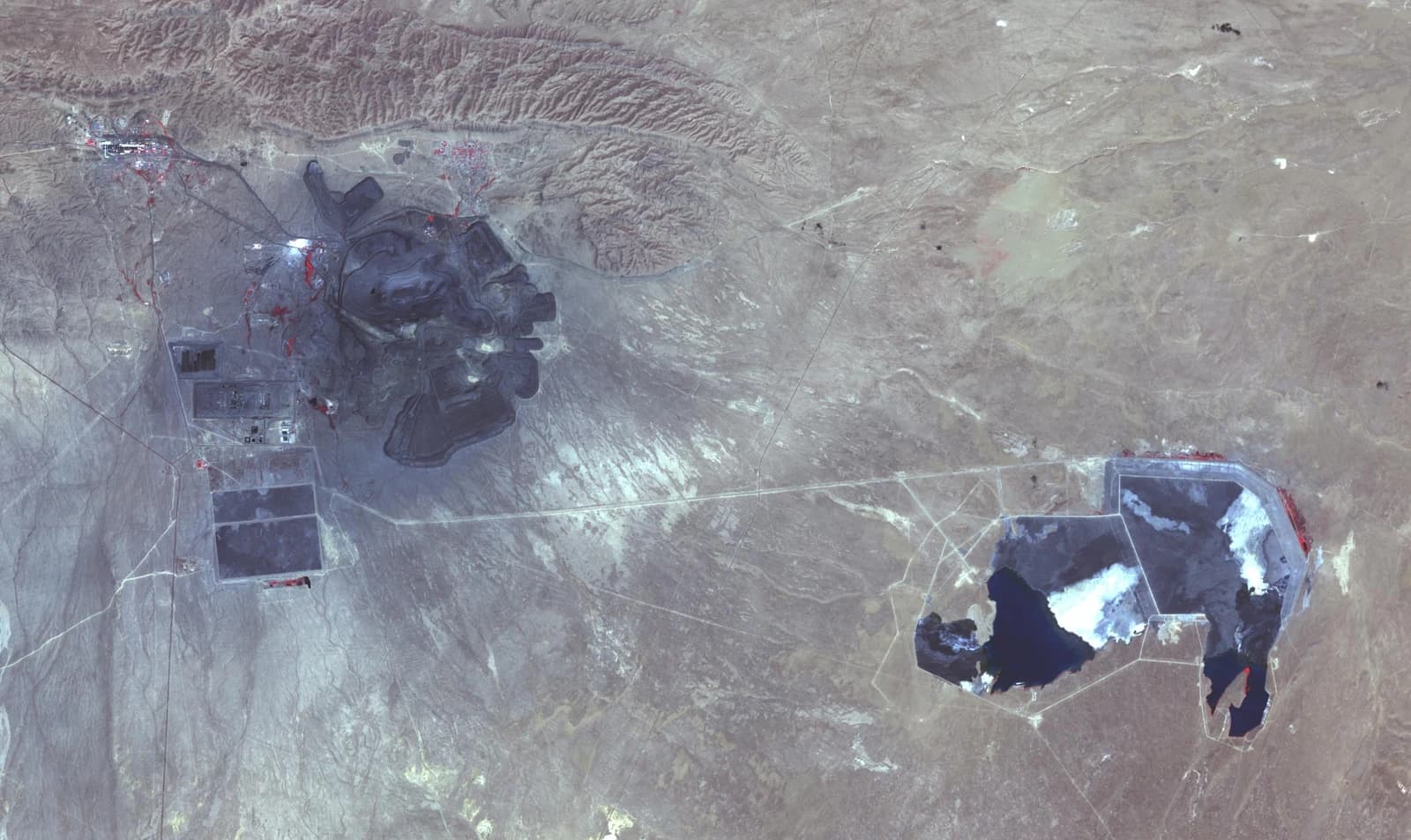
A Kazakhstan court has ordered the pre-trial confiscation of 2.8 kilograms of high-purity gold worth 182.3 million tenge after border officers intercepted the bullion hidden under shoe insoles on a route believed to be aimed at China.
Kazakhstan Court Orders Confiscation of Smuggled Gold
The case matters less for its unusual concealment method than for what it says about tightening pressure on illicit precious-metals flows through Central Asia. Gold remains one of the easiest assets to move, conceal and resell across borders, which is why customs enforcement on the Kazakhstan-China corridor has become economically important: it protects state revenue, narrows the space for smuggling networks and reduces the risk that physical bullion becomes a parallel settlement channel outside regulated markets.
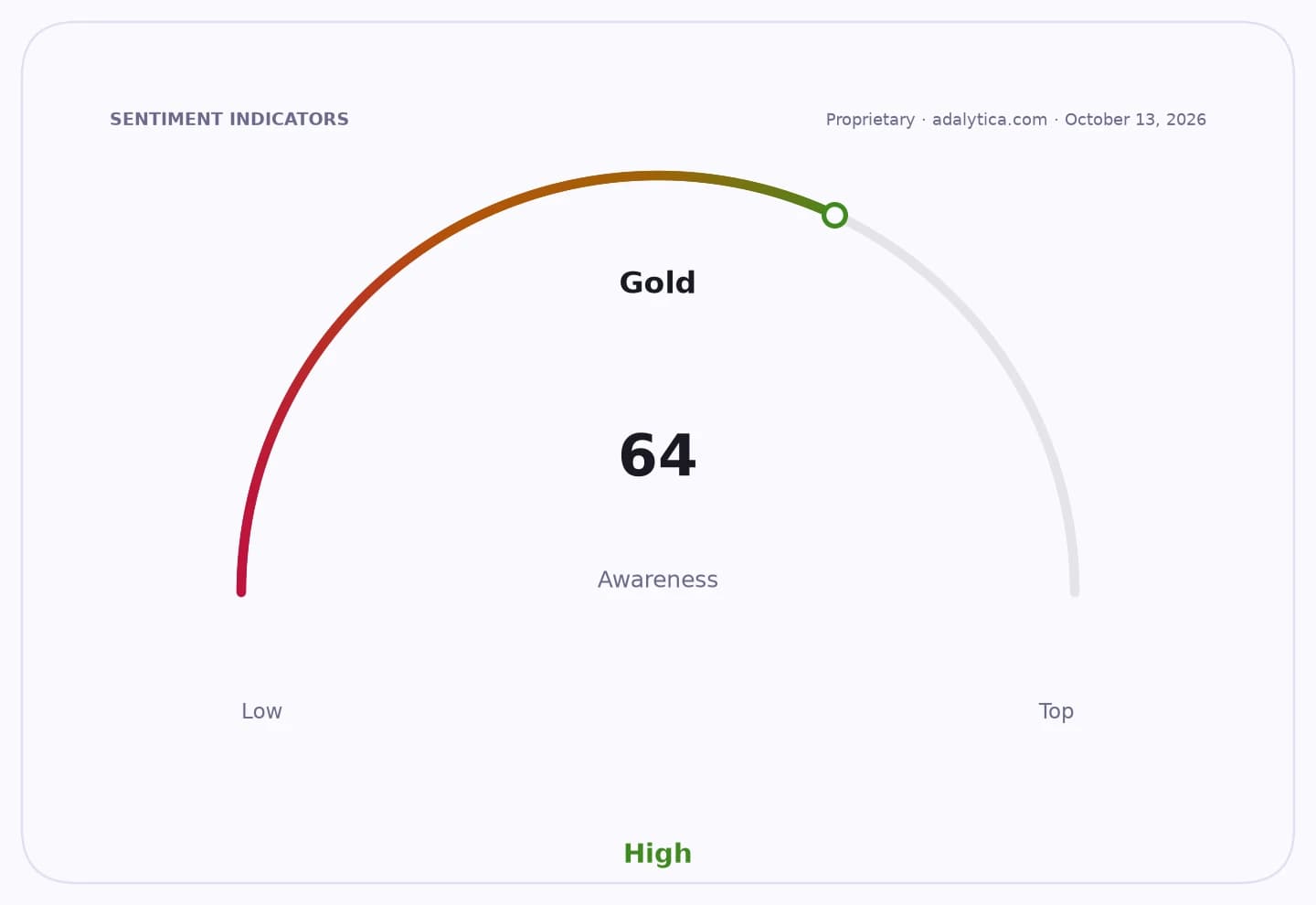
Sentiment IndicatorsⓘProprietary · adalytica.com · October 13, 2026
This is a snapshot — live sentiment, awareness and momentum for 130+ markets update continuously in the dashboard.Open AlphaPulse
According to the Main Transport Prosecutor’s Office, a Kyrgyz national bought six gold bars at home, brought them into Kazakhstan via the Korday auto checkpoint and then tried to move them onward through the Khorgos border cooperation center. Investigators said she concealed three bars under each insole. The metal, more than 99% pure, was discovered during inspection and seized before it could cross into China.
The court’s decision to transfer the bullion to state ownership before the criminal case is complete is significant because it removes the asset from circulation immediately, rather than leaving authorities to wait for a final verdict. For prosecutors and border agencies, that is a stronger deterrent than a delayed forfeiture. For smugglers, it raises the cost of failure: the cargo is gone even if the underlying case remains unresolved.
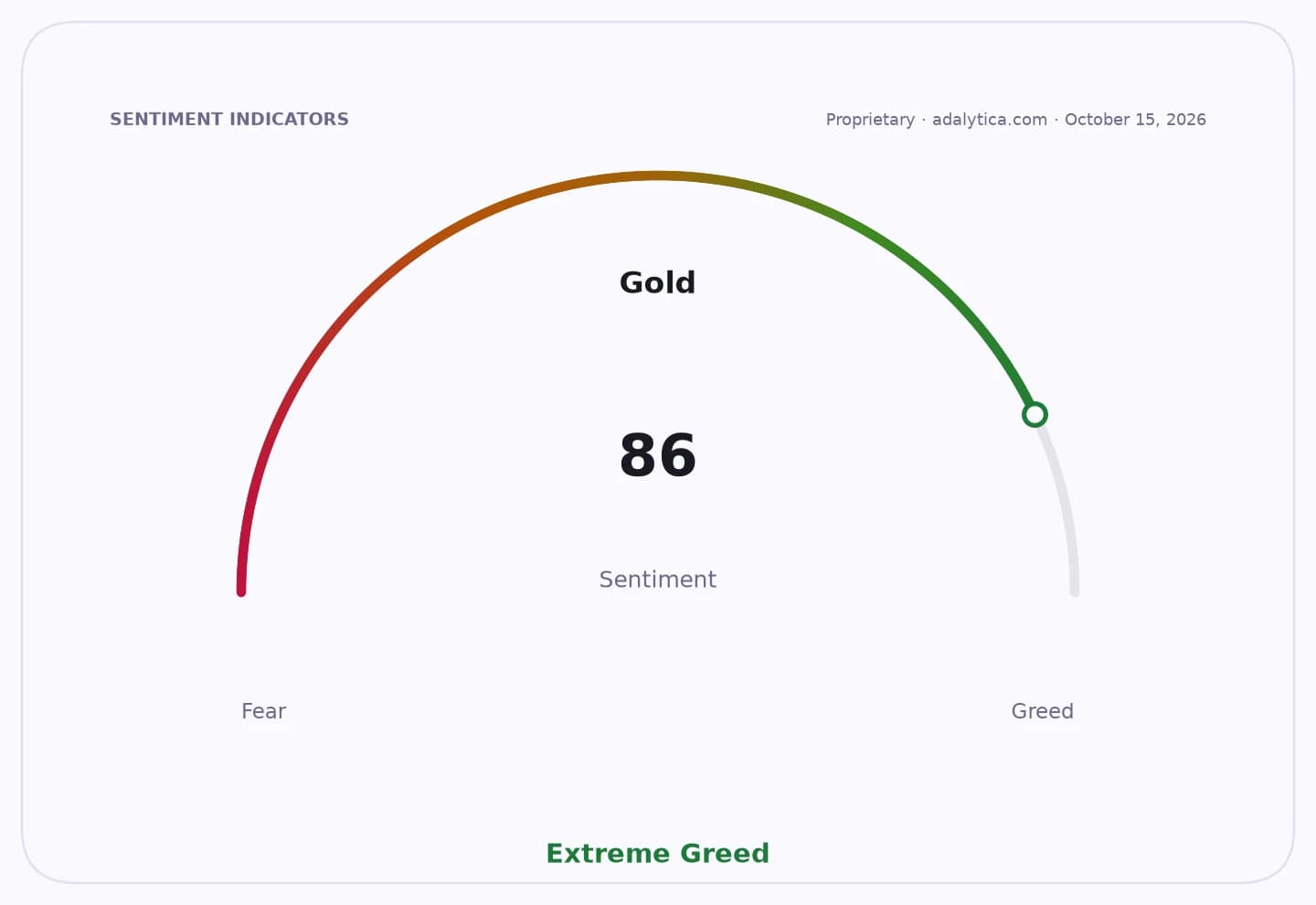
There is also a broader commercial backdrop. Gold prices have been volatile, with conventional technical indicators on GLD showing a recent pullback after an earlier surge, while Adalytica’s Gold Fear & Greed Index still points to elevated market appetite. That combination typically encourages arbitrage, physical movement and opportunistic cross-border shipments, especially where price differentials, taxes or compliance gaps can be exploited. In that environment, seized bullion is not just a law-enforcement story; it is evidence of how quickly precious metals can be redirected into shadow trade channels when global demand is firm.
For investors, the direct market impact is limited, but the story reinforces a larger theme: physical gold supply chains are vulnerable to regulatory intervention, and enforcement can affect regional flows even when it does not move benchmark prices. The clearest beneficiaries are Kazakhstan’s customs and judicial authorities, which gain a public win in anti-smuggling enforcement, while would-be smugglers and any informal bullion intermediaries lose valuable inventory and route access.
The case is also a reminder that China-facing land routes through Central Asia remain under scrutiny as authorities target not only bulk commodities but high-value, easily portable goods. If similar seizures continue, the cost of moving bullion outside formal channels could rise, pushing more trade into licensed exchanges and documented logistics instead of concealed cross-border shipments.
| Entity | Gains | Losses |
|---|---|---|
| Kazakhstan authorities | ▲stronger enforcement credibility | ▼none |
| State budget | ▲confiscated asset value | ▼smuggling proceeds |
| Smugglers | ▲none | ▼seized bullion |
| Gold buyers/traders using formal channels | ▲cleaner supply chains | ▼illicit route access |