Kazakhstan is expected to keep cutting its base rate through year-end, with analysts saying the central bank still has room to ease even after two reductions this year because inflation is falling faster than borrowing costs.
Kazakhstan rate cuts seen continuing through year-end
The assessment from the Association of Financiers of Kazakhstan matters because it points to a policy shift that can gradually lower funding costs across the economy, but not quickly enough to erase the impact of still-tight real rates. The group said the real policy rate has risen to 6.95%, meaning monetary conditions remain restrictive despite the start of an easing cycle. For businesses and households, that suggests credit may get cheaper, but with a lag and not uniformly across products.
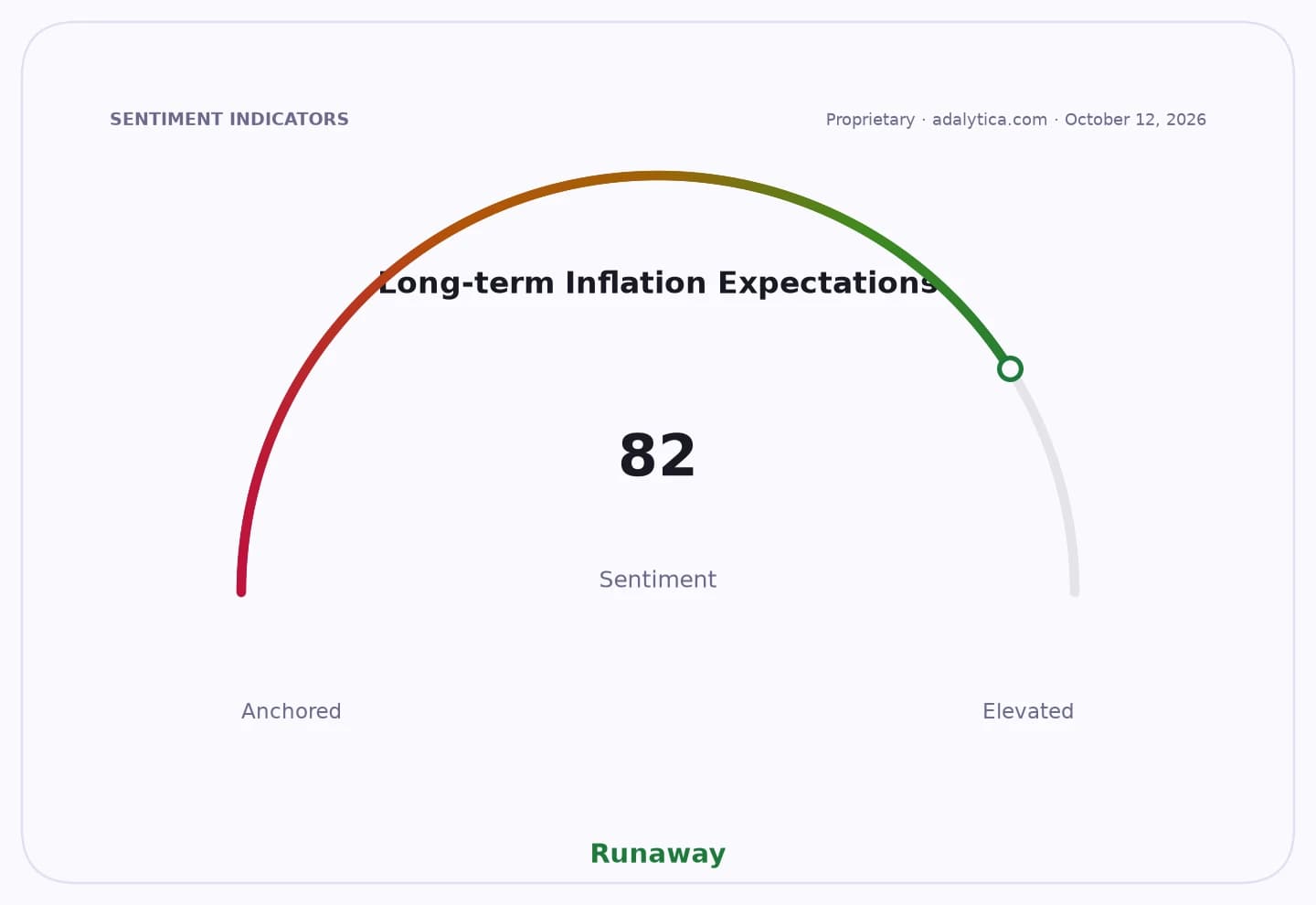
Sentiment IndicatorsⓘProprietary · adalytica.com · October 8, 2026
This is a snapshot — live sentiment, awareness and momentum for 130+ markets update continuously in the dashboard.Open AlphaPulse
The National Bank of Kazakhstan cut the base rate to 17% in June, after the first move in the current cycle, and then lowered it again to 16.25% in September. Its next scheduled decision is Oct. 23. Analysts expect further cuts to depend on how quickly disinflation is sustained and how financing costs evolve in the banking system, where competition for deposits, credit risk and product pricing will shape how much of any policy easing reaches borrowers.
That matters for the broader economy because Kazakhstan is trying to balance softer inflation against still-strong demand pressures. The association said the room for further easing is constrained by elevated inflation expectations, likely fiscal and quasi-fiscal stimulus, tariff reform and the risk of imported price shocks from key trade partners. In other words, the central bank may be able to continue easing, but only cautiously if it wants to avoid reigniting price pressure.
For investors, the main implication is that tenge assets may remain relatively attractive even as rates come down, which can support demand for local debt and help anchor the currency. The flip side is that bond investors may see uneven performance across maturities: short-term yields are more sensitive to policy expectations, while longer-dated paper will also reflect inflation risk, supply dynamics and term premiums.
The currency backdrop remains broadly supportive of that view. The tenge traded near 450.68 per dollar on Oct. 8, after a recent stretch in which the dollar-tenge pair fell toward the low 430s and 440s, with the 50-day moving average close to current levels and the 200-day average much higher, indicating the currency has strengthened materially from earlier in the year. Technical indicators such as RSI have also moved back into a less oversold range, suggesting recent volatility has not yet broken the broader stabilization trend.
The narrative for the rest of the year is therefore not aggressive easing, but a measured continuation of the disinflation trade: lower policy rates, slowly cheaper credit and a still-defensive central bank. If inflation expectations stay elevated or fiscal spending accelerates, the pace of cuts could slow. If disinflation holds, however, Kazakhstan’s rate cycle should keep moving lower into year-end, reinforcing demand for local-currency assets while gradually easing pressure on borrowers.
| Entity | Gains | Losses |
|---|---|---|
| Borrowers | ▲Lower financing costs | ▼Slower credit repricing |
| Banks | ▲Loan growth potential | ▼Margin pressure |
| Bond investors | ▲Supportive rate backdrop | ▼Yield compression |
| National Bank of Kazakhstan | ▲Inflation cooling room | ▼Limited easing flexibility |