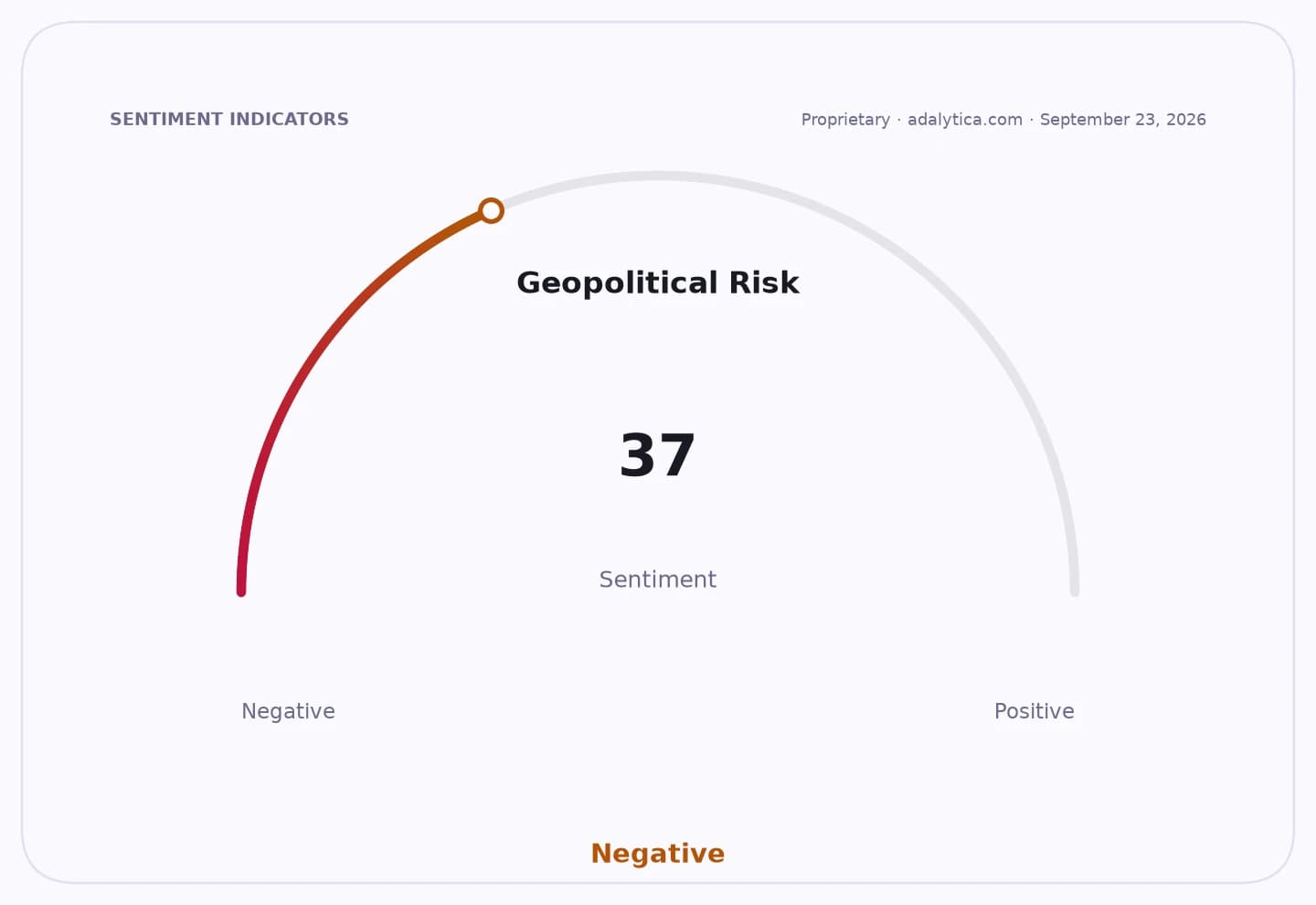
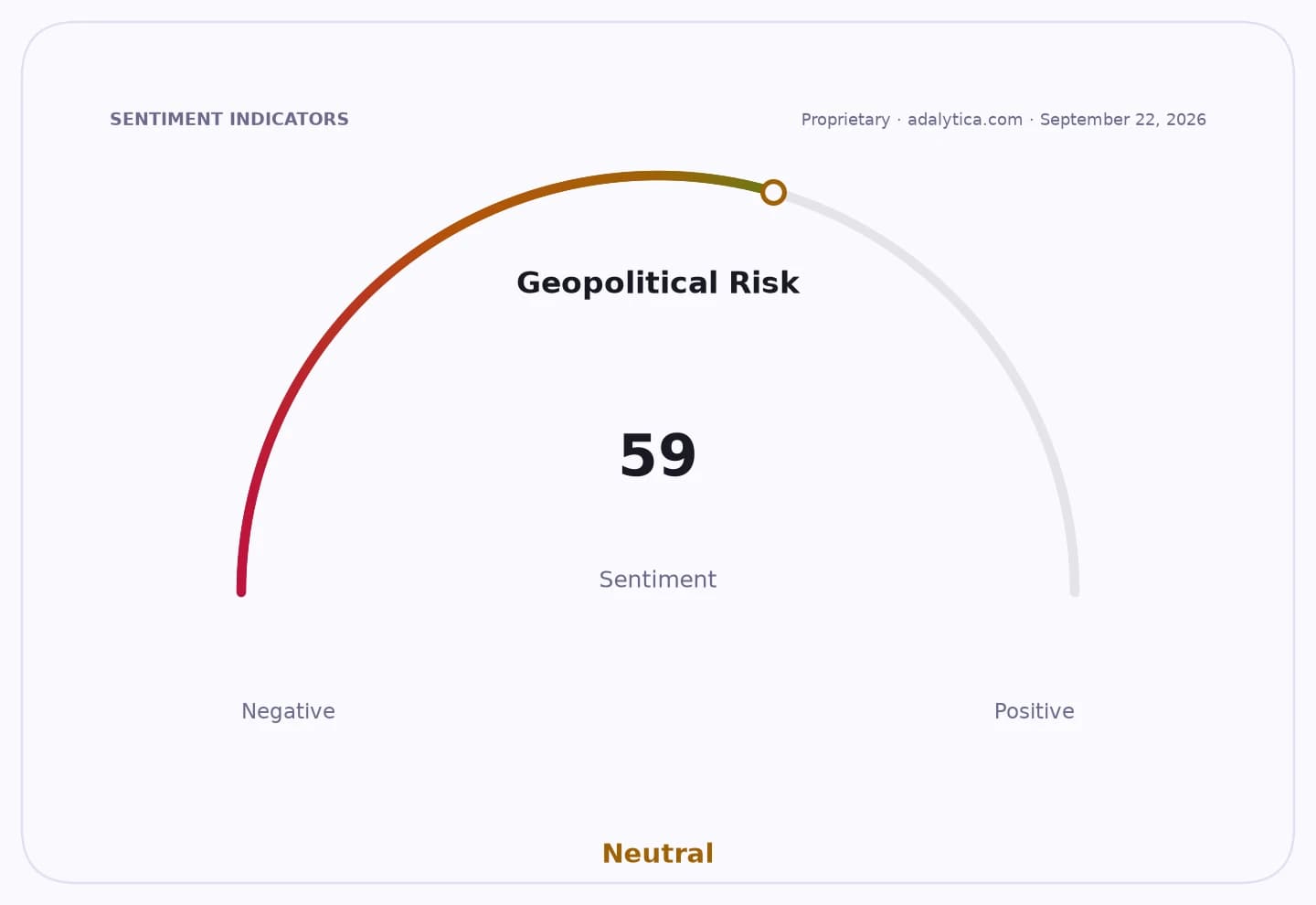
Russia’s shift to daytime as well as overnight bombardments of Kyiv is intensifying the war’s economic and geopolitical costs, signaling that the capital’s civilian and logistical infrastructure remains a live target even as markets have grown accustomed to periodic strikes.
Kyiv daytime strikes raise Ukraine war risk
At least 11 people were killed in the latest air assault, including eight in Kyiv, among them children, as drones and missiles struck residential areas, warehouses and other urban infrastructure. The attacks extended into the morning, a timing change that matters because it broadens the window of exposure for civilians, emergency services and supply chains, while raising the psychological and operational pressure on Ukraine’s government and economy.
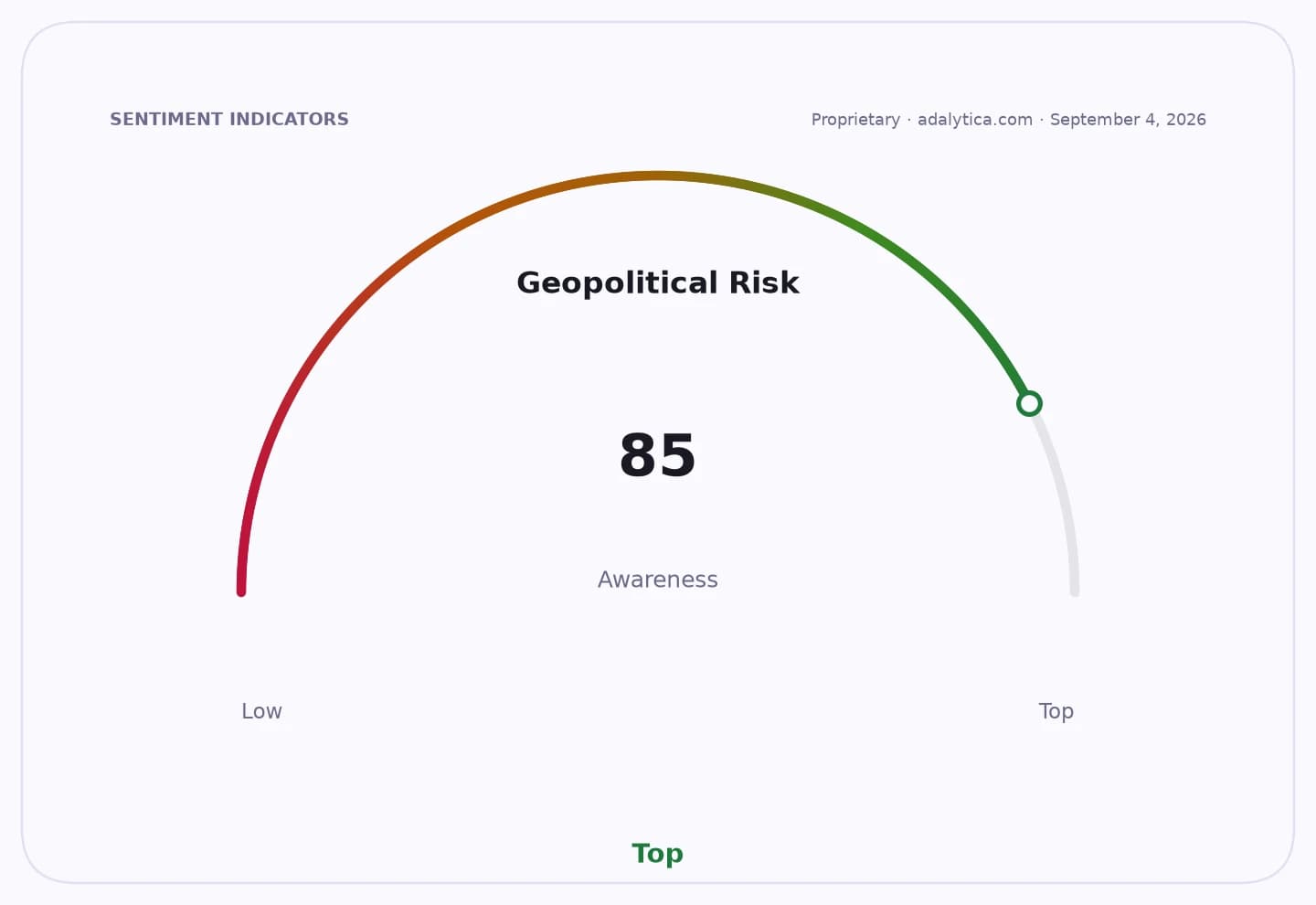
Sentiment IndicatorsⓘProprietary · adalytica.com · September 4, 2026
This is a snapshot — live sentiment, awareness and momentum for 130+ markets update continuously in the dashboard.Open AlphaPulse
The destruction of warehouses holding 12 million textbooks is a sharp reminder that the war is not only about front lines but also about the capacity of cities to function. Damage to storage sites, homes and public infrastructure adds to reconstruction needs, interrupts distribution networks and diverts scarce resources toward defense and recovery. For Ukraine, that means higher fiscal strain and a more difficult start to the school year; for investors, it reinforces the view that the conflict remains unresolved and capable of producing sudden market shocks.
The broader market relevance is less about immediate asset moves than about risk pricing. Escalating strikes on the capital keep geopolitical volatility elevated, which can support safe-haven demand and keep traders cautious on European assets exposed to energy, trade and security spillovers. The Adalytica Global Stability Sentiment gauge remains neutral at 44, but its steep weekly decline suggests the market backdrop has deteriorated quickly as awareness of instability remains high.
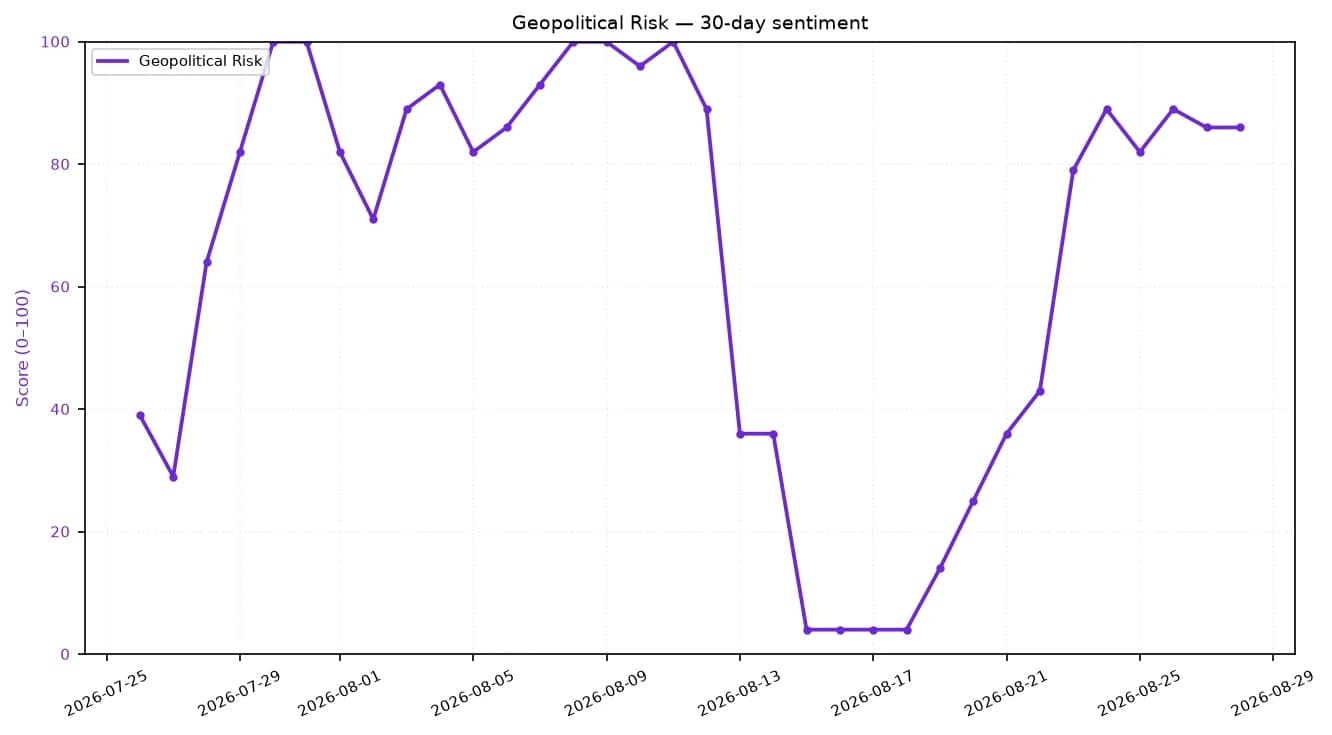
Geopolitical Risk — 30-day sentimentadalytica.com
Explore this data interactively — full history, time series and cross-market comparisons.Open AlphaPulse
That backdrop matters for currencies and risk-sensitive assets even if the direct price impact is uneven. The dollar has been firmer than it was earlier in the period, and China-focused equities as measured by FXI have been volatile but not yet in distress; investors are still differentiating between isolated shocks and a broader macro repricing. The Russia-Ukraine war remains the type of tail risk that can tighten financial conditions quickly if it widens, hits energy infrastructure or prompts a stronger policy response from Western governments.
For now, the strategic message is that Moscow is not limiting pressure to military objectives at night. Daytime attacks on Kyiv suggest a willingness to maximize disruption and erode the sense of normalcy in the capital, which increases the odds of further civilian casualties, harsher retaliatory rhetoric and continued demands for military and humanitarian support from Ukraine’s allies.
| Entity | Gains | Losses |
|---|---|---|
| Russia | ▲Tactical pressure | ▼Diplomatic standing |
| Ukraine | ▲Western support focus | ▼Civilian safety, infrastructure |
| European safe havens | ▲Risk demand | ▼None from war escalation |
| Investors in risk assets | ▲Limited visibility | ▼Higher geopolitical volatility |