Lenovo is widening its push into AI PCs with a new compact desktop workstation and two ThinkBook laptops aimed at developers and mobile professionals, betting that demand for on-device AI will keep powering premium PC upgrades into 2026.
Lenovo Unveils AI PCs With AMD and Qualcomm Chips

The headline product is the ThinkCentre X Ultra, a 1.6-liter AI workstation that can be configured with AMD’s Ryzen AI Max+ PRO 495 chip, a 16-core, 32-thread processor with up to 5.2 GHz boost, a 55 TOPS neural accelerator and integrated Radeon 8065S graphics. Lenovo says the system can take up to 128 GB of LPDDR5X memory and as much as 8 TB of total NVMe storage, and it will ship in November 2026 starting at 3,100 euros.
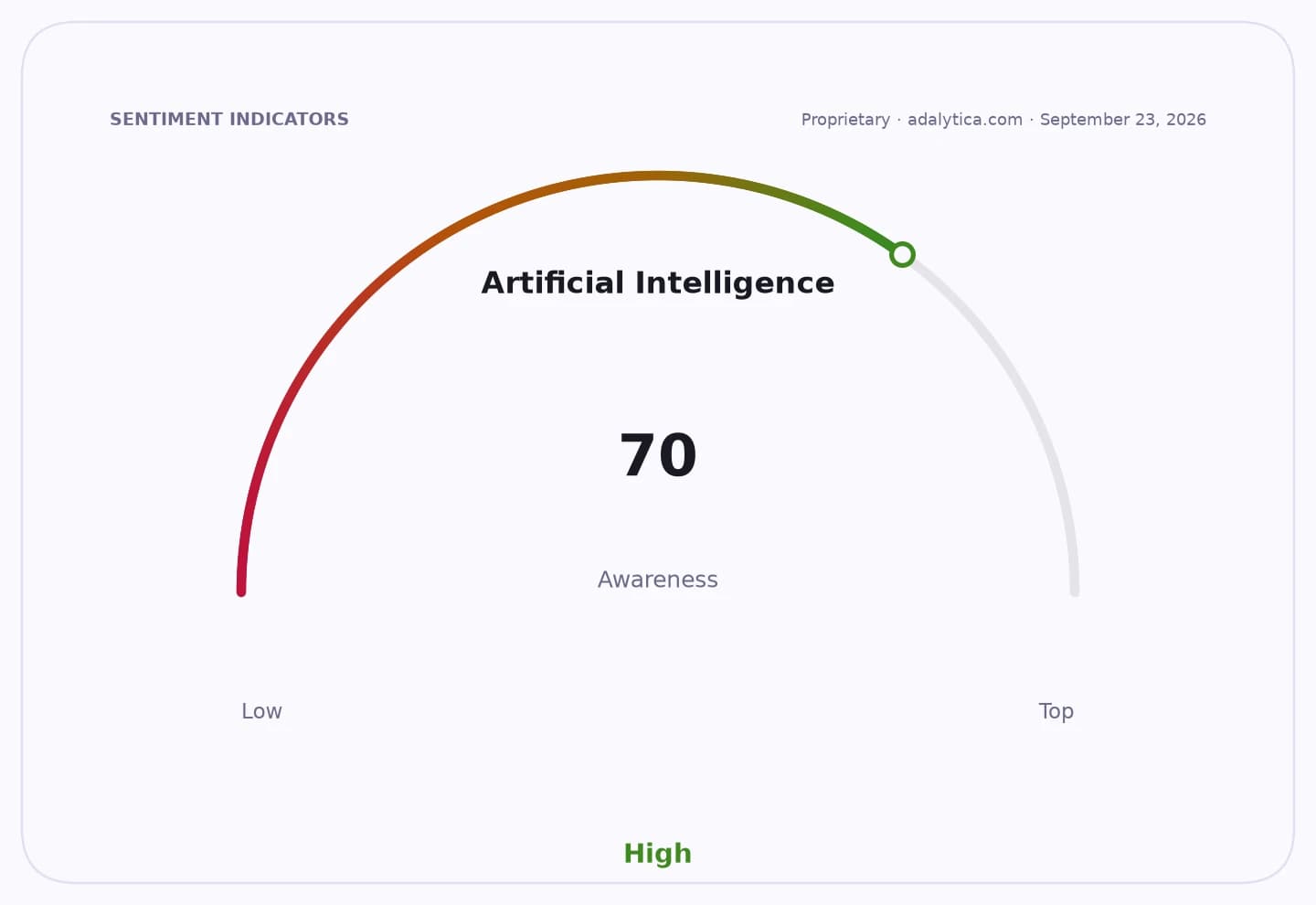
Sentiment IndicatorsⓘProprietary · adalytica.com · September 5, 2026
This is a snapshot — live sentiment, awareness and momentum for 130+ markets update continuously in the dashboard.Open AlphaPulse
That positions Lenovo squarely in the emerging market for compact AI boxes that can handle development, creative work and local model inference without requiring large external GPU rigs. As enterprises move from AI pilots to governed production systems, demand is shifting toward machines that can run workloads closer to the user, a trend that benefits PC makers with premium configurations and higher average selling prices.
Lenovo also introduced the ThinkBook 14 Gen 9, a 1.3-kilogram notebook built around Qualcomm’s Snapdragon X2 Plus and sold with Windows 11 Pro. The laptop carries up to 32 GB of LPDDR5X memory, a 1 TB SSD, a second M.2 slot, a 14-inch 1920x1200 display, Wi-Fi 7, and a battery Lenovo says can last up to 26 hours, with pricing from 1,100 euros when it arrives in October 2026.
The ThinkBook 14x Gen 2 keeps to the traditional x86 lane, using an Intel Core 7 Series 3 processor and up to 32 GB of LPDDR5X memory and 2 TB of storage in a chassis that starts at 990 grams. Lenovo will offer OLED and LCD display options, both with 120 Hz refresh rates, and says the model will start at 1,080 euros in September 2026.
For investors, the product mix matters because it reinforces Lenovo’s strategy of leaning into AI-branded systems across desktop and notebook categories just as the broader PC market tries to revive growth through replacement cycles and higher-priced devices. Shares of Lenovo have already been trading above both their 50-day and 200-day moving averages, reflecting a strong recent run, while Qualcomm and AMD stand to benefit from more AI PC designs using their chips.
The launch also lands against a broader market backdrop where AI hardware demand remains strong even as investors watch for signs of saturation and margin pressure in the sector. Lenovo’s next catalyst will be whether these AI PCs translate into meaningful shipments when they start rolling out in late 2026, and whether the company can keep pricing power intact as rivals push deeper into the same segment.
| Entity | Gains | Losses |
|---|---|---|
| Lenovo | ▲Higher-end PC mix | ▼Commodity laptop pricing |
| Qualcomm, AMD, Intel | ▲Design wins in AI PCs | ▼Share in older PC sockets |
| Enterprise buyers | ▲Local AI-capable systems | ▼Lower-cost basic notebooks |
| Competitors | ▲— | ▼Pressure to match AI features |