Russian LNG buyers are still being forced to lock in more supply for 2026, and that matters because the market is signaling that geopolitical risk, not just spot prices, is now dictating contract strategy.
LNG Buyers Secure 2026 Supply Amid Russia Risk
The clearest evidence is Shell’s five-year LNG agreement with Metlen Energy & Metals, under which the Greek group will supply six cargoes a year. On the surface it is just another medium-term supply deal. In reality, it shows how buyers are moving to secure volumes well ahead of delivery as the global LNG trade braces for tighter balances, sanctions risk and shipping uncertainty tied to Russian supply chains.
Sentiment Indicators
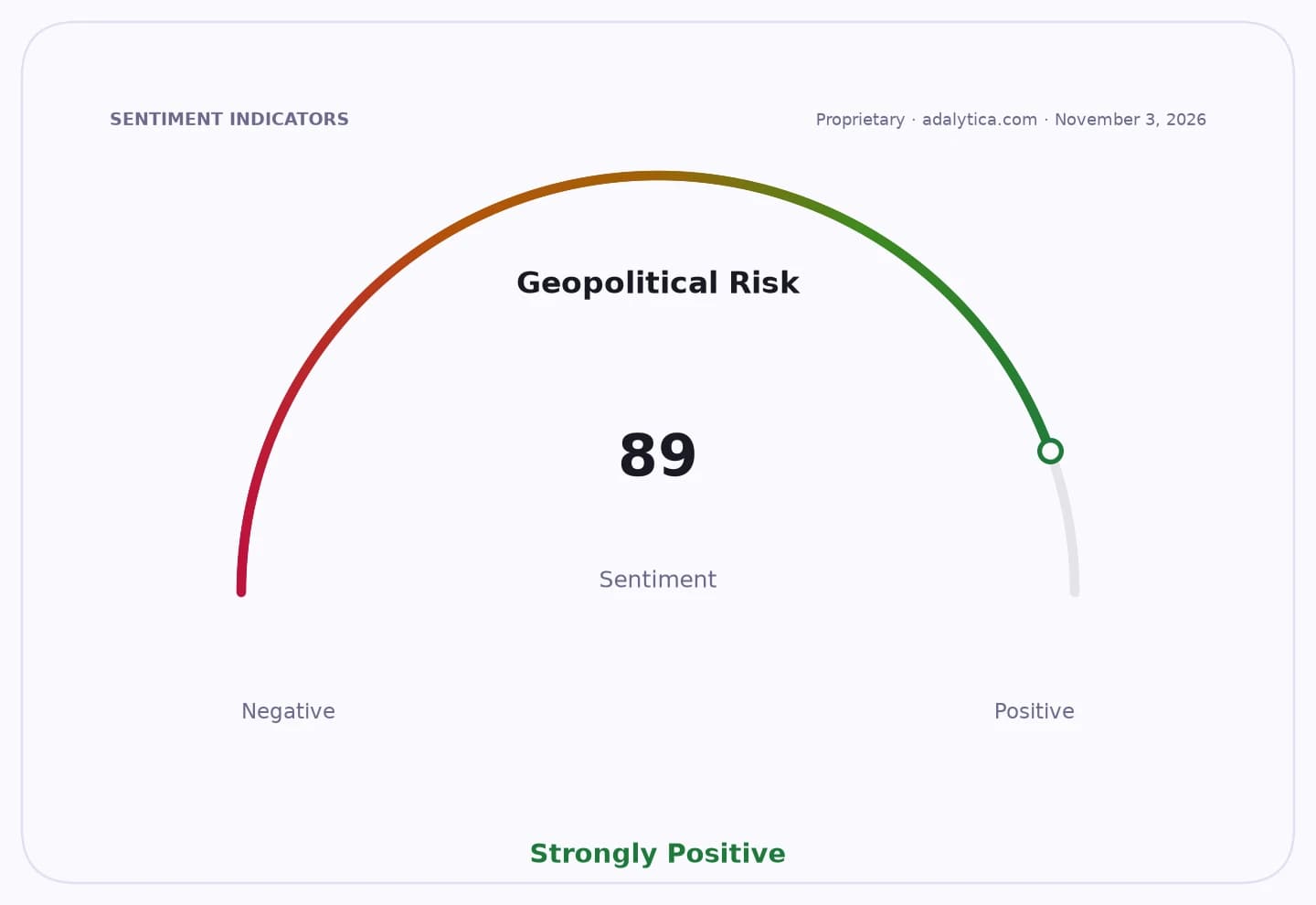
Geopolitical Risk
For investors, that is the key takeaway: LNG is no longer a purely cyclical commodity play. It is becoming a contracted infrastructure trade, where the winners are the producers and traders with flexible molecule access, shipping optionality and the balance sheets to sign multi-year deals. That is why the shares of LNG-related names have been able to outrun the broader energy complex. LNG closed at 292.02 on Nov. 4, up sharply from 226.54 in mid-June, even after a recent pullback from the late-October high of 330.32. The stock remains well above both its 50-day and 200-day moving averages, showing the market still prices in durable earnings power.
The move is even more telling in the LNG services and midstream cohort. Golar LNG, a pure-play floating LNG beneficiary, has rallied from the high 30s earlier this year to 44.88, while NGL Energy Partners has more than doubled from around 8.82 in January to 15.52. That kind of price action says investors are not just betting on one or two cargoes; they are positioning for a multi-year reordering of gas flows as Europe and Asia compete for secure supply.
Geopolitical Risk — 30-day sentimentadalytica.com
Explore this data interactively — full history, time series and cross-market comparisons.
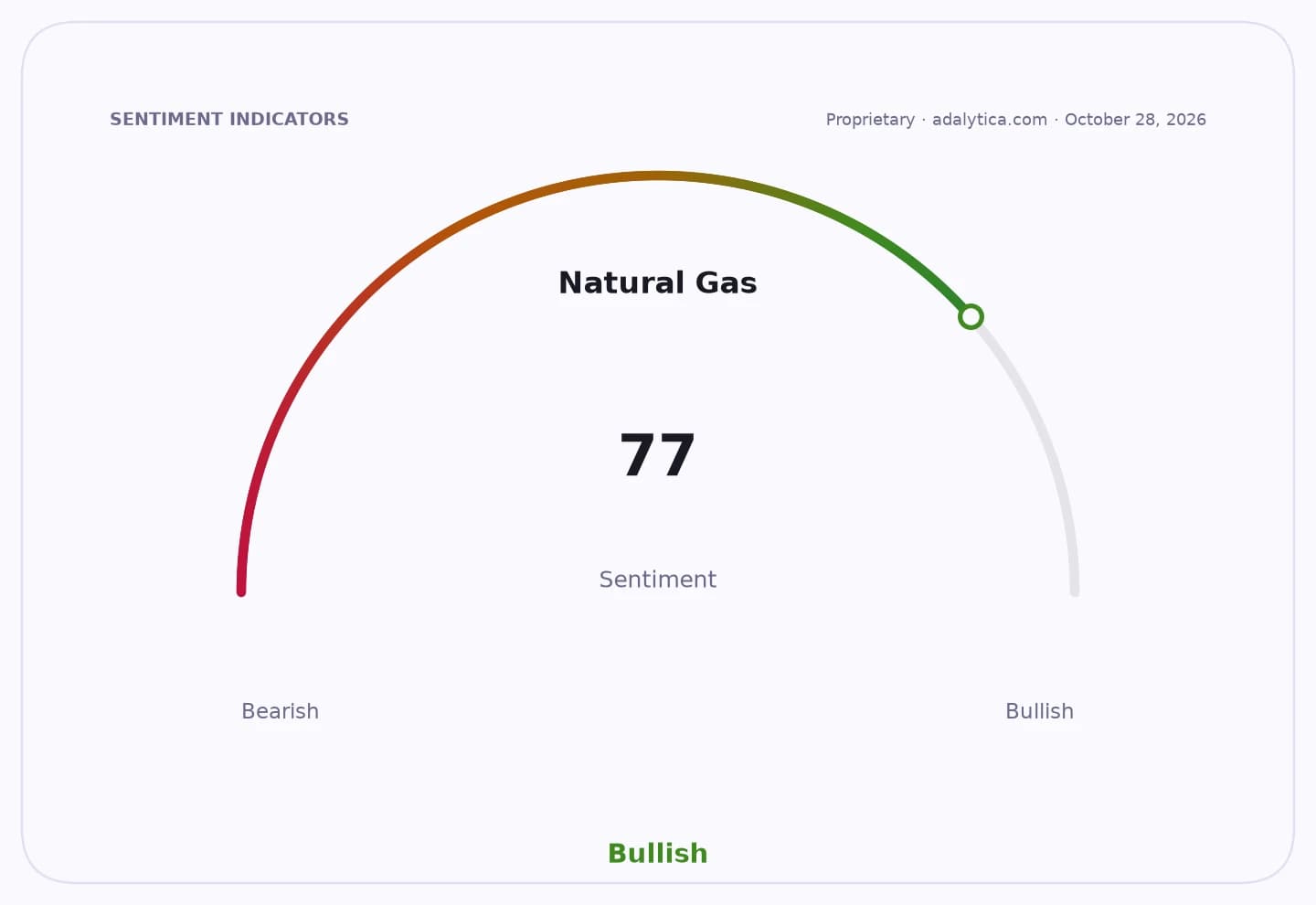
Natural Gas
Adalytica’s Global Stability Sentiment gauge sitting at extreme greed underscores the same macro backdrop: markets are rewarding assets tied to energy security while discounting the chance of a rapid normalization in geopolitical risk. That has direct implications for Russian LNG purchases in 2026. Buyers are not waiting for clarity. They are paying up now for optionality, which supports contract volumes, keeps freight markets tight and improves the bargaining power of suppliers outside Russia.
The opportunity is in the second-order beneficiaries. Long-term LNG contracts favor exporters with project visibility, traders with offtake flexibility and infrastructure owners that collect toll-like fees regardless of commodity direction. The market underestimates how sticky these contracts become once the world has been forced to rebuild supply chains around Russia risk.
If you want exposure to the next leg of the LNG trade, focus on the names that control liquefaction, shipping and contracted capacity rather than pure spot-price beta. That is where the asymmetric upside sits as 2026 buying seasons unfold and energy security remains the dominant theme.
| Entity | Gains | Losses |
|---|---|---|
| Shell | ▲Locked-in supply optionality | ▼Spot-market exposure |
| Metlen Energy & Metals | ▲Stable multi-year sales | ▼Short-term pricing upside |
| LNG producers/exporters | ▲Higher contract demand | ▼Buyers waiting for cheaper spot deals |
| Russian LNG suppliers | ▲None | ▼Market share and pricing power |