More than 50 participants in Loreto have drawn up proposals to improve the competitiveness of paiche, aguaje, cacao and camu camu, in a sign that the Peruvian Amazon region is trying to move from primary production toward higher-value, innovation-led agribusiness.
Loreto hackathon targets Amazon crop competitiveness
The immediate economic significance is less about the event itself than what it represents: an attempt to address the chronic bottlenecks that keep regional producers stuck in low-margin chains. By bringing together students, professionals, specialists and local officials in a hackathon format, the Loreto government and Quintil Valley are betting that digital tools, process redesign and collaboration can lift productivity, improve market access and add value to products with export and domestic demand potential.
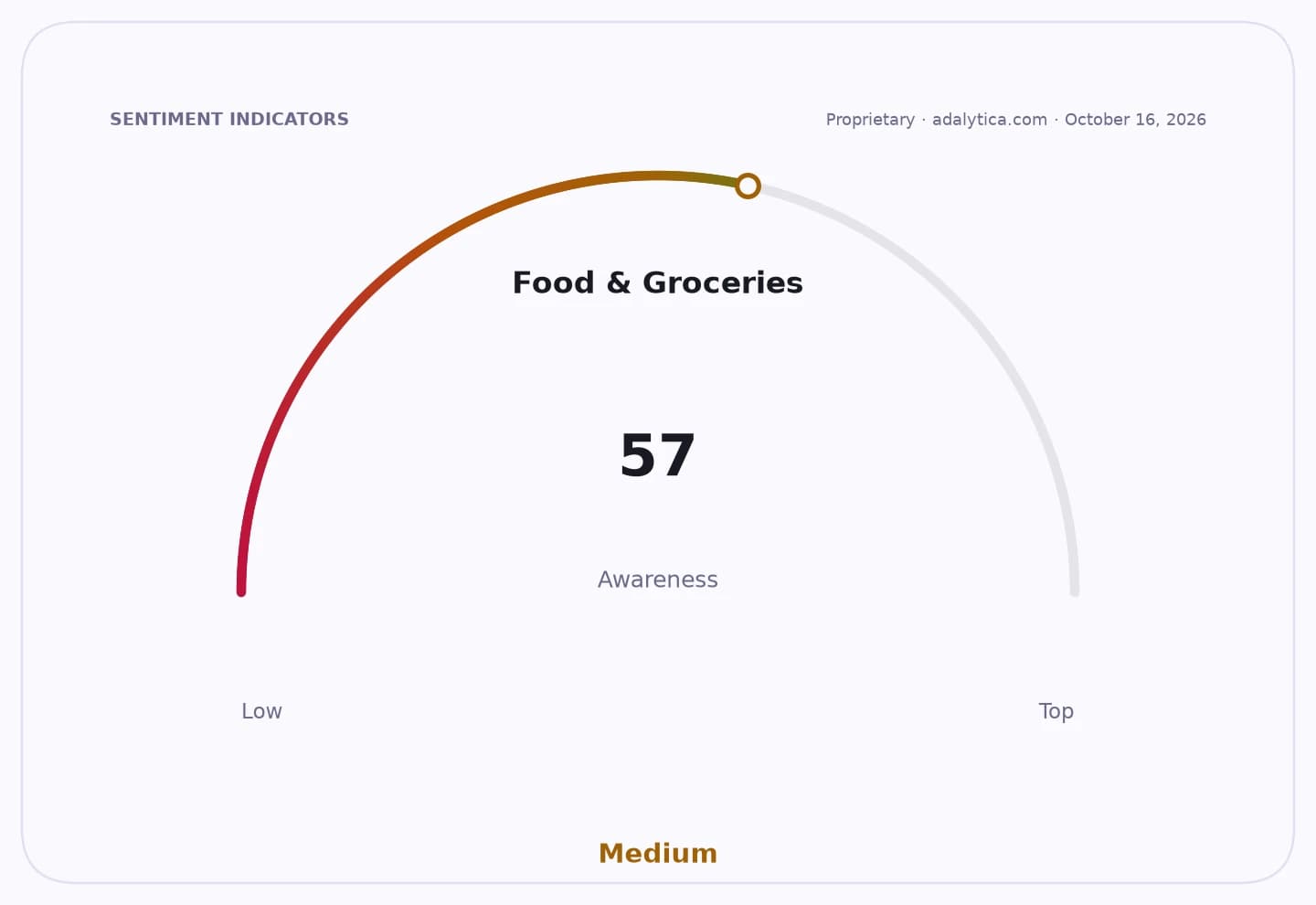
Sentiment IndicatorsⓘProprietary · adalytica.com · October 15, 2026
This is a snapshot — live sentiment, awareness and momentum for 130+ markets update continuously in the dashboard.Open AlphaPulse
That matters because Loreto’s product base is limited by geography, logistics and fragmented supply chains. Paiche, aguaje, cacao and camu camu can support rural incomes, but only if producers can improve storage, traceability, processing and commercialization. The challenge is not simply to grow output; it is to turn raw materials into marketable products that can compete on quality, consistency and branding. In that sense, innovation is being used as an industrial policy tool for the Amazon.
The project also fits a wider policy shift in Latin America toward regional development models that rely on technology adoption rather than large-scale heavy industry. The regional government’s involvement suggests the effort is not just a private-sector experiment but part of a broader strategy to coordinate agrarian authorities, entrepreneurs and technical talent. If the proposals advance into pilots, they could help create local service ecosystems around processing, logistics and digital commercialization, which is where much of the economic multiplier would come from.
For investors and development partners, the key issue is whether this can scale beyond a one-off workshop. Hackathons often generate promising ideas, but the value only appears when there is follow-through: financing, infrastructure, technical assistance and buyer relationships. The upside case is a more resilient Amazonian production base with better margins and stronger bargaining power for farmers. The downside is that, without capital and execution, the initiative remains a useful signal of intent rather than a driver of measurable output growth.
The next test for Loreto will be whether the proposals from this first round can be converted into operational programs that improve yields, processing and sales. If they do, the region could build a more competitive agricultural model around its native products. If they do not, the exercise will still have underscored an important economic reality: in resource-rich regions, competitiveness now depends as much on innovation capacity as on production itself.
| Entity | Gains | Losses |
|---|---|---|
| Loreto producers | ▲Better value capture | ▼Low-margin raw sales |
| Regional government | ▲Development credibility | ▼Policy inertia |
| Quintil Valley / partners | ▲Ecosystem influence | ▼Execution risk |
| Buyers of Amazon products | ▲More reliable supply | ▼Price pressure from stronger sellers |