Investors are starting to rotate out of risk and back into protection as Treasury yields climb, oil tops $100 and policy uncertainty rises, making low-beta ETFs an increasingly obvious place for capital that still wants equity exposure.
Low-Volatility ETFs Gain as Yields and Oil Rise
That is the message from Bank of America’s latest warning, and it matters because the market’s complacency is colliding with a very real macro squeeze. The 30-year Treasury yield has pushed to its highest level since 2007, Brent crude has moved above $100 a barrel and the VIX has climbed above 17. At the same time, U.S. equity funds have seen $14.2 billion in outflows over the past three weeks, according to EPFR data cited by BofA, while global equity inflows have slowed to an average of $7 billion a week from $52 billion in July.
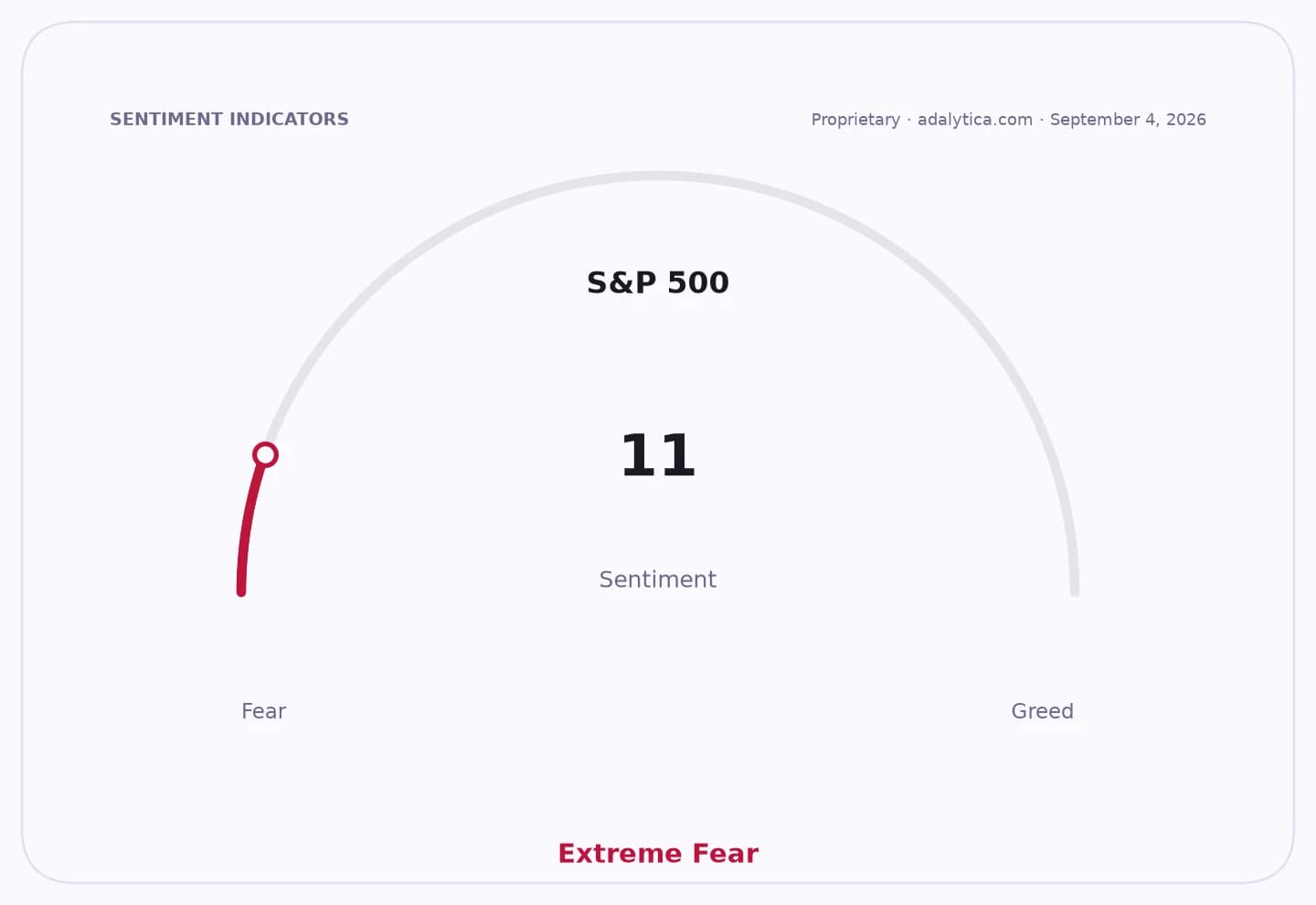
Sentiment IndicatorsⓘProprietary · adalytica.com · September 14, 2026
This is a snapshot — live sentiment, awareness and momentum for 130+ markets update continuously in the dashboard.Open AlphaPulse
This is not just a short-term trading wobble. It is the kind of setup that changes portfolio construction. When long-duration rates rise and energy costs stay sticky, earnings multiples come under pressure, financing conditions tighten and investors begin rewarding balance-sheet quality, pricing power and lower volatility over pure growth. The result is a market where defense stops being a niche trade and becomes a capital destination.
The clearest beneficiaries are low-volatility equity funds such as the Invesco S&P 500 Low Volatility ETF, the iShares MSCI USA Min Vol Factor ETF and smaller-cap variants like XMLV and XSLV. These products are built to hold stocks that have historically moved less than the broader market, offering a cushion without forcing investors all the way into bonds or cash. That matters now because bond funds are no longer the only defensive outlet: with rate risk still elevated, many investors want equity exposure but less drawdown risk.
The numbers show why this trade has room to run. SPLV has a beta of about 0.54 and has returned roughly 4.7% this year through Sept. 10. USMV carries a beta of 0.64 and is up about 5% year to date, while XSLV has gained around 12%, showing that low-volatility strategies can still participate in rallies without taking full market risk. Even as the S&P 500 trades near its highs, the 50-day moving average and 200-day moving average remain important reference points for trend followers, and the current backdrop leaves little margin for disappointment.
That tension is exactly why the defensive bid could extend. Adalytica’s proprietary S&P 500 trade signals show sentiment at 11, labeled “Extreme Fear,” even as awareness has remained in “Fear” territory. That kind of reading does not call a top by itself, but it does underscore how quickly positioning can shift when volatility spikes. For investors, the practical implication is simple: the market is no longer paying up for comfort, and that makes low-beta ETFs a high-conviction way to stay invested while reducing exposure to the next rate or oil shock.
The bigger opportunity is not to abandon equities, but to own the parts of the market that can survive a tougher macro regime. If yields stay elevated, oil remains sticky and policy uncertainty keeps funds on edge, low-volatility ETFs could move from defensive afterthought to core allocation. For investors who want to prepare before that shift becomes consensus, the trade is to lean into low-beta now, not after volatility has already done the damage.
| Entity | Gains | Losses |
|---|---|---|
| Low-beta ETF providers | ▲Higher inflows | ▼ |
| Risk-averse equity investors | ▲Less drawdown risk | ▼ |
| High-beta growth stocks | ▲ | ▼Multiple pressure |
| Treasury bond bulls | ▲ | ▼Rate volatility risk |