Value shares have regained an edge over the broader U.S. market as investors move toward cheaper, more defensive exposures and away from expensive growth names amid a sharp deterioration in risk appetite.
Value ETFs Outperform as Risk Appetite Falls
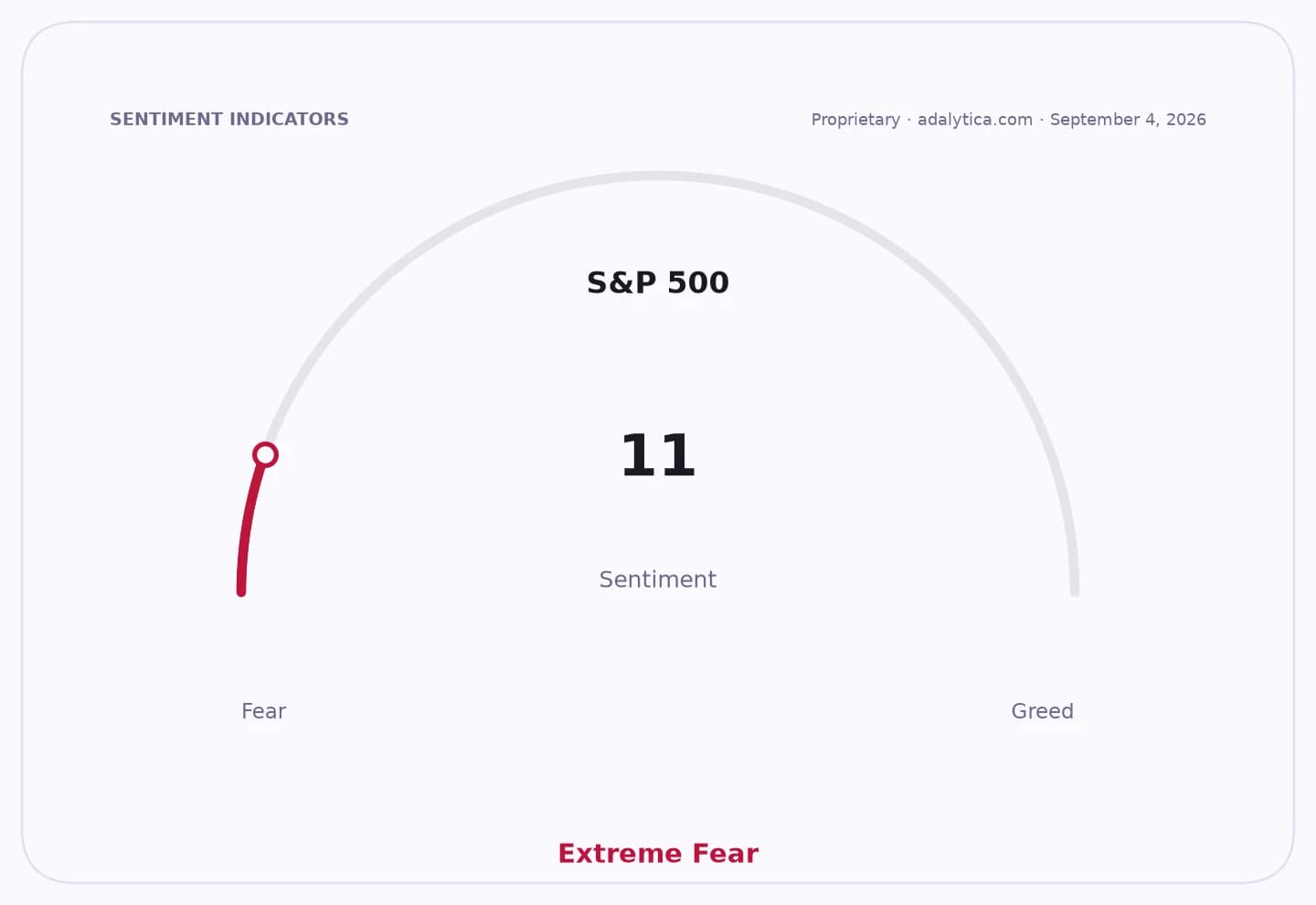
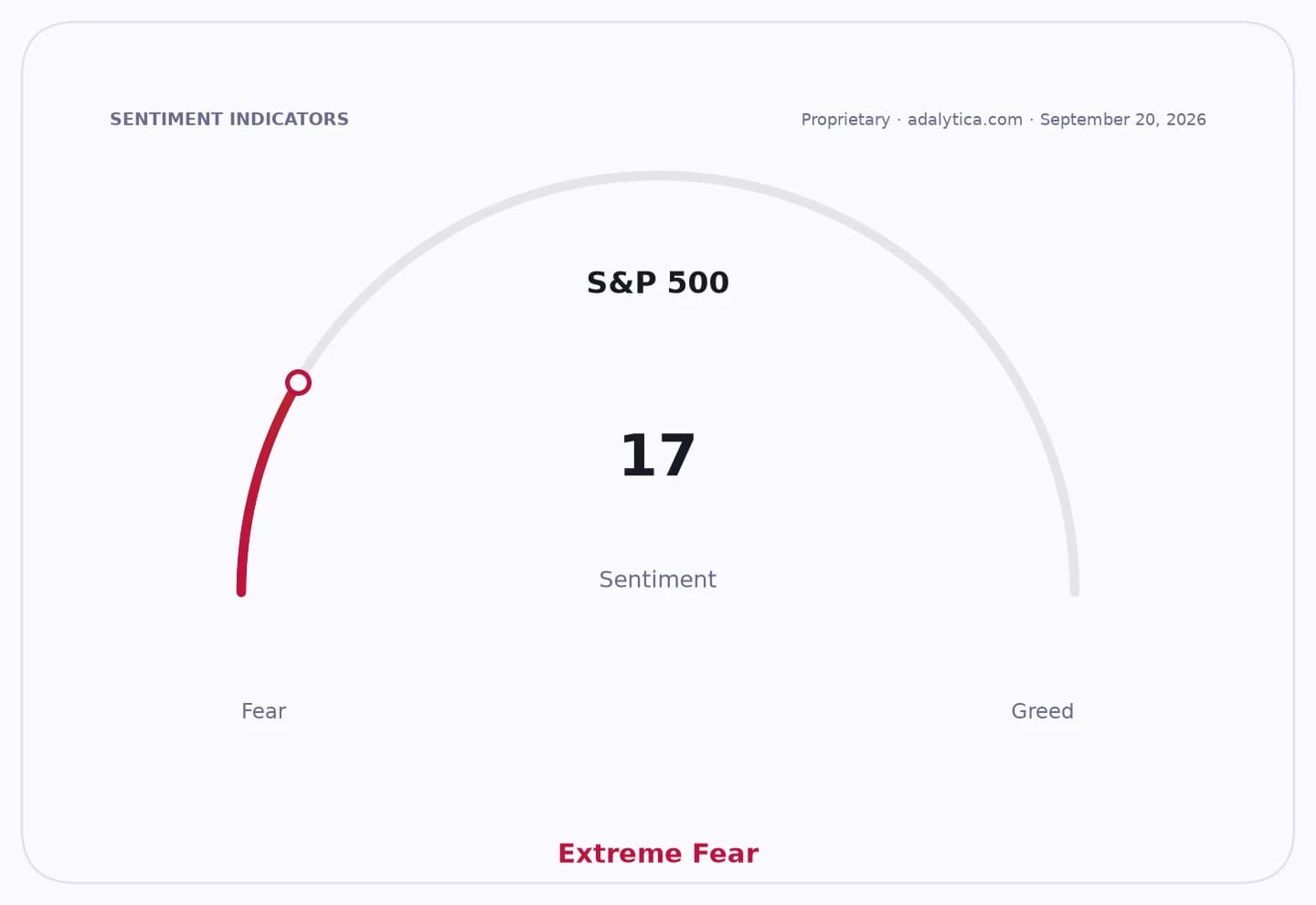
The iShares Russell 1000 Value ETF, tracking large-cap value stocks, closed at 257.08 on Sept. 2, near its recent highs and above its 50-day moving average of 251.70. By contrast, the SPDR S&P 500 Trust is carrying an “Extreme Fear” reading of 11 on Adalytica’s S&P 500 trade signals, with sentiment down 85 points over the past month. That gap matters because it captures a classic late-cycle rotation: when confidence fades, investors often reach for valuation support, cash generation and balance-sheet strength rather than paying for longer-duration earnings growth.
The case for value is less ideological than it is mechanical. Value strategies tend to hold sectors such as financials, energy, industrials and parts of health care — businesses that usually trade on current earnings rather than distant growth assumptions. Those companies can look relatively more attractive when markets are demanding a bigger margin of safety. The recent price action reflects that: VTV has climbed to 225.41 from 223.96 on Sept. 1 and remains well above its 200-day moving average of 204.85, while VBR has risen to 245.51 from 243.64 and sits just under its 50-day average of 245.63.
Technical indicators reinforce the broader picture. IWD’s 50-day average is 251.70, and its relative strength index is 44.4, suggesting the fund has cooled without breaking its longer uptrend. VTV’s RSI is 41.8, while VBR’s is 37.0, levels that indicate weakness but not a full capitulation. In other words, value has not become euphoric; it is being bid on relative appeal. That distinction matters for portfolio construction, because a crowded trade can reverse quickly, but a valuation-led rotation can persist if growth expectations keep slipping.
The bear case for value is that the trade is partly a defense mechanism rather than a conviction call. If rates fall, earnings breadth improves or the market regains faith in growth, leadership can swing back toward technology and other long-duration names. Value also tends to lag when investors are willing to pay up for future growth and when macro conditions support higher multiples across the market.
For now, though, the market is asking the same question that sits behind the value debate: is this an allocation to the best path to returns, or a contrarian bet against expensive risk assets? The answer is increasingly both. In a fearful market, value is functioning less as a philosophy and more as a refuge with still-visible earnings support.
| Entity | Gains | Losses |
|---|---|---|
| Value ETFs | ▲Relative inflows | ▼Growth-stock leadership |
| Large-cap value investors | ▲Valuation cushion | ▼Momentum chasing |
| Financials, industrials, energy | ▲Defensive demand | ▼High-multiple tech |
| S&P 500 bulls | ▲Potential rebound if fear eases | ▼Short-term sentiment backdrop |