Luxembourg’s economy will need about 335,000 recruits over the next 14 years, a shortfall that underscores how quickly the Grand Duchy’s growth model is becoming dependent on foreign labor and faster hiring rules.
Luxembourg needs 335,000 hires by 2040
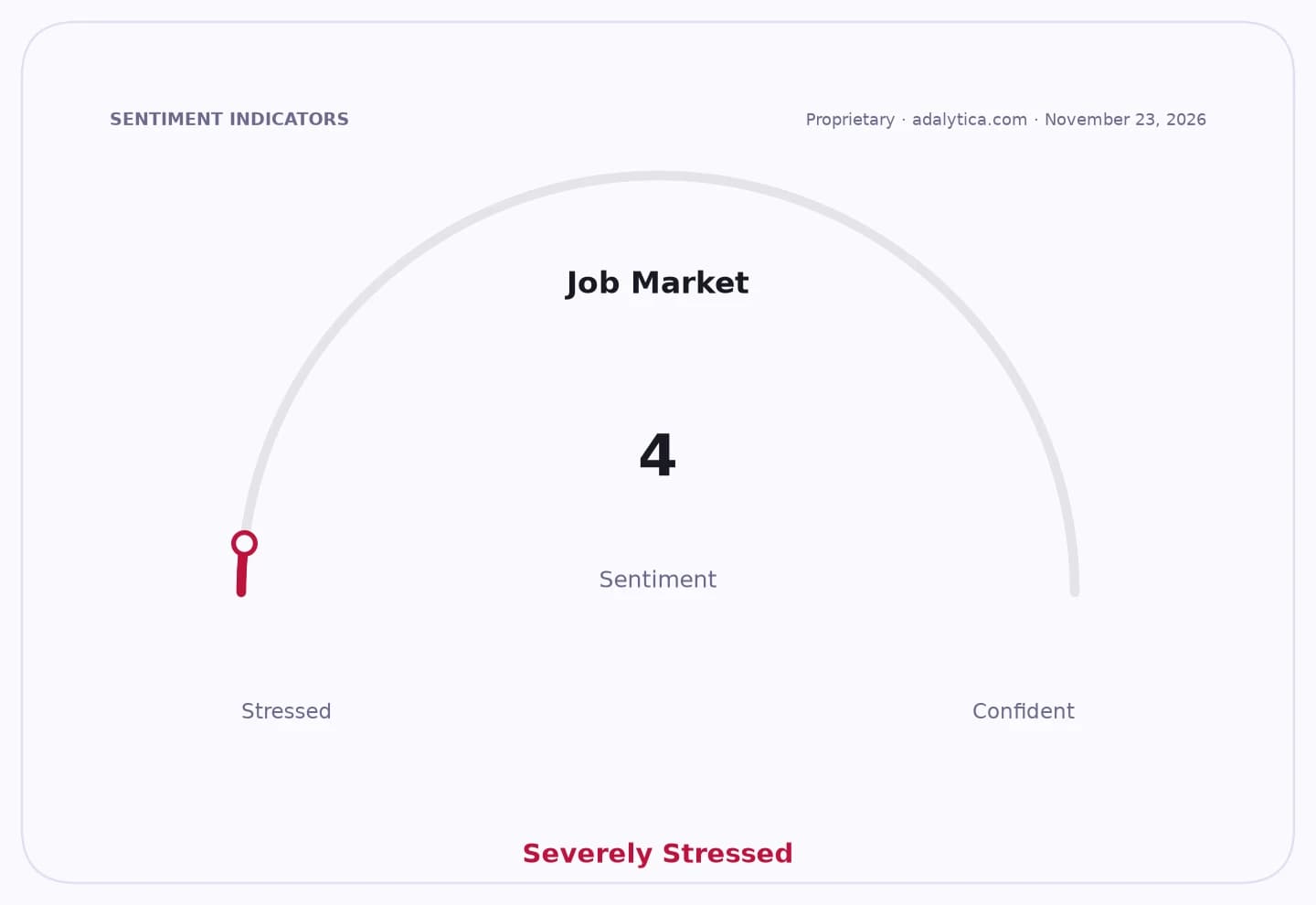
Job Market
The scale of the need matters because it goes beyond a cyclical labor shortage. About 180,000 of those hires will replace retirees, while another 155,000 will fill new roles created by 2040, according to estimates used by Luxembourg’s Chamber of Commerce and the General Social Security Inspectorate. That leaves the country facing a structural labor supply problem at a time when aging is reducing the domestic workforce and skilled labor is already scarce across finance, healthcare, construction, industry and IT.
Sentiment Indicators
For investors, the message is straightforward: Luxembourg’s competitiveness now hinges on whether it can keep importing talent fast enough to sustain output, margins and tax revenues. The country already relies heavily on international workers, with about 74% of employees holding foreign nationality. That dependence may support growth in the near term, but it also raises exposure to bottlenecks in housing, transport, family integration and immigration processing — all of which can determine whether foreign workers stay.
The Chamber of Commerce has turned the labor crunch into a policy agenda, proposing 34 measures across six strategic areas. Those include a one-stop shop for recruitment and integration, faster administrative procedures, and support for spouses of foreign employees to enter the labor market. It is also urging better use of workers over 45 and 55, as well as artificial intelligence to lift productivity and ease recruitment.
The economic stakes are broad. In finance and legal services, employers are looking for bank risk analysts, auditors, legal consultants and client relationship managers. In health and social care, the need is for nurses, care workers and early-childhood educators. In IT, the shortage spans software developers, database administrators and cybersecurity specialists. Construction and industrial maintenance are also under pressure, which suggests the labor gap is not confined to high-value white-collar roles but runs through the entire production base.
Luxembourg has already moved to make hiring easier for non-EU workers in the 20 occupations with the most acute shortages. Employers can now get the required certificate within five working days once an application is confirmed, compared with seven days for other roles. That may sound incremental, but in a small economy where talent competition is intense, speed can be the difference between filling a vacancy and losing a project.
The bull case is that Luxembourg’s high living standards, political stability and concentration of financial and professional services keep it attractive to global talent. The bear case is that these advantages are being eroded by practical frictions: expensive housing, commuter strain, slow integration and a shrinking local labor pool. If those constraints worsen, businesses may struggle to scale even if demand remains healthy.
For employers and policymakers, the next test is not whether Luxembourg can identify the jobs most in demand. It is whether it can build the housing, transport links and immigration machinery needed to attract and retain the people to fill them.
| Entity | Gains | Losses |
|---|---|---|
| Luxembourg employers | ▲Faster access to talent | ▼Higher recruiting pressure |
| Foreign workers | ▲More openings and faster permits | ▼Tougher integration demands |
| Domestic economy | ▲Sustained growth capacity | ▼Risk of labor bottlenecks |
| Jobseekers in shortage fields | ▲Strong bargaining power | ▼Skills gaps still constrain mobility |