Turkey is leaning on a huge, state-backed wage subsidy and tax break system to keep people employed, and that matters because the health of the labor market is one of the clearest gauges of the country’s growth, inflation and social stability.
Turkey Labor Subsidies Reach 301.3 Billion Lira
Job Market
Labor and Social Security Minister Vedat Işıkhan said the government handed out more than 301.3 billion lira in employment incentives in the January-August period, a scale of support that underscores how central the state has become to preserving registered employment in an economy still wrestling with high prices and uneven demand.
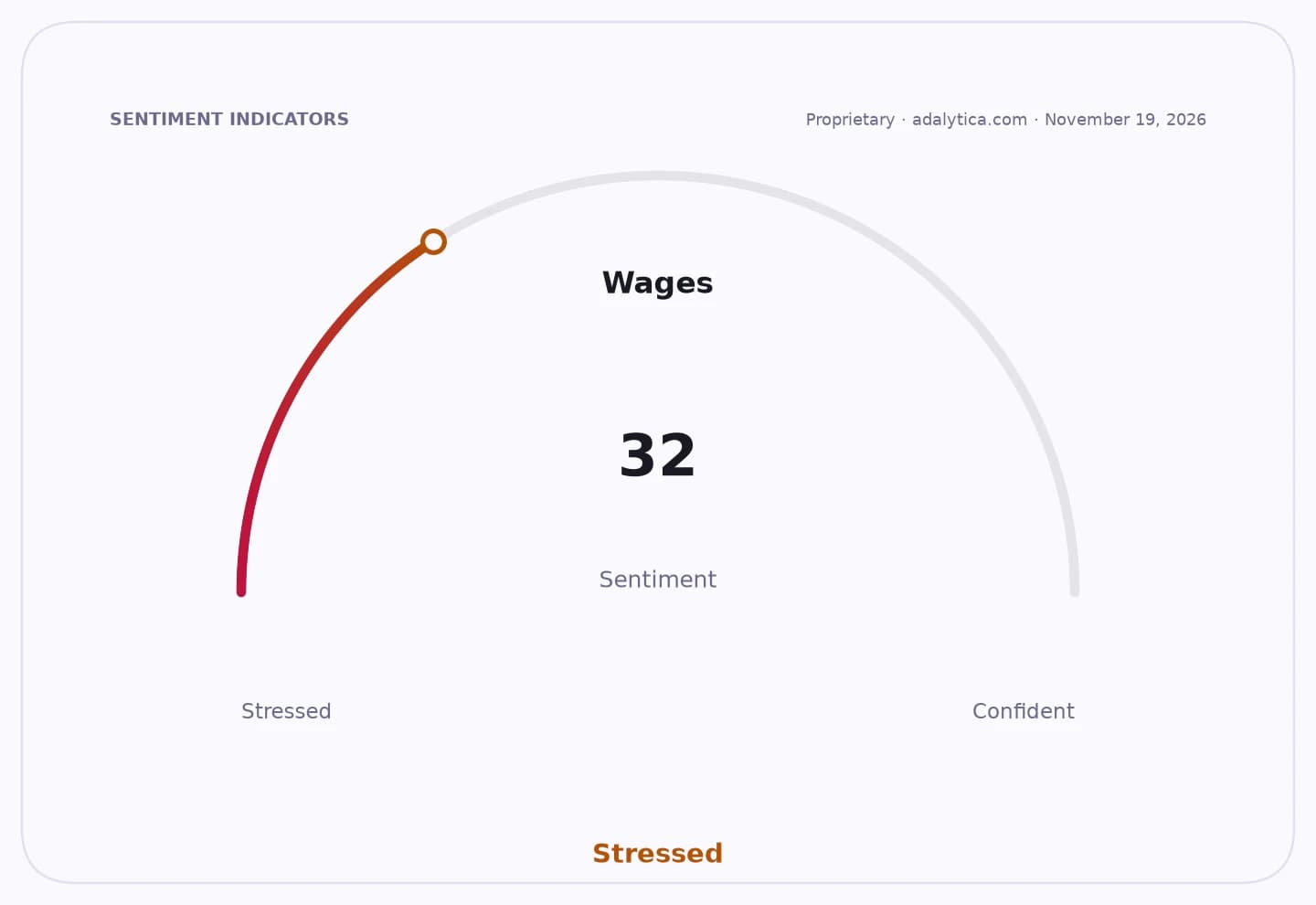
Sentiment Indicators
For investors, the number is important not because it is a one-off fiscal announcement, but because it shows the government is actively absorbing some of the cost of hiring. That can help firms hold on to workers, support consumption and limit a sharper slowdown in payrolls, even as tighter financial conditions and inflation pressures make labor costs harder to manage.
Işıkhan said 15 separate premium incentives, supports and discounts are being used to bolster formal employment, with particular emphasis on women, young people and disabled workers. He said an average of 385,000 insured workers benefited each month from incentives tied to investment support decisions, with 26.2 billion lira in support, while another program for young people, women and workers with vocational certificates supported 390,000 insured workers on average and delivered 23.3 billion lira.
The biggest slice by far came from reductions in the employer share of social security contributions, including a two-point cut generally and a five-point cut for manufacturing. Işıkhan said about 11 million insured workers benefited from that channel each month, with 161.9 billion lira in support.
That is a clear signal that Ankara is still using targeted labor subsidies as an industrial policy tool, not just a welfare measure. Manufacturing gets the heaviest assistance because it is the sector most likely to pass through lower labor costs into competitiveness, exports and investment, while the focus on women and younger workers speaks to Turkey’s long-running challenge of lifting labor-force participation in groups that are often underrepresented.
The market takeaway is straightforward: these incentives can cushion employment and help businesses maintain formal payrolls, which is supportive for domestic demand and bank loan performance over time. But they also carry a fiscal cost, and the more the economy relies on subsidies to sustain jobs, the more sensitive growth becomes to any future tightening in public spending or changes in policy.
For long-term investors, the story is less about a single headline figure than about the structure of Turkey’s labor market. A government willing to spend heavily to protect formal employment can slow the damage from a weak cycle, but it cannot substitute indefinitely for productivity gains, investment and stable inflation.
In other words, the incentives are supportive now, especially for manufacturers and employers with large workforces, but the real question for years ahead is whether Turkey can turn this backstop into durable job creation without leaning on the budget so heavily. That is the part worth watching.
| Entity | Gains | Losses |
|---|---|---|
| Employers | ▲Lower payroll costs | ▼Less room for wage flexibility |
| Workers in formal jobs | ▲More job support | ▼Dependence on subsidies |
| Manufacturing firms | ▲Bigger social security relief | ▼Higher scrutiny on fiscal policy |
| Turkish Treasury | ▲Political support for jobs | ▼Larger budget burden |