Turkey’s minimum-wage arithmetic has changed ahead of December’s annual negotiations, with the central bank’s higher inflation outlook pushing three competing pay scenarios for 2027 onto the table and raising the stakes for workers, employers and policymakers.
Turkey minimum wage scenarios ahead of December talks
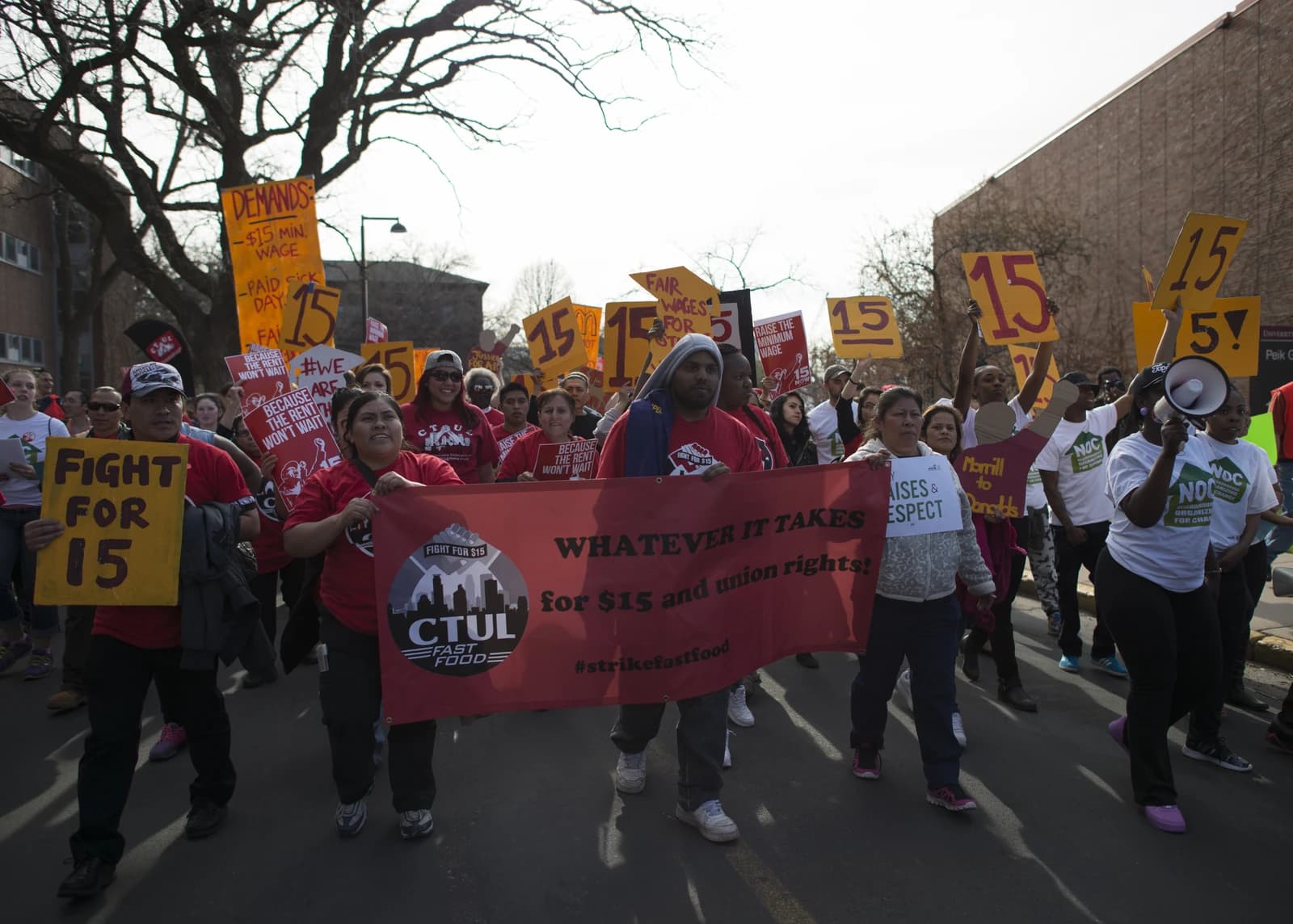
The shift matters because the minimum wage is not just a labor issue in Turkey; it is a key input into household purchasing power, business payroll costs and broader inflation expectations. With millions of workers tied to the floor wage, even a modest change in the formula can ripple through retail demand, company margins and the government’s balancing act between preserving living standards and avoiding another cost-push inflation round.
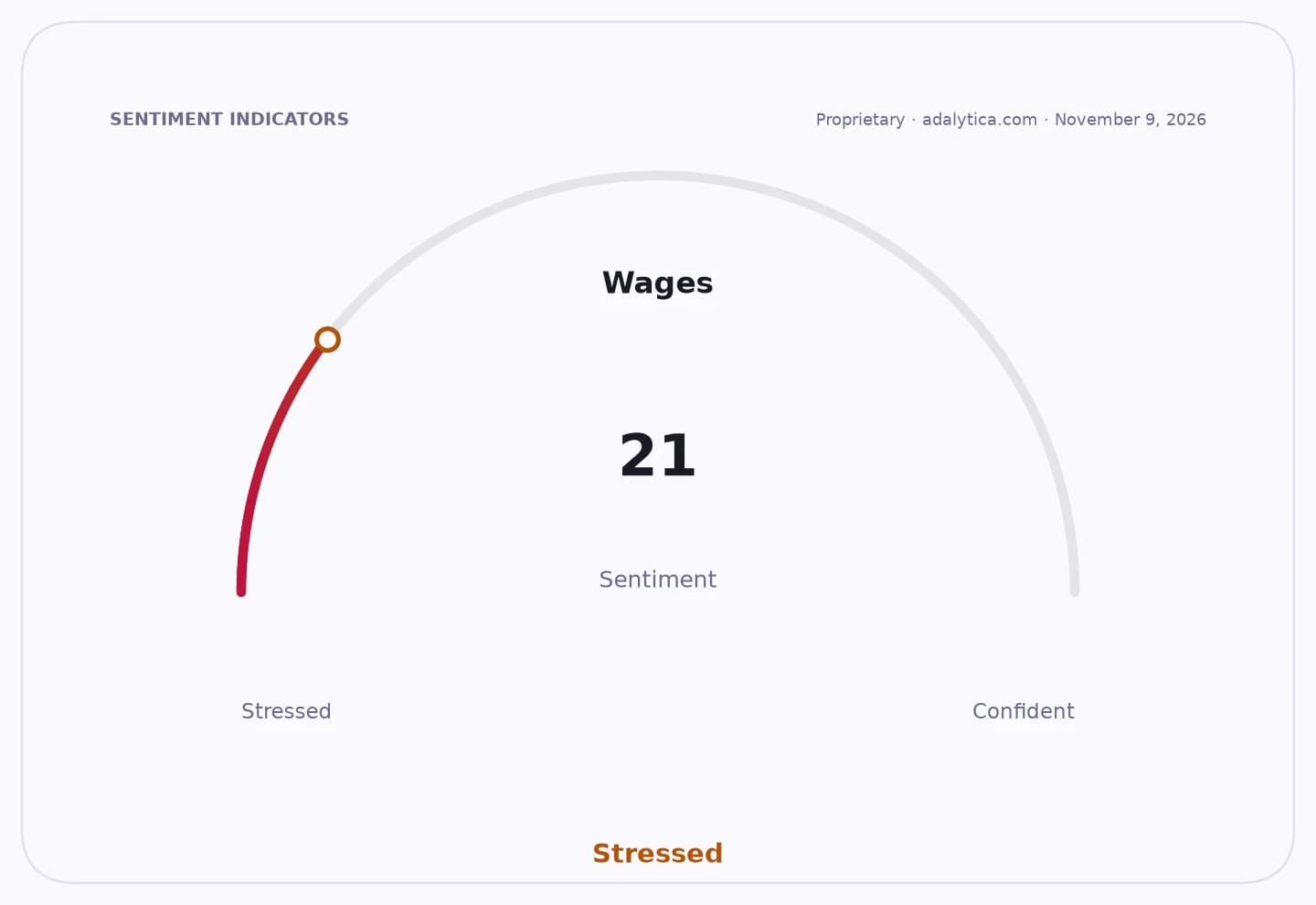
Sentiment Indicators
Wages
Under the first calculation, based on the central bank’s revised inflation estimate, a 29.5% increase would lift the net minimum wage to 36,357 lira, adding 8,282 lira a month to workers’ pay. A second scenario, which folds in a 33.7% rise tied to the tax exemption granted to employers, would take the net wage to 37,536 lira and raise monthly take-home pay by 9,461 lira. A third, more aggressive option circulating in market chatter would imply a 35% increase and push the net wage to 37,901 lira, or 9,826 lira more than the current level.
The gap between the lowest and highest scenarios is 1,544 lira a month, enough to matter for household budgets in an economy where consumer inflation has repeatedly eroded real incomes and where wage-setting has become a major transmission channel for price pressures. The central bank’s latest inflation forecast, which is feeding these calculations, has effectively reset the bargaining range before the commission even meets.
Wages — 30-day sentimentadalytica.com
Explore this data interactively — full history, time series and cross-market comparisons.
For investors, the key issue is not simply the size of the raise but its second-order effects. A larger minimum-wage settlement would support consumer spending and some sectors of domestic demand, but it would also raise labor costs for employers already dealing with tight margins and weak pricing power. That creates potential upside for retailers, food producers and other consumption-linked names, while increasing pressure on labor-intensive industries, small businesses and firms with limited ability to pass through costs.
The policy backdrop is equally important. The minimum wage commission, which brings together labor, employers and government representatives, is set to begin talks in early December, and the final number will reflect more than the inflation forecast alone. The decision will hinge on how far officials are willing to stretch wage growth without aggravating inflation, and whether they prioritize protecting real incomes or containing cost pressures.
The broader narrative is that Turkey’s wage-setting process is once again being pulled between inflation management and social stability. If the central bank’s upgraded outlook proves accurate, it will strengthen the case for a larger wage adjustment. If policymakers lean too far in that direction, however, they risk reinforcing the very inflation dynamics they are trying to curb.
| Entity | Gains | Losses |
|---|---|---|
| Low-wage workers | ▲Higher take-home pay | ▼Less if raise stays near 29.5% |
| Employers | ▲Smaller wage bill under lower formula | ▼Higher payroll costs under 33.7%-35% scenarios |
| Consumers | ▲More household spending power | ▼Risk of pricier goods and services |
| Government/CBRT | ▲Less social pressure if wage rises more | ▼Harder inflation fight if wage growth accelerates |