Turkey’s next minimum wage decision is set to ripple far beyond low-paid workers, reshaping unemployment benefits, severance pay, maternity support, apprenticeship wages and social security contributions for as many as 85 million people.
Turkey minimum wage rise lifts benefits and costs
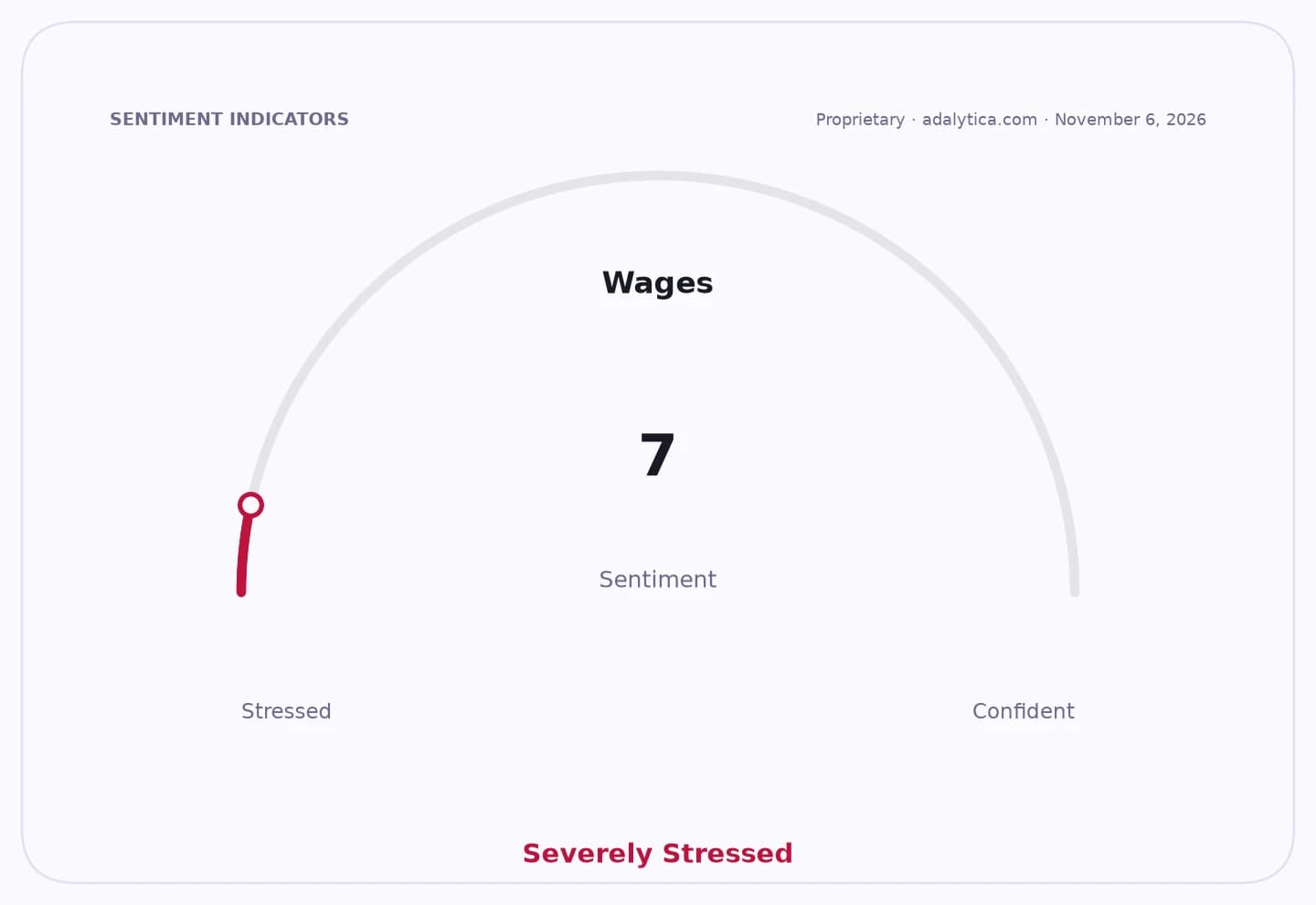
Wages
That makes the annual pay-setting process one of the country’s most consequential income-policy events, with the proposed 28.4% to 33.7% increase creating a broader jump in labor costs and household transfers just as policymakers are trying to balance inflation control with pressure to protect purchasing power.
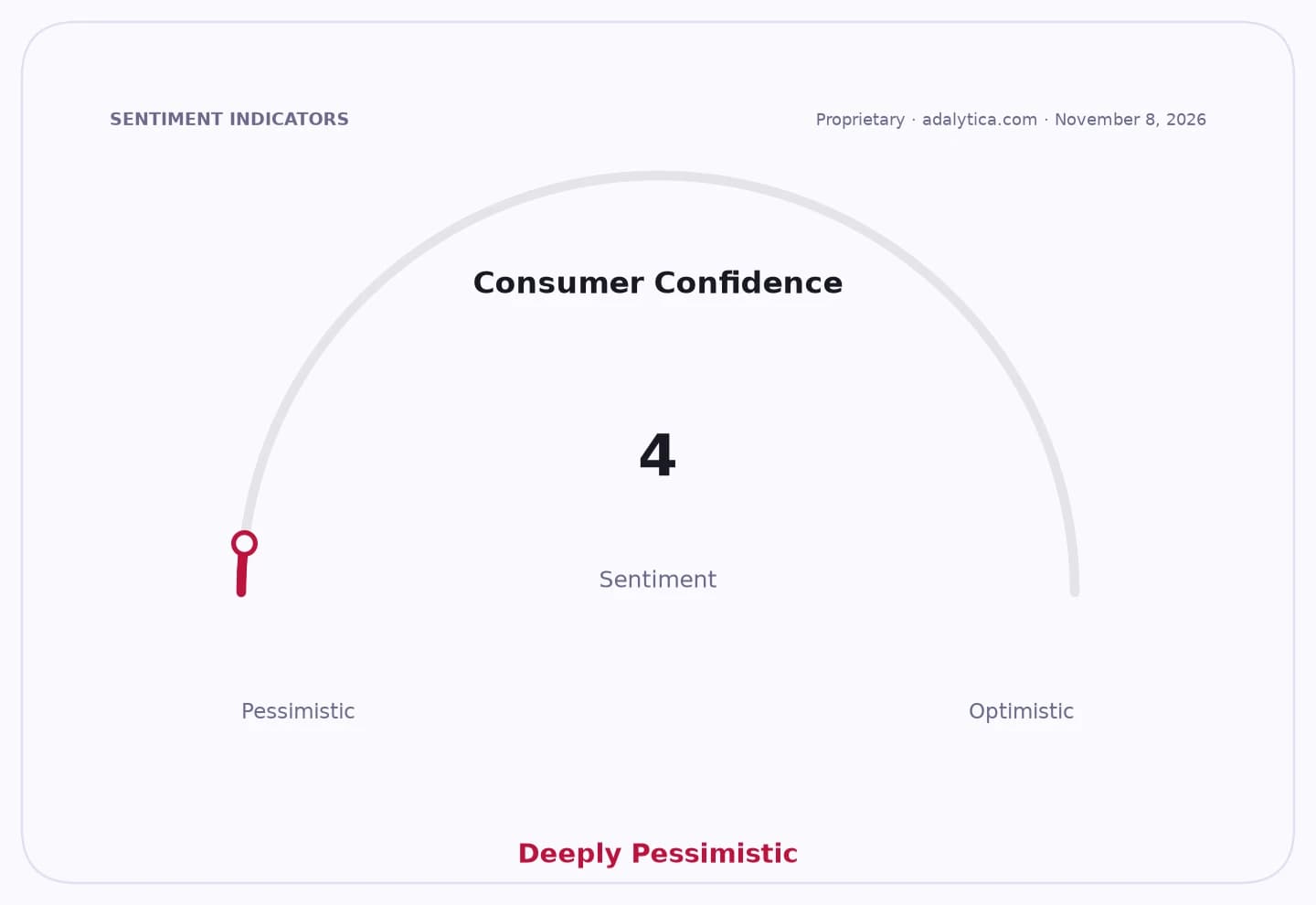
Sentiment Indicators
Under the scenarios now on the table, net monthly minimum pay would rise to 36,048 lira, 36,498 lira or 37,536 lira, depending on the increase chosen. Gross pay would climb to as much as 44,161 lira. Those levels matter because the minimum wage in Turkey is the benchmark for a wide range of state-linked payments and private-sector obligations, from unemployment insurance and severance floors to premium liabilities and childcare-related allowances.
For employers, the direct wage bill is only part of the story. Because many compensation thresholds are tied to the minimum wage, a bigger increase would feed into payroll expenses across the economy, especially for labor-intensive sectors such as retail, food service, manufacturing and construction. That comes on top of already elevated operating costs from inflation, and could force companies to narrow margins, accelerate price increases or slow hiring.
The most immediate pass-through would be to social protection outlays. Unemployment benefits, which are indexed to gross minimum pay, would rise sharply under the new scenarios, with the current floor of 13,111 lira moving to 16,835 lira in a 28.4% increase case and 17,530 lira in the highest scenario. The severance-pay floor would also reset, climbing from 32,779 lira net after stamp tax to as much as 43,825 lira.
Other linked payments would move in lockstep. Maternity leave compensation for insured women, currently at least 123,312 lira for 168 days, would rise to 158,332 lira or 164,868 lira. Part-time childcare support would also increase, while daily sick-pay floors and trainee wages would reset higher, adding to the cost base for employers and the state alike.
The policy choice has macroeconomic significance because it affects both demand and inflation. Higher pay would support household consumption and help offset real-income erosion, but it would also raise wage pressure in an economy still sensitive to price shocks. That is why the final decision will be watched not only by workers and employers, but by investors looking for clues on Turkey’s inflation path, corporate profitability and the government’s tolerance for higher labor costs.
Adalytica’s Wage Inflation Sentiment gauge remains in “fear” territory, underscoring how sensitive markets are to the inflationary implications of a large wage adjustment. That concern is reflected in the broader debate around minimum wage policy globally: workers and unions see a pay increase as necessary social relief, while employers warn it can erode employment, especially in lower-margin industries.
For investors, the key issue is not just whether wages rise, but how broad the indexation effect becomes. A larger increase would be positive for consumer-facing companies with pricing power and for workers’ disposable income, but negative for labor-intensive businesses, exporters facing cost pressure and companies with thin margins. The final number will therefore shape both household balance sheets and corporate earnings expectations into the new year.
| Entity | Gains | Losses |
|---|---|---|
| Minimum wage workers | ▲Higher take-home pay | ▼Inflation may erode gains |
| Social benefit recipients | ▲Higher unemployment and maternity payments | ▼Higher contribution burdens |
| Labor-intensive employers | ▲None | ▼Rising payroll and severance costs |
| Consumers / retailers | ▲Stronger household spending | ▼Price pressure from higher wages |