A rice demonstration plot in Malang Regency has produced as much as 12.5 tons per hectare, giving local authorities a potential template for lifting farm output in East Java if the technique holds up outside the trial field.
Malang rice plot yields 12.5 tons per hectare

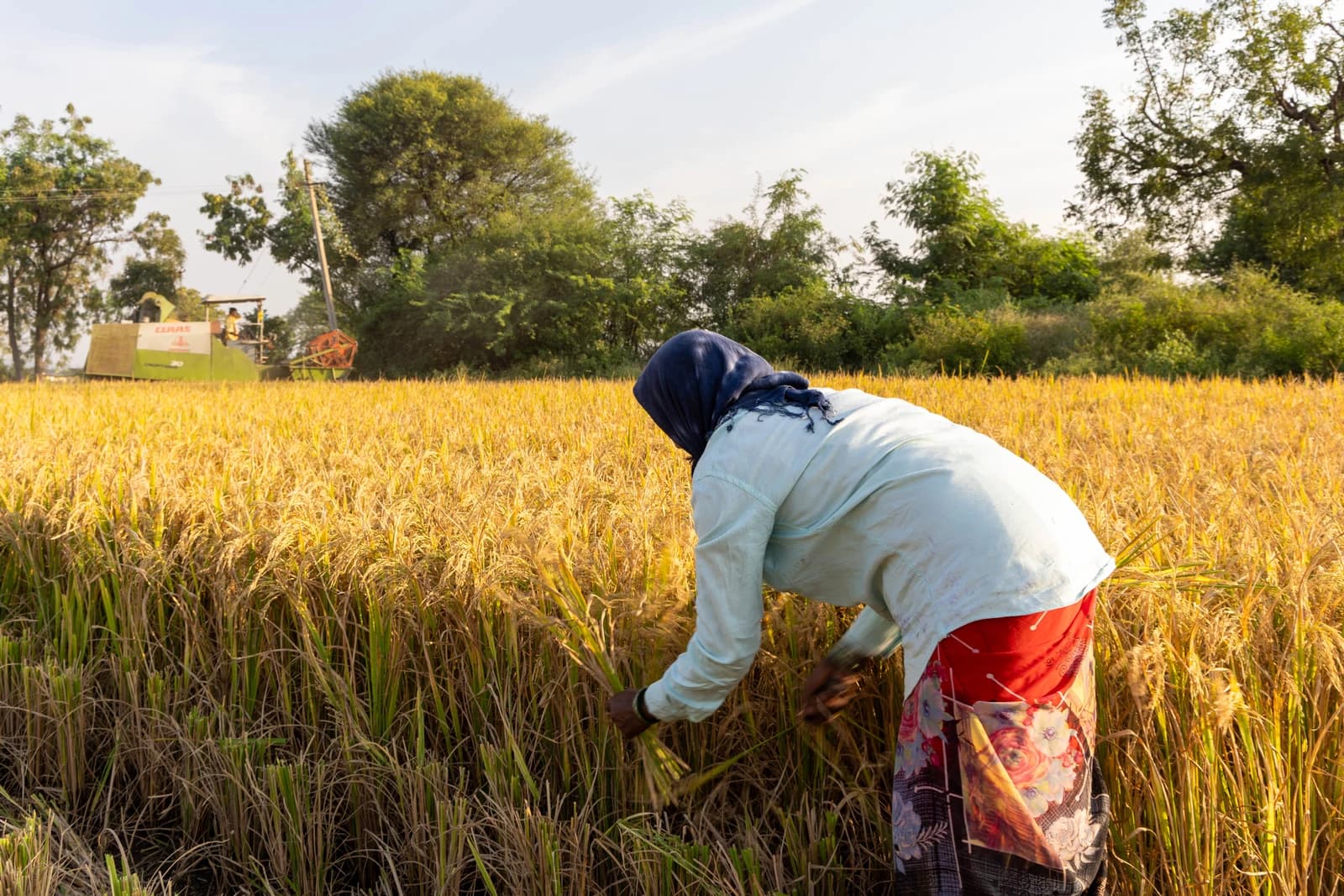
The harvest, carried out with PT Indoraya Mitra Persada 168’s ExtraGen liquid biofertilizer in Ngudi Makmur farmer group land in Sumberpucung, averaged 11 to 12.5 tons per hectare, according to the farmer group and local officials. That puts the plot well above typical Indonesian paddy yields and makes the result economically relevant for a country where rice supply, farm incomes and import dependence remain politically sensitive.
For Malang’s government, the trial is not just a publicity event. It is an early proof point for a broader development program that could be applied on a larger area if the agronomic performance is replicated. Higher yields on existing land would matter more than expansion alone, especially as climate variability, fertilizer efficiency and land constraints keep pressure on food production.
The result also underscores the market value of yield-enhancing inputs such as biofertilizers, which are increasingly being pitched as a way to improve nutrient uptake rather than simply raise application volumes. Samudji, head of the Ngudi Makmur farmer group, said the outcome depended not only on the product but on the timing and balance of fertilization, with sprays applied from around 7 to 10 days after planting and repeated at similar intervals.
That detail matters to investors and agribusiness suppliers because the economics of agricultural inputs are increasingly tied to demonstrated productivity gains, not just branding. If the pilot can be scaled consistently, it could support demand for specialty fertilizers and field services in Java’s rice belt. If it cannot, the project risks remaining a local showcase with limited commercial value.
The broader rice backdrop gives the development more weight. Rice markets in Indonesia have been uneven, with supply concerns, regulatory scrutiny over fortified rice brands and signs of tighter production conditions elsewhere in the country. In that environment, a credible route to higher yields from existing acreage offers a rare positive for both policymakers and the farm sector.
The key question now is whether Malang can reproduce the plot’s performance on commercial farms, where soil quality, pest pressure and farmer discipline are less controlled. If the rollout works, the winners are likely to be farmers, local food security planners and input suppliers; if not, the gap between pilot yields and field reality will remain the main risk.
| Entity | Gains | Losses |
|---|---|---|
| Malang Regency government | ▲Food output credibility | ▼Policy risk if rollout disappoints |
| Rice farmers in Sumberpucung | ▲Higher yields and income | ▼Higher input discipline required |
| PT Indoraya Mitra Persada 168 / ExtraGen | ▲Product validation | ▼Reputation risk if results don’t scale |
| Rice import-dependent consumers | ▲Better local supply prospects | ▼None if adoption stalls |