Malaysia’s labor market is becoming more dependent on foreign workers just as the government tries to build a higher-skilled economy for semiconductors, AI and green energy.
Malaysia labor market shifts toward foreign workers

That imbalance matters because it goes to the heart of Malaysia’s growth model. Prime Minister Anwar Ibrahim is pushing the country toward more advanced manufacturing and better-paying jobs, but the data and policy backdrop suggest the near-term labor supply is still being filled largely by imported workers rather than domestic job creation. That can keep factories and construction sites staffed, but it also risks holding down wage growth, delaying productivity gains and leaving local workers out of the sectors Malaysia says it wants to own.
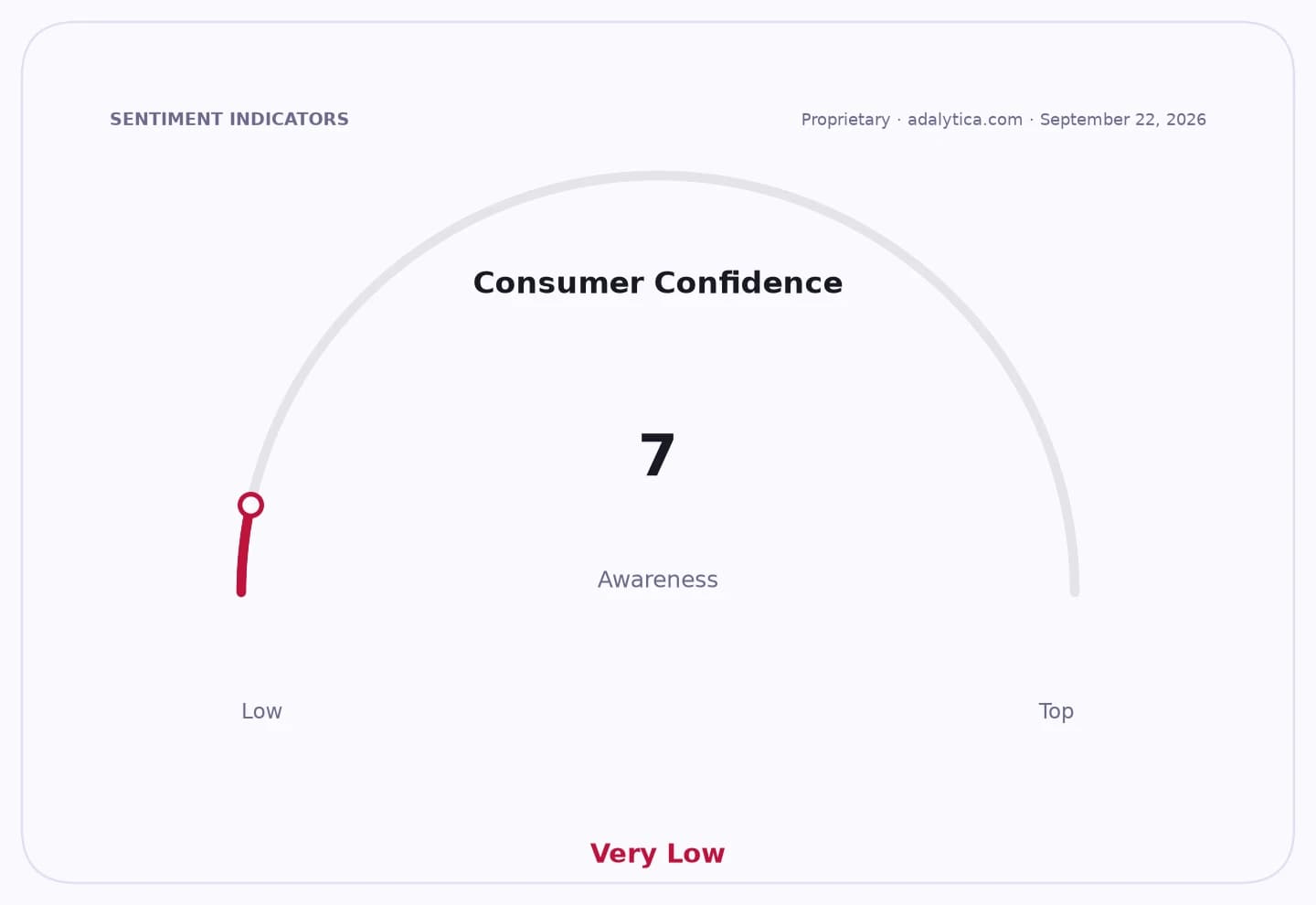
Sentiment IndicatorsⓘProprietary · adalytica.com · September 25, 2026
This is a snapshot — live sentiment, awareness and momentum for 130+ markets update continuously in the dashboard.Open AlphaPulse
The economic signal is clear in the labor data. U.S. nonfarm payrolls are irrelevant here, but the market-style read from Malaysia is that employment demand is being met through labor inflows rather than a broad domestic hiring boom. The seed headline points to an influx of workers five times larger than the number of new jobs created, which suggests labor absorption is not keeping pace with population pressure, visa demand or recruitment networks. For an economy trying to move up the value chain, that is a structural warning: growth can continue, but without enough skilled local labor, more of the uplift leaks into low-productivity employment and foreign labor dependency.
That is why the government’s focus on recruitment reform and skill development is more than bureaucratic housekeeping. Tightening abuses in foreign-worker hiring, including warnings over tourist visas being used for jobs, is an attempt to restore order to a system that businesses rely on but investors often underestimate. If Malaysia cannot match labor supply with the right skills, the semiconductor, AI and renewable-energy push will face bottlenecks in engineering, maintenance, logistics and plant operations. That is where the real economic risk sits: not in a lack of headline job openings, but in a mismatch between the jobs created and the labor force available to fill them.
For investors, this is a second-order story with direct implications. Malaysia’s equity market, represented by the EWM ETF, has been firmer than Chinese equities in FXI, but the labor imbalance argues for a selective rather than broad-brush approach. The winners are likely to be automation, industrial software, factory equipment, logistics and wage-saving technologies. The losers are businesses that depend on cheap, abundant labor or on a smooth foreign-worker pipeline that regulators are now trying to police more aggressively.
The ringgit also deserves attention. MYR=X has been trading close to its 50-day and 200-day moving averages around 4.07 to 4.01, suggesting the currency is stabilizing, but sustained foreign-worker inflows can complicate the inflation and wage outlook if they are not matched by productivity gains. In the near term, the market underestimates how much Malaysia’s labor policy will shape corporate margins, capex priorities and industrial execution.
The investment takeaway is straightforward: Malaysia’s growth story is no longer about cheap labor, it is about labor discipline and productivity upgrade. That is bullish for firms tied to automation, semiconductor equipment and workforce training, and it is a warning sign for businesses that still depend on imported workers to compensate for weak domestic skills formation. The next catalyst is whether Kuala Lumpur can convert its recruitment crackdown into a genuine productivity cycle rather than just a cleaner version of the old model.
| Entity | Gains | Losses |
|---|---|---|
| Automation and industrial tech providers | ▲Higher demand for labor-saving tools | ▼Slower adoption if policy stalls |
| Skilled local workers | ▲Better wage power | ▼Competition for retraining time |
| Labor-intensive employers | ▲Short-term staffing access | ▼Higher compliance and wage costs |
| Malaysia’s reform agenda | ▲Stronger productivity story | ▼Exposure if labor mismatch persists |