Marine Le Pen has sharpened one of Europe’s most important geopolitical fault lines, saying Ukraine’s future is not in the European Union and that NATO membership should be left to peace talks — a position that could reshape investor expectations for European defense, sanctions policy and the long war premium on the region.
Marine Le Pen Questions Ukraine EU and NATO Path
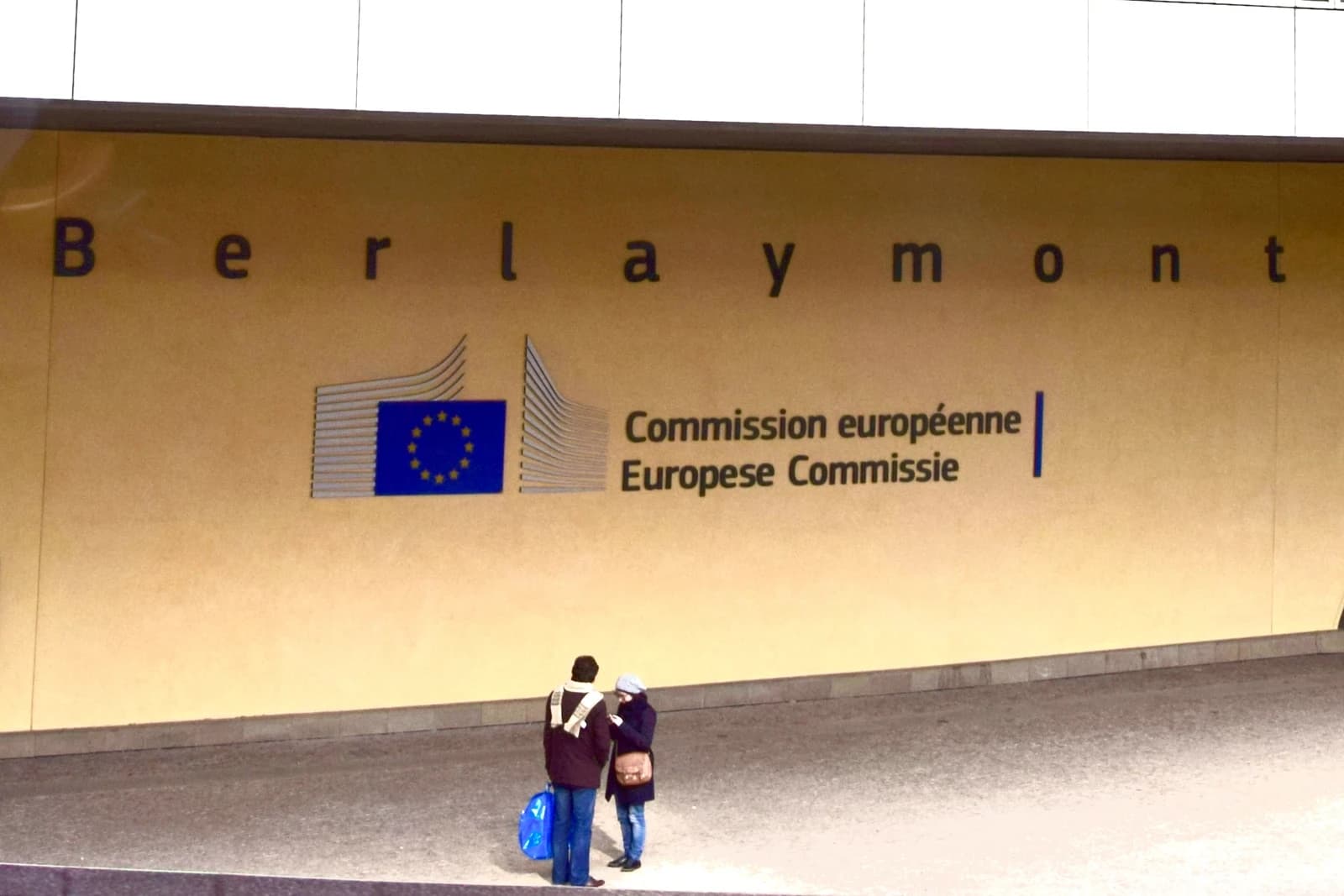
That matters because France is not just another voice in the debate. As a leading contender for the 2027 presidential election, Le Pen is signaling that a future French government under her National Rally could push Europe toward a more transactional settlement with Moscow and away from the open-ended security architecture that Kyiv says it needs. For markets, that raises the odds of a choppier path for EU enlargement, a softer line on war financing, and more political friction inside NATO just as the alliance remains central to Europe’s security.
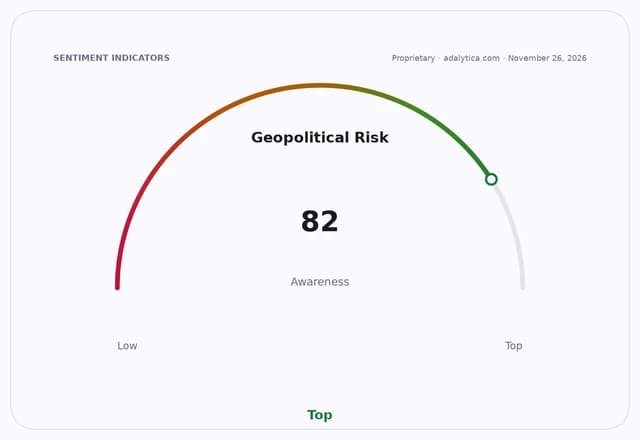
Sentiment Indicators
Le Pen told the India Global Review that she did not think Ukraine should join the bloc and that its future was “in no way” tied to EU accession. On NATO, she said the issue should be part of peace negotiations. The comments echo a broader strain in European politics that has strengthened as the war drags on and voters absorb the economic costs of higher defense spending, energy disruption and sanctions.
The immediate market read is not about one speech; it is about policy optionality. If France, one of the EU’s core powers and a nuclear-armed NATO member, were to move toward a more skeptical stance on Ukraine’s long-term integration, that would complicate the pricing of Europe’s security umbrella. Investors would have to consider a wider range of outcomes for defense budgets, reconstruction flows, sovereign risk in eastern Europe and the euro’s geopolitical discount.
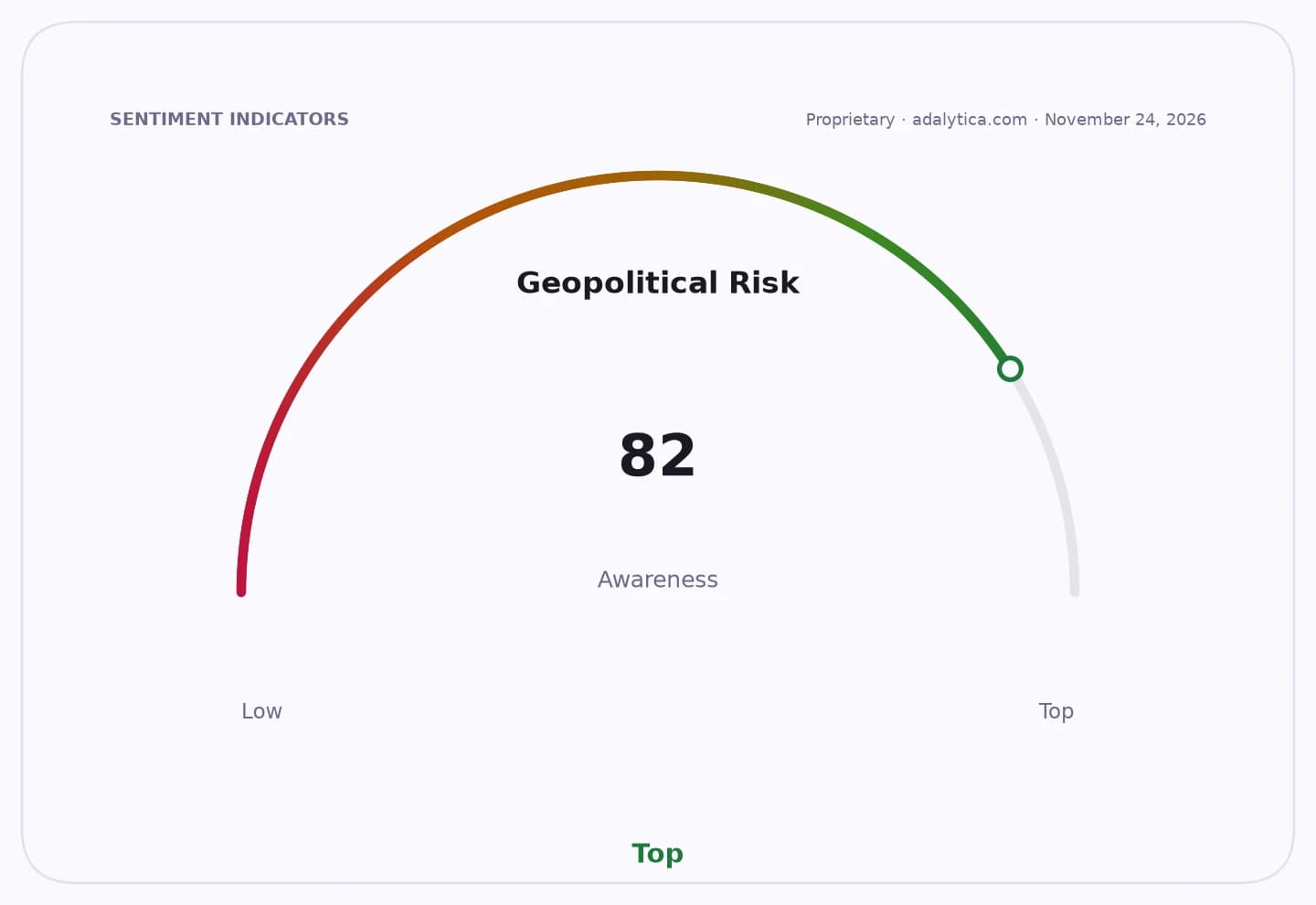
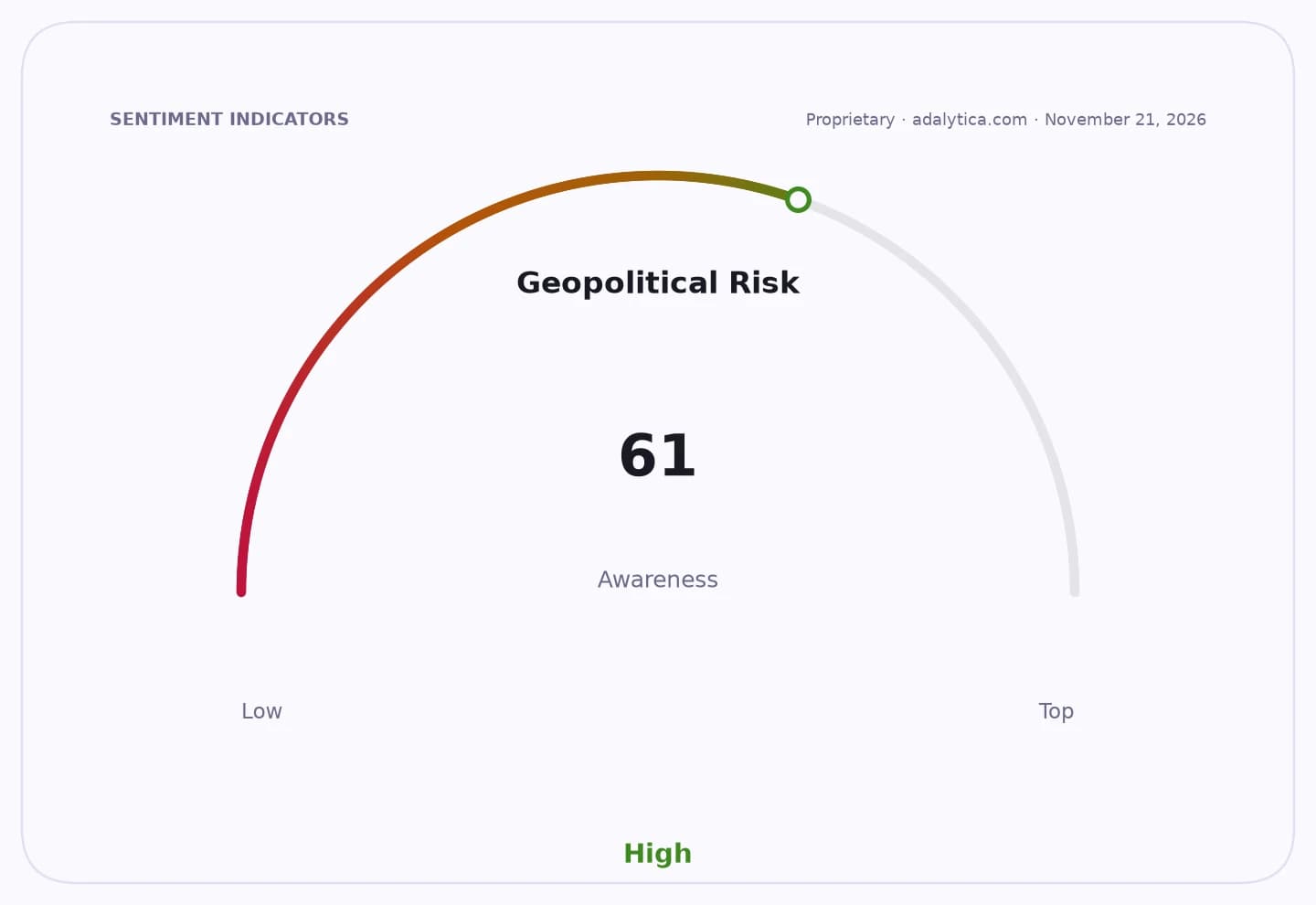
Geopolitical Risk — 30-day sentimentadalytica.com
Explore this data interactively — full history, time series and cross-market comparisons.
The market backdrop already shows how sensitive assets are to shifting war expectations. FXE, the euro trust, has recently slipped to about $101.38, below both its 50-day and 200-day moving averages, with the 200-day near $105.73. RSI readings around 26 suggest the fund is technically oversold, but the bigger message is that Europe’s currency remains vulnerable whenever the region’s strategic outlook deteriorates. The same logic applies across European equities, especially defense contractors, energy importers and countries closest to the front line.
That is why Le Pen’s remarks matter beyond France. A harder bargaining line from a major EU power could embolden the view that Ukraine’s path to the West is conditional rather than guaranteed. That would be unwelcome for Kyiv, which has argued that NATO membership is the most credible security guarantee. It would also reinforce the market’s growing divide between companies and sectors that benefit from prolonged strategic uncertainty and those exposed to a rapid easing of war risk.
Adalytica’s Global Stability Sentiment gauge now sits at 4.0, marked “Extreme Fear,” after a sharp drop over the past month, while awareness remains elevated. In plain terms, geopolitical anxiety is rising even as investors continue to position for headlines rather than a durable resolution. That is the setup where mispricing tends to emerge — especially in Europe’s defense, industrial and infrastructure names, where capital spending can stay elevated even if front-line combat dynamics shift.
My view is that the market underestimates how quickly this debate can turn into portfolio reality. If France’s 2027 campaign evolves into a referendum on Europe’s posture toward Ukraine, investors should expect more volatility in the euro, more dispersion across European equities and stronger demand for assets tied to rearmament, energy security and supply-chain resilience. The winning trade is not to chase a headline-driven peace bounce, but to own the companies positioned for a longer cycle of European strategic rebuilding.
| Entity | Gains | Losses |
|---|---|---|
| European defense contractors | ▲Higher military spending | ▼Faster peace repricing |
| Euro skeptics / French National Rally | ▲Political traction | ▼Pro-EU consensus |
| Ukraine and EU accession advocates | ▲None | ▼Slower integration path |
| FXE / euro bulls | ▲None | ▼Geopolitical premium |