Russia is unlikely to launch a full-scale attack on Poland or the Baltic states while the war in Ukraine is still grinding on, but it may wait for the right political moment to stage smaller provocations that raise the cost of Europe’s support for Kyiv. That matters because the Kremlin’s most plausible next move is not an invasion, but a campaign of sabotage, drone strikes or other deniable operations designed to exploit the heating season and election cycles in Europe.
Poland ETF EPOL Falls on Russia Risk
That is the core warning from Ukrainian strategic security expert Oleksii Yizhak, who said Moscow will look for a window when it believes the West is less willing or able to respond forcefully. In practical terms, that means Russia may try to pair any escalation with moments that already strain European politics, such as winter energy stress or high-stakes votes, so the shock lands harder at home and inside NATO capitals.
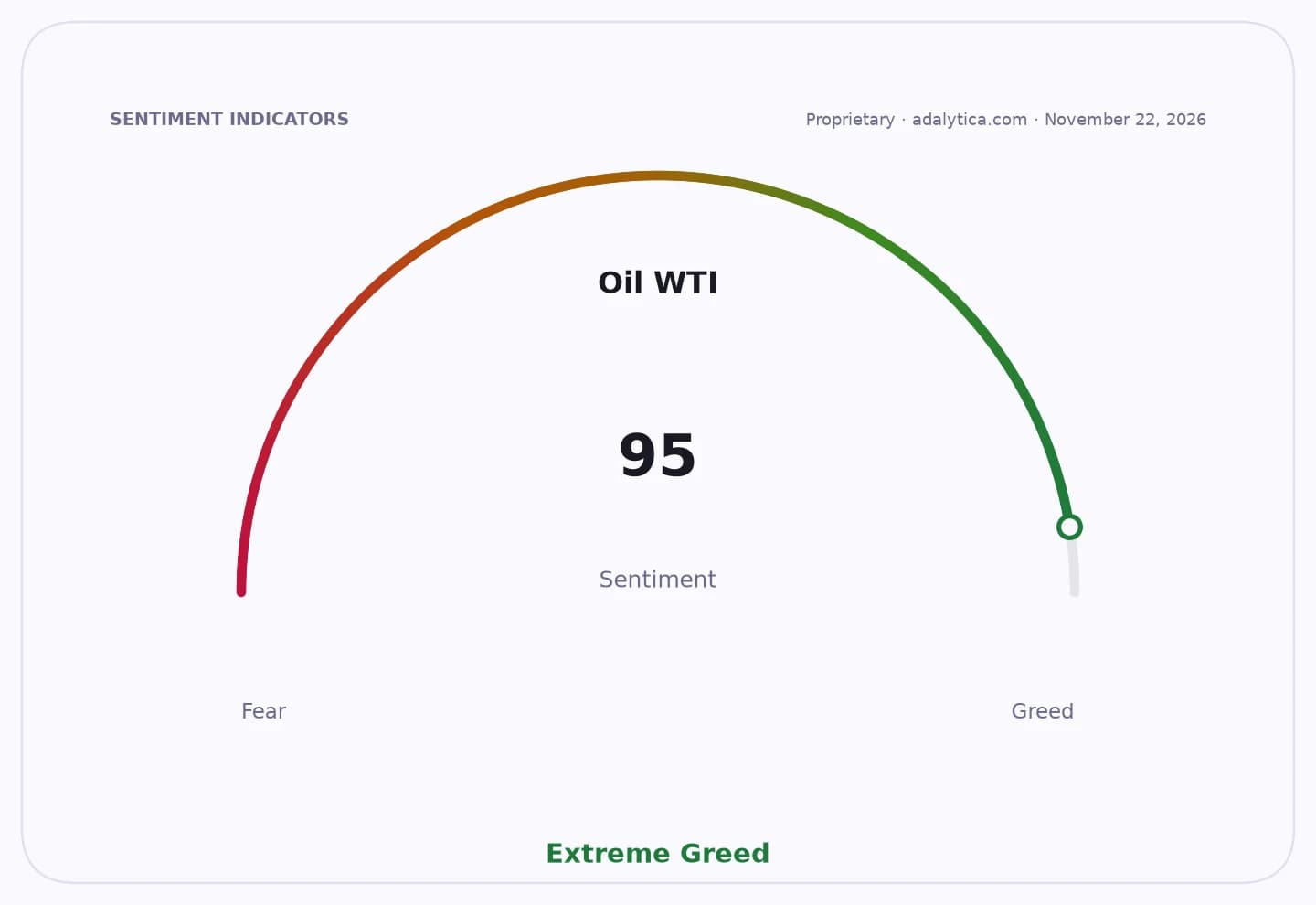
Sentiment Indicators
For investors, the message is not about military conquest so much as persistent geopolitical risk. Europe’s eastern flank is already one of the most sensitive pressure points in global markets, and the closer we get to winter, the more any incident involving Poland, Lithuania, Latvia or Estonia could ripple through defense shares, energy prices and risk sentiment. The possibility of low-level attacks is especially relevant because such actions can be deniable, hard to deter and politically disruptive without crossing the threshold of open war.
Yizhak also argued that Russia still lacks the capacity to shift major forces west while Ukraine continues to resist. That makes Ukraine a strategic brake on any broader pressure campaign against NATO’s eastern members. In other words, as long as Moscow remains tied down in Ukraine, the near-term danger is more likely to be terrorism, sabotage or drone activity than a conventional invasion of NATO territory.
Geopolitical Risk — 30-day sentimentadalytica.com
Explore this data interactively — full history, time series and cross-market comparisons.
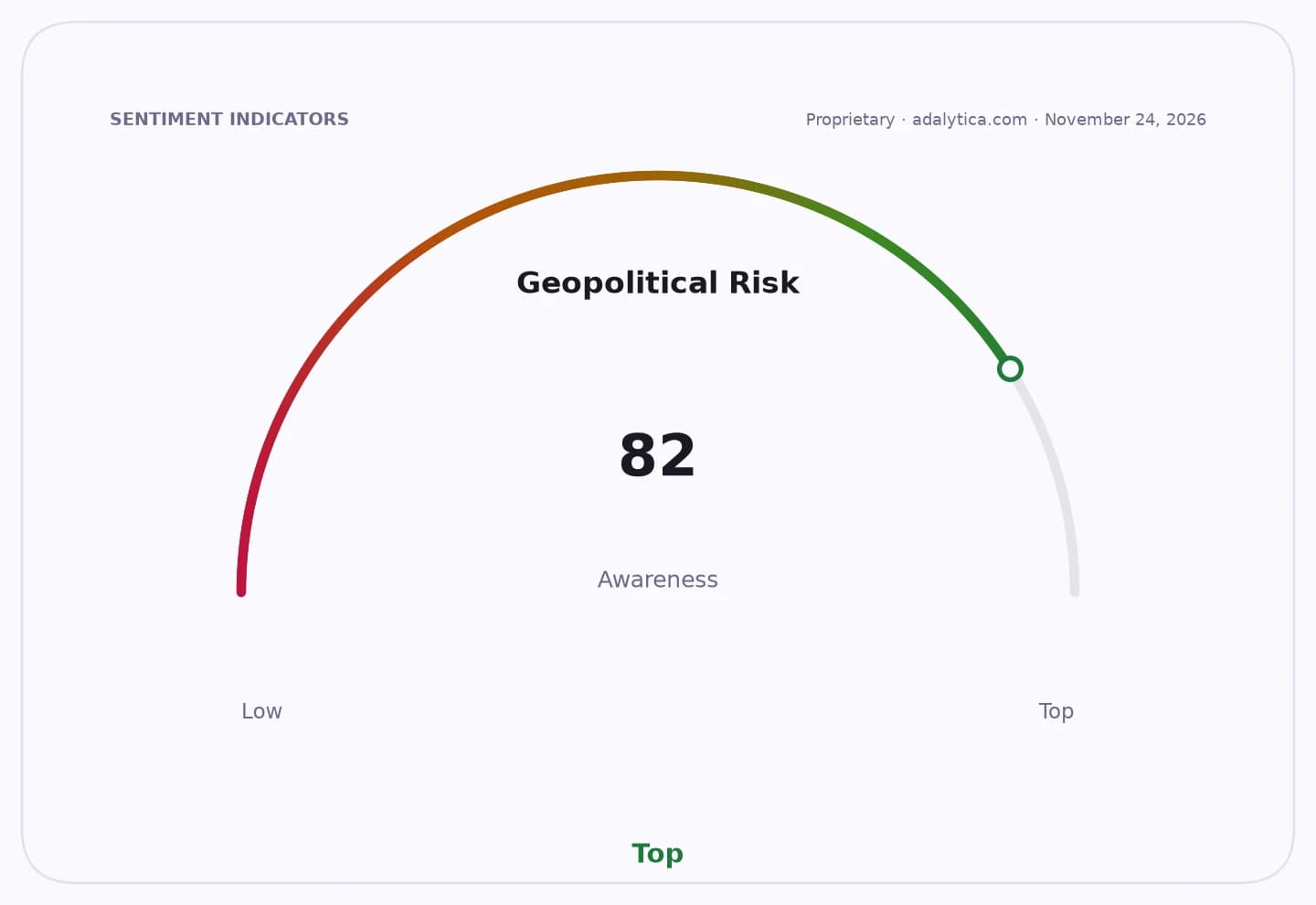
The broader market backdrop reinforces that caution. Adalytica’s Global Stability Sentiment gauge sits at 11, deep in “Extreme Fear,” even as awareness remains elevated. That combination usually means investors are watching geopolitical risk closely but have not fully priced the next headline. For European assets, especially those tied to border security, defense procurement and energy resilience, that can keep a floor under valuations even when the latest incident is contained.
The iShares MSCI Poland ETF, EPOL, shows how quickly the market can swing on regional risk. The fund closed at $40.87 on Nov. 24, below its 50-day moving average of $43.76, with a relative strength index of 33.7 — a level that suggests the ETF has already weakened as tensions have risen. A weaker tape like that does not forecast the next provocation, but it does show that investors are already building in a heavier geopolitical discount.
For long-term investors, the takeaway is simple: eastern Europe is entering a season when security headlines can matter as much as macro data. If Russia tests the region, the likely impact will be felt first in sentiment, then in defense spending expectations and finally in asset prices. That is why Poland and the Baltics deserve a place on every investor’s watchlist, not because war is inevitable, but because Europe’s security premium is likely to stay elevated well into next year.
| Entity | Gains | Losses |
|---|---|---|
| Russia | ▲Tactical pressure options | ▼Strategic freedom of action |
| Poland and Baltic states | ▲NATO attention and deterrence | ▼Stability and lower security risk |
| Defense contractors | ▲Higher spending demand | ▼— |
| EPOL / Polish equities | ▲Long-term security premium | ▼Short-term risk sentiment |