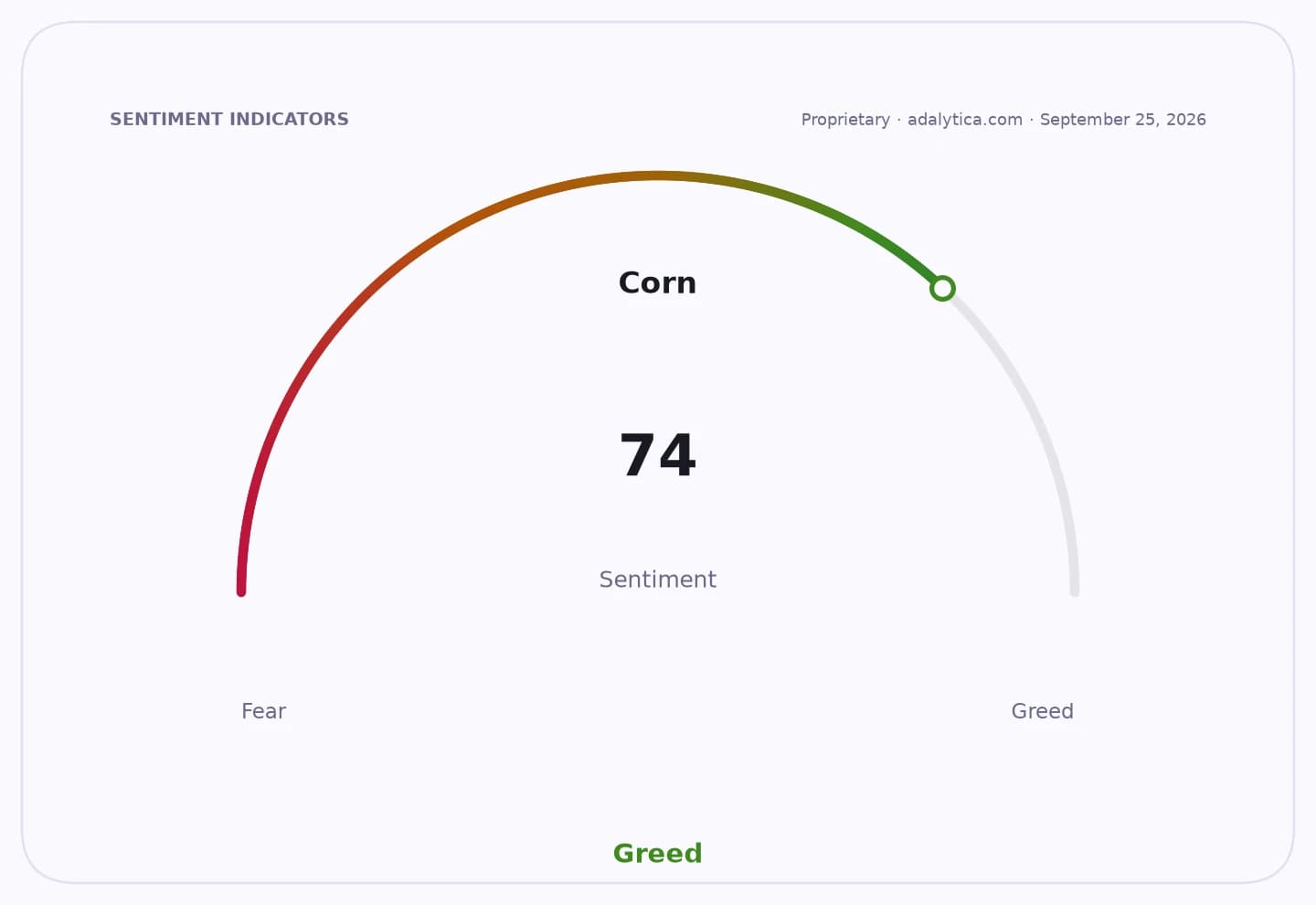
Corn in Mato Grosso do Sul is ending the harvest with firmer prices, as producers have already sold half of the second crop and the local 60-kilo sack is trading 6.4% above a year earlier.
Mato Grosso do Sul Corn Prices End Harvest Firm
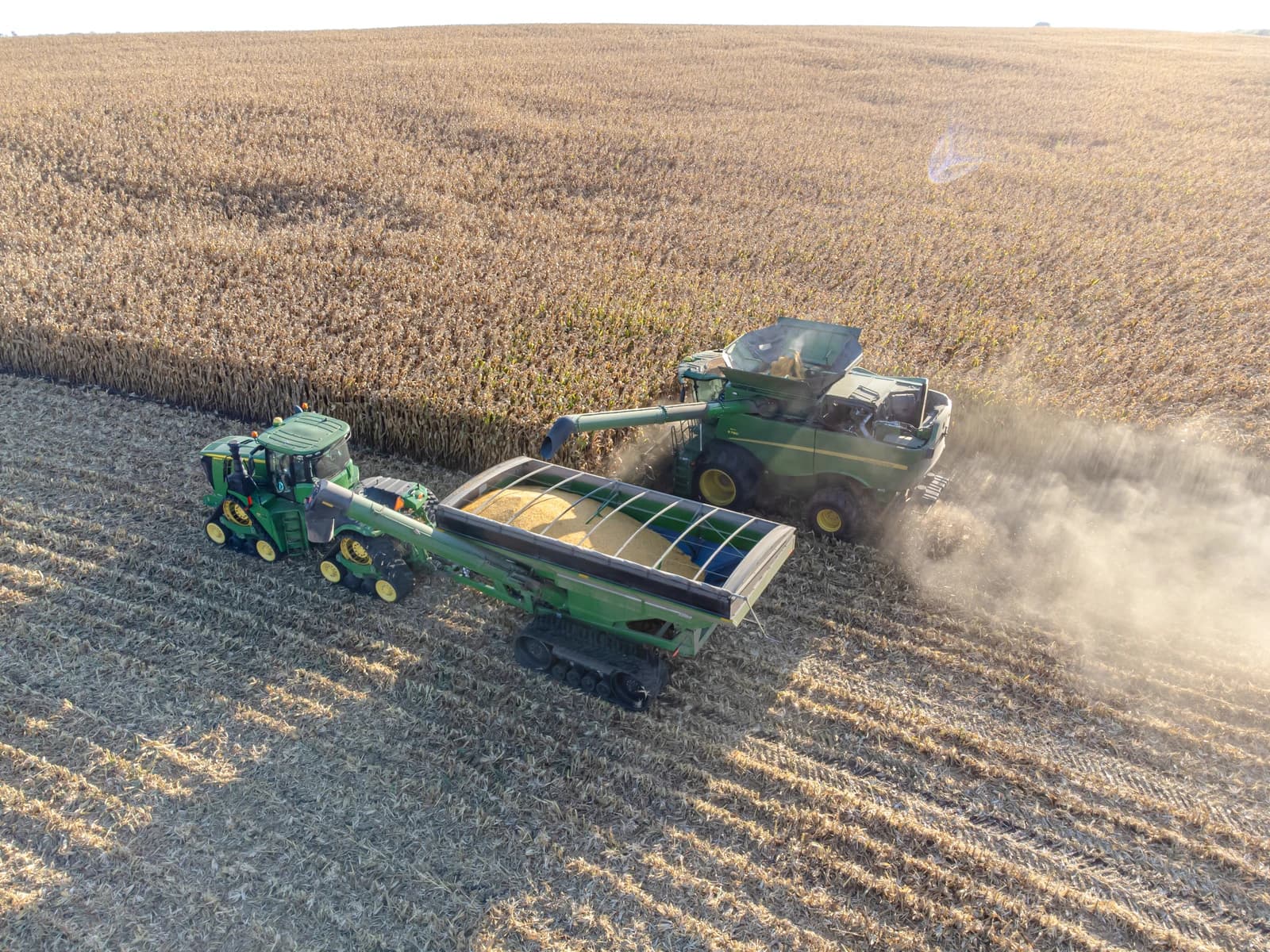
The combination of nearly finished fieldwork and stronger cash values matters because it shows the market is absorbing a large 2026 crop without a sharp post-harvest collapse. Producers had sold 50% of output by Monday, while 99.5% of the planted area had been harvested, leaving little of the supply overhang that often pressures prices at this stage.
Sentiment IndicatorsⓘProprietary · adalytica.com · September 27, 2026
This is a snapshot — live sentiment, awareness and momentum for 130+ markets update continuously in the dashboard.Open AlphaPulse
The state’s average sack price reached R$54.83 on Sept. 21, up 0.92% in a week and 11.5% from R$49.17 in August, when commercialization was at 43.5%. The average between Sept. 14 and Sept. 21 was R$54.40, compared with R$51.13 in the same period last year, according to Aprosoja Mato Grosso do Sul.
Dourados posted the highest local quote at R$56 per sack, while Chapadão do Sul, Maracaju and São Gabriel do Oeste were at R$55. Campo Grande and Sidrolândia were at R$54, and São Gabriel do Oeste logged the sharpest gain over the period, rising 3.77%.
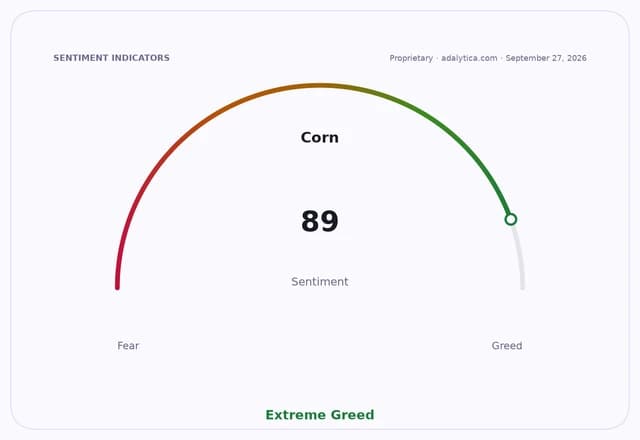
The pricing backdrop is important for farmers’ margins and for grain traders watching Brazil’s second-crop corn flow into the market. Mato Grosso do Sul’s 2026 production is estimated at 16.253 million tons, 16.7% above last season and well above the crop initially expected at the start of the cycle, which suggests ample supply even as cash prices hold up.
For investors, the message is that strong harvest progress is not automatically translating into weaker corn values, a sign of resilient local demand and still-managed selling from producers. In the broader market, that could temper bearish bets on Brazilian corn and keep attention on weather, export flows and freight costs heading into the next marketing phase.
| Entity | Gains | Losses |
|---|---|---|
| Farmers in Mato Grosso do Sul | ▲Higher cash prices | ▼Smaller upside if sales lag |
| Corn buyers/traders | ▲Supply is available | ▼Pay more for spot grain |
| Sellers who held grain | ▲Better pricing window | ▼Risk of missing peak prices |
| Short corn positions | ▲Little benefit from harvest pace | ▼Pressure from firm basis levels |