Farmers bringing cotton to the Unawa APMC in Mehsana are getting roughly ₹1,900 per maund, a year-on-year improvement of about ₹100 to ₹150 that is giving growers a rare income lift after a season marked by weak rainfall.
Mehsana Cotton Prices Rise on Weak Rainfall
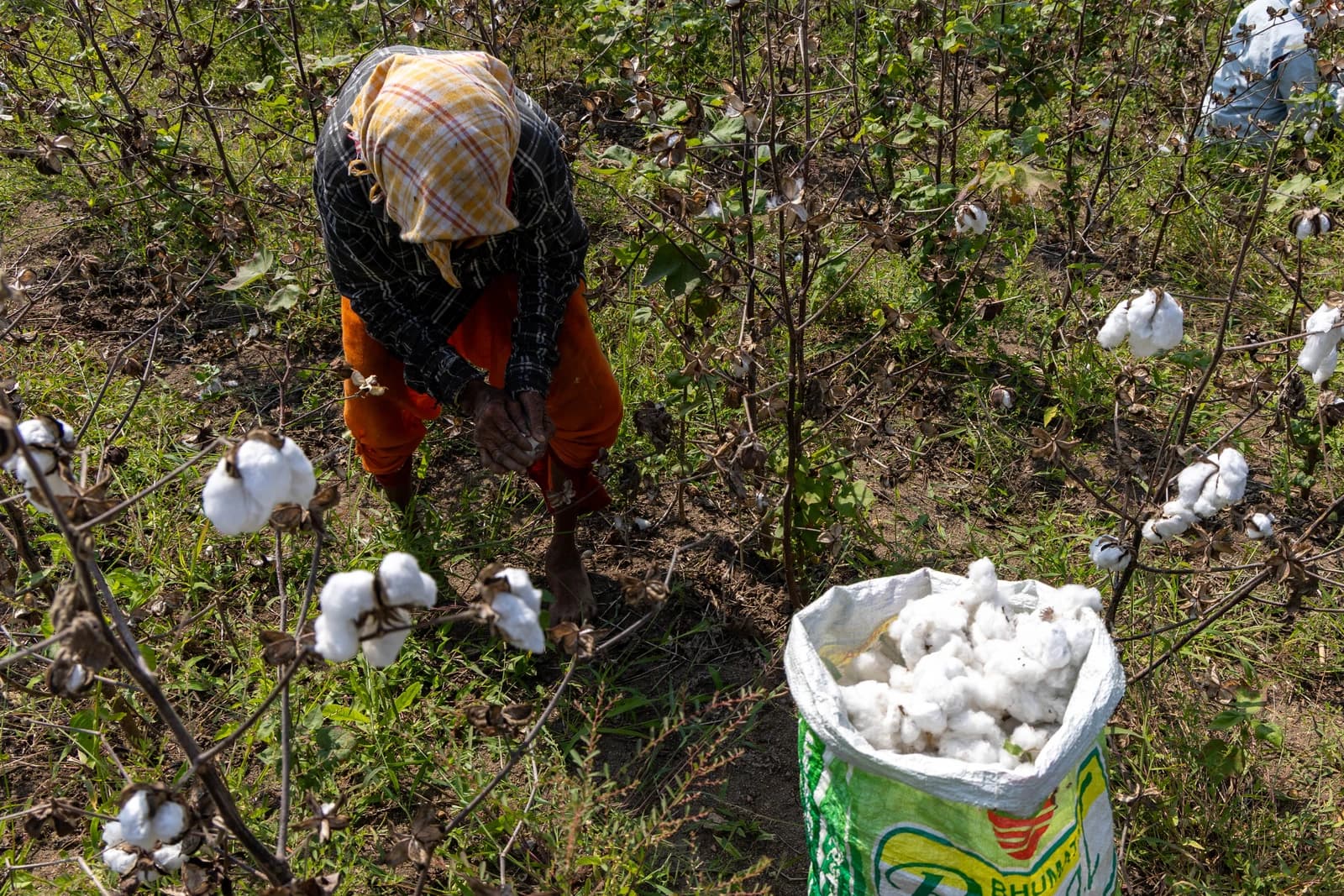
The price strength matters because cotton remains a key cash crop for north Gujarat, where farm incomes are highly sensitive to small shifts in yield and mandi rates. In Unawa, daily arrivals are running at about 20 to 25 truckloads, suggesting steady trade rather than a one-off spike, while thinner output and some quality loss from below-normal rain are helping keep prices firm.
Sentiment Indicators
For growers, the higher realization is cushioning the hit from reduced production. A stronger mandi rate can offset part of the volume loss, especially for small and mid-sized farmers who depend on cotton sales to fund the next cropping cycle. The fact that prices are holding despite broader volatility in agricultural commodities also points to a locally tight market, not just a temporary burst of buying.
The flip side is that the same weather pattern supporting prices is also hurting the crop. Lower rainfall has limited yields and affected quality, which means farmers may still end up with mixed total income outcomes even at better rates. For traders and ginners, firmer raw cotton costs may squeeze margins if supply stays restricted while demand for lint holds up.
The broader market narrative is one of weather-driven price support in a crop that is still exposed to rainfall risk. If output remains constrained, mandi prices could stay elevated through the marketing season. But if arrivals rise later or quality improves, the current premium may narrow quickly, leaving farmers with the familiar trade-off between better prices and lower harvest volumes.
| Entity | Gains | Losses |
|---|---|---|
| Unawa cotton farmers | ▲Higher mandi realisations | ▼Lower yields from weak rain |
| Cotton traders/ginners | ▲Steady arrivals | ▼Higher raw material costs |
| North Gujarat mandi market | ▲Firmer price trend | ▼Supply tightness |
| Consumers/textile buyers | ▲— | ▼Higher input prices |