Melaka’s plan to study a jump in the minimum basic salary to RM2,500 is more than a local labour-policy tweak: it would, if adopted, set a precedent for Malaysian states and put immediate pressure on employers’ wage bills, hiring plans and investment decisions.
Melaka studies RM2,500 minimum wage plan

Chief Minister Ab Rauf Yusoh said the state is assessing the proposal from every angle before sending it to Putrajaya, but even the possibility of a 47% increase from the current RM1,700 floor is significant. For workers, especially younger jobseekers and women returning to the labour force, a higher wage floor could improve household incomes and make staying in Melaka more attractive than migrating to larger urban centres.
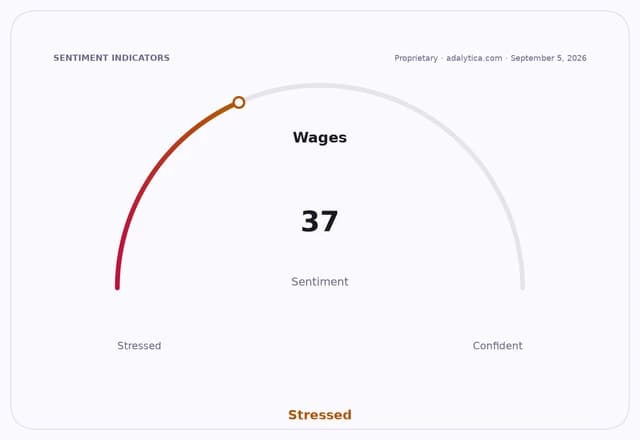
Sentiment IndicatorsⓘProprietary · adalytica.com · September 5, 2026
This is a snapshot — live sentiment, awareness and momentum for 130+ markets update continuously in the dashboard.Open AlphaPulse
For businesses, the economics are less straightforward. A higher mandated wage would raise operating costs for labour-intensive sectors such as retail, hospitality, plantations, logistics and port-linked activity, while also narrowing margins for smaller firms with limited pricing power. Companies that rely on entry-level labour would likely face a choice between absorbing higher payroll costs, passing them on to consumers, or accelerating automation and productivity upgrades.
The proposal also has a regional-development angle. Ab Rauf framed it as part of an effort to improve career prospects for young people and support young mothers re-entering work, including through employment models linked to the Melaka Inland Port. That suggests the state is trying to pair wage policy with labour-market participation, rather than treating pay as a standalone social measure.

Investors would read the move as a potential test case for how far Malaysian states can push wage policy in a country where labour costs remain a key competitiveness issue. If Melaka advances the plan, it could influence expectations across the broader manufacturing and services base, particularly in export-sensitive sectors already under pressure from soft global demand and uneven consumer spending.
The market implication is less about an immediate repricing of equities than about medium-term margin risk and labour tightness. Firms with strong productivity, pricing power or capital intensity would be better positioned than low-margin operators that depend on cheap labour. The policy also raises the odds of a wider national debate over whether Malaysia’s wage floor is keeping pace with living costs.
For now, the proposal remains under study. But even at this stage, it underscores a broader shift in the policy conversation: wage growth is moving from an abstract social goal to a concrete competitiveness question for employers and investors.
| Entity | Gains | Losses |
|---|---|---|
| Workers in Melaka | ▲Higher take-home pay | ▼None if jobs hold |
| Labour-intensive employers | ▲Better retention potential | ▼Higher payroll costs |
| Consumers | ▲Potentially stronger local demand | ▼Higher prices if costs pass through |
| Melaka state economy | ▲More spending power | ▼Risk of slower hiring if firms cut jobs |