Brazil’s top election court has given Meta 24 hours to prove it is treating President Luiz Inácio Lula da Silva and former President Jair Bolsonaro equally on its platforms, putting the world’s largest social network back in the middle of a politically charged fight over speech, fairness and election integrity.
Meta Faces Brazil Election Court Review

That matters far beyond Brazil’s borders. For Meta, the order underscores a persistent business risk investors should not ignore: in major markets, regulators are no longer debating whether platforms can police political content, but whether they do it consistently enough to satisfy courts, governments and voters at the same time. The company’s global ad machine depends on trust, and trust gets harder to defend when a single country can force a rapid response on politically sensitive moderation decisions.
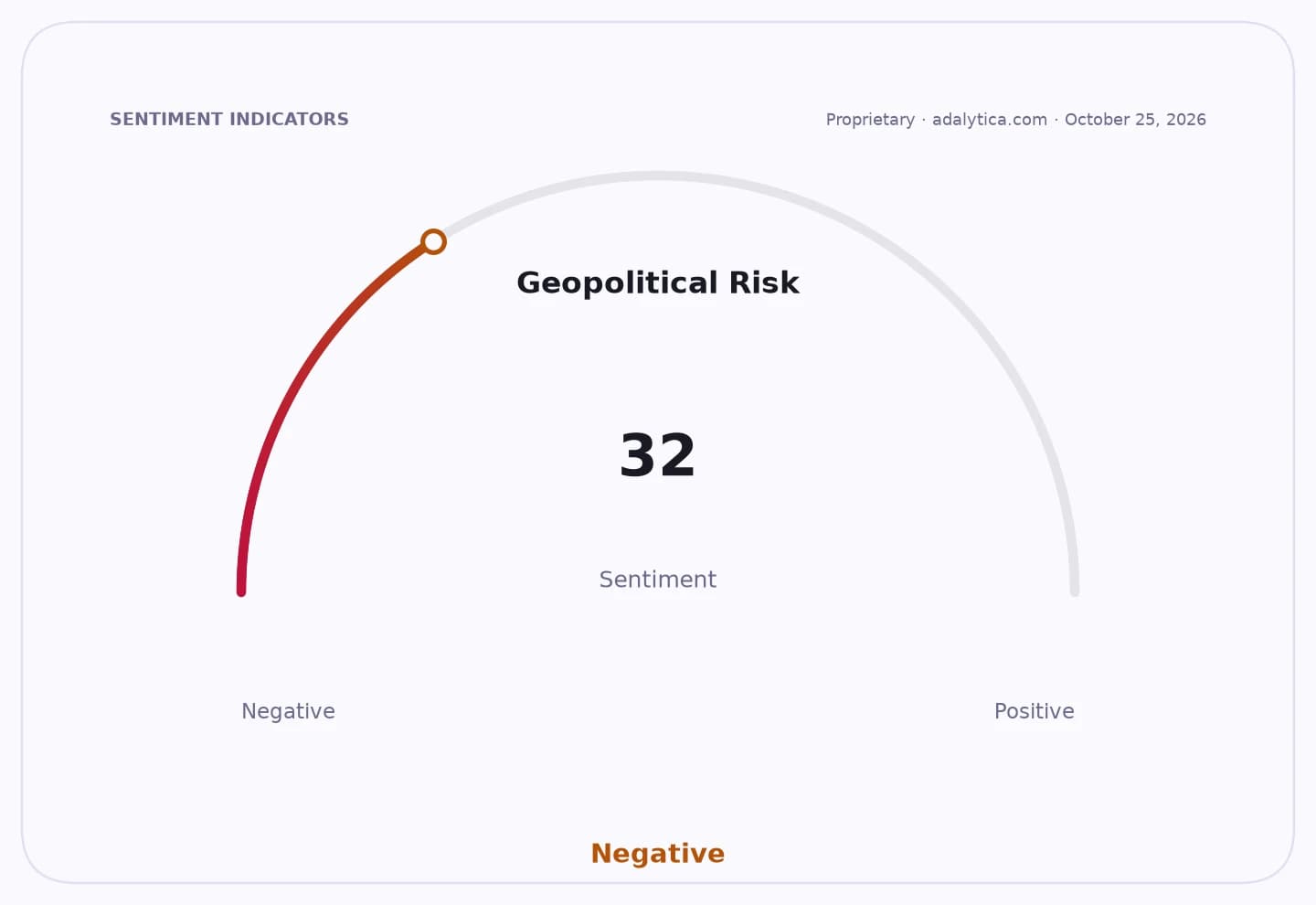
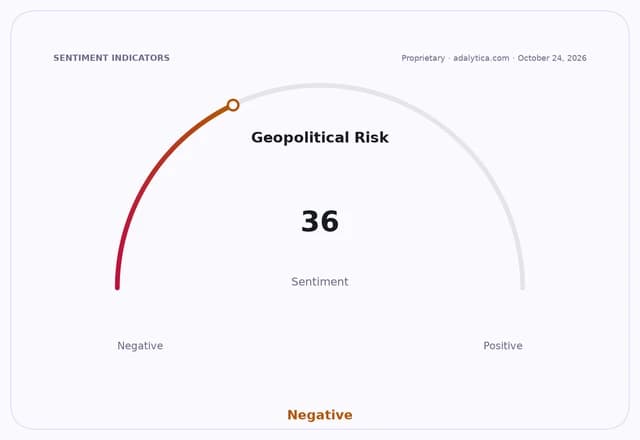
Sentiment IndicatorsⓘProprietary · adalytica.com · October 24, 2026
This is a snapshot — live sentiment, awareness and momentum for 130+ markets update continuously in the dashboard.Open AlphaPulse
The timing is especially notable for long-term shareholders. Meta has been wrestling with heavier scrutiny on content moderation, privacy, algorithms and election-related misinformation, according to its latest 10-Q, while its shares have shown how quickly investor sentiment can swing when legal and regulatory pressure rises. The stock has climbed from roughly $612 in mid-October to $642.62 in the latest session, but it remains below its recent highs and has lost momentum, with the relative strength index slipping into oversold territory and the price sitting under the 50-day moving average.
In practical terms, the Brazilian court’s demand is about more than one post, one account or one election cycle. It speaks to the operating reality of every major platform: governments want proof that content rules are applied evenly, and they are increasingly willing to use courts to force that proof out into the open. For Meta, that raises the cost of compliance, the risk of inconsistent enforcement findings and the chance of fresh political backlash in one of the world’s largest democracies.
Investors should also read this through the lens of platform concentration. Meta can absorb legal noise better than smaller rivals, but repeated clashes with regulators can still chip away at margins, complicate product decisions and distract management from the company’s longer-term priorities in artificial intelligence, advertising and messaging. The bigger the platform, the larger the target on its back.
For now, this is not an earnings story so much as a governance story with economic consequences. Meta’s growth thesis still rests on scale, cash generation and the ability to monetize attention across Facebook, Instagram and WhatsApp. But every order like this reminds investors that the moat comes with obligations, and those obligations are only getting heavier.
| Entity | Gains | Losses |
|---|---|---|
| Brazilian courts | ▲authority over election fairness | ▼none |
| Lula and Bolsonaro supporters | ▲equal-treatment ruling | ▼partisan narratives |
| Meta | ▲chance to show compliance | ▼legal risk and scrutiny |
| Long-term investors | ▲clearer regulatory visibility | ▼potential margin pressure |