Meta Platforms is closing in on a $US2 trillion market value after its shares logged their strongest monthly performance in more than a decade, a rally powered by investor confidence that its AI spending is starting to translate into tangible product momentum and earnings power.
Meta Nears $2 Trillion Market Value After AI Rally
The stock’s rise matters because Meta is no longer being valued just as an advertising giant with a costly AI bill. Investors are increasingly treating it as one of the few large-cap names that can fund heavy AI investment from robust cash generation while still expanding margins and user engagement. That combination has helped push the shares to levels that put the company among the most valuable in the world and has reinforced the idea that mega-cap tech remains the market’s main source of growth.
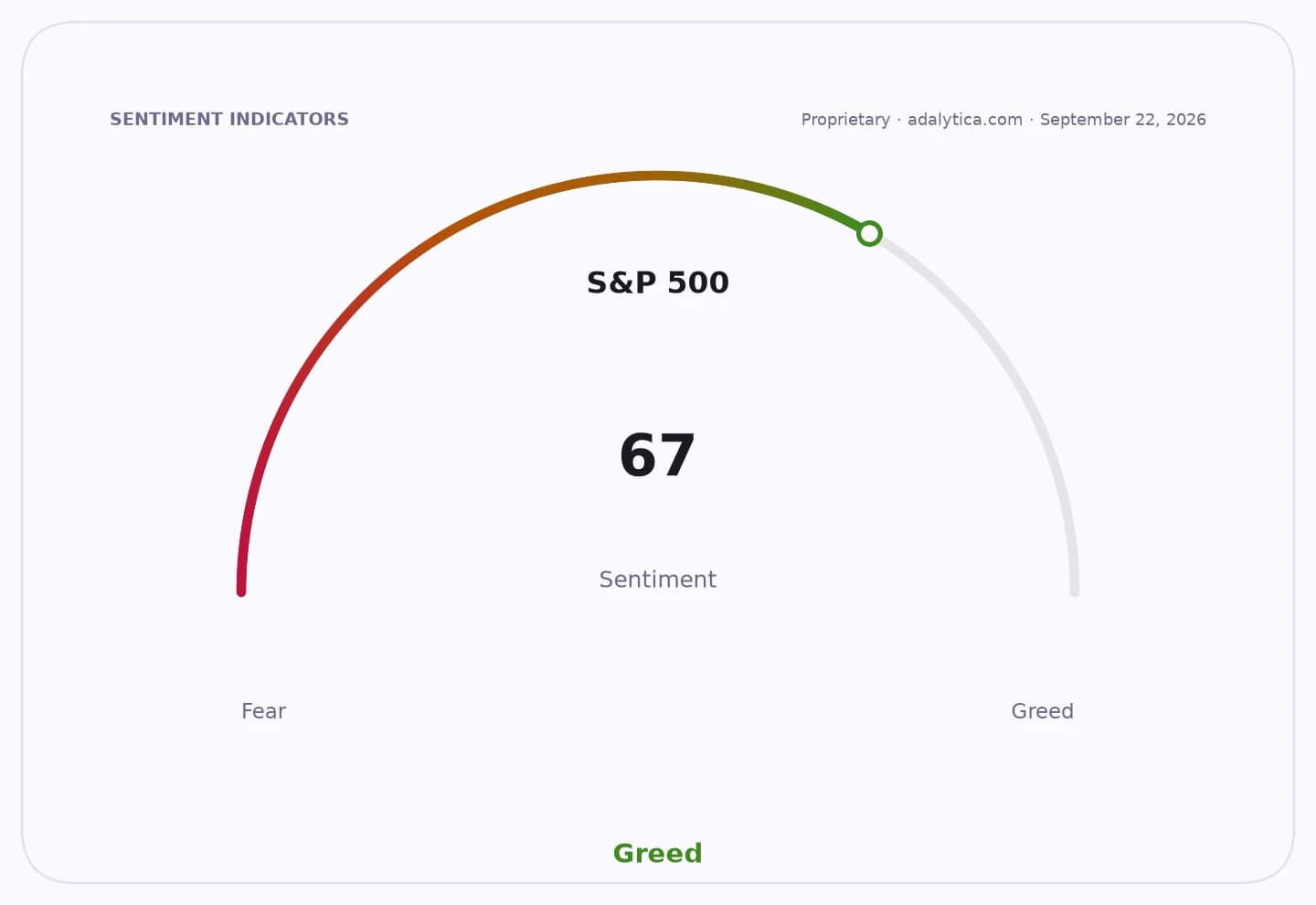
Sentiment IndicatorsⓘProprietary · adalytica.com · September 30, 2026
This is a snapshot — live sentiment, awareness and momentum for 130+ markets update continuously in the dashboard.Open AlphaPulse
Meta’s share price climbed to $738.79 on Sept. 29, leaving it only a step away from the $US2 trillion threshold. The stock has rallied sharply from a late-July low near $538, a swing that reflects a violent reversal in sentiment as buyers returned to the name after a steep midyear pullback. The move also left the shares well above the 50-day moving average and just under recent highs, with momentum readings still elevated even after some consolidation.
The latest leg higher has been driven by enthusiasm for Meta’s AI strategy, particularly the Muse personal AI assistant, which has gained traction in app-store rankings and fed the view that the company is building consumer-facing products with commercial potential. That has been reinforced by bullish broker commentary, including Wells Fargo’s AI-driven upgrade, which helped validate the argument that Meta’s capital-intensive push into artificial intelligence is not just defensive but potentially accretive to revenue growth over time.
For investors, the key question is whether the rally is being justified by fundamentals or by a narrower re-rating of the platform. The bull case is that Meta’s advertising machine remains extraordinarily profitable, giving it room to absorb AI spending while still delivering earnings growth. The bear case is that expectations are now running ahead of the economics, especially if monetization from new AI products takes longer to materialize or if user engagement weakens in some regions, a risk the company itself has flagged in recent filings.
The broader market context has also mattered. Mega-cap technology has remained the dominant destination for capital whenever sentiment turns cautious, and Meta’s advance has come amid a choppy tape that has left investors favoring companies with clear balance sheets, scale and visible cash flow. In that environment, Meta’s combination of ad dominance and AI optionality has made it one of the market’s preferred ways to express optimism about the next phase of digital spending.
If the shares can hold near current levels, the $US2 trillion milestone would cement Meta’s position as one of the defining winners of the AI trade. The next test is whether product momentum can broaden beyond initial enthusiasm and whether the company can convert that demand into durable revenue without reigniting concerns over spending discipline.
| Entity | Gains | Losses |
|---|---|---|
| Meta shareholders | ▲Higher valuation | ▼Near-term upside risk |
| Meta | ▲Market-cap milestone | ▼Scrutiny on AI returns |
| AI bulls | ▲Validation of thesis | ▼FOMO-driven entry risk |
| Skeptics | ▲None | ▼Re-rating pressure |