Meta Platforms has removed wording from its business services terms that appeared to give it broad rights to use content from corporate accounts to “develop, improve, research, train and maintain” its products, after legal experts warned the language could have opened the door to training its artificial intelligence models on publishers’ material.
Meta removes AI training language from business terms

The retreat matters because it puts a fresh spotlight on one of the most sensitive fault lines in the AI boom: who controls the data companies use to train and improve models, and whether platform operators can quietly expand access through updated terms. For Meta, which is already spending heavily on AI infrastructure and model development, any perception that it is broadening data access without clear consent risks more scrutiny from regulators, publishers and advertisers.
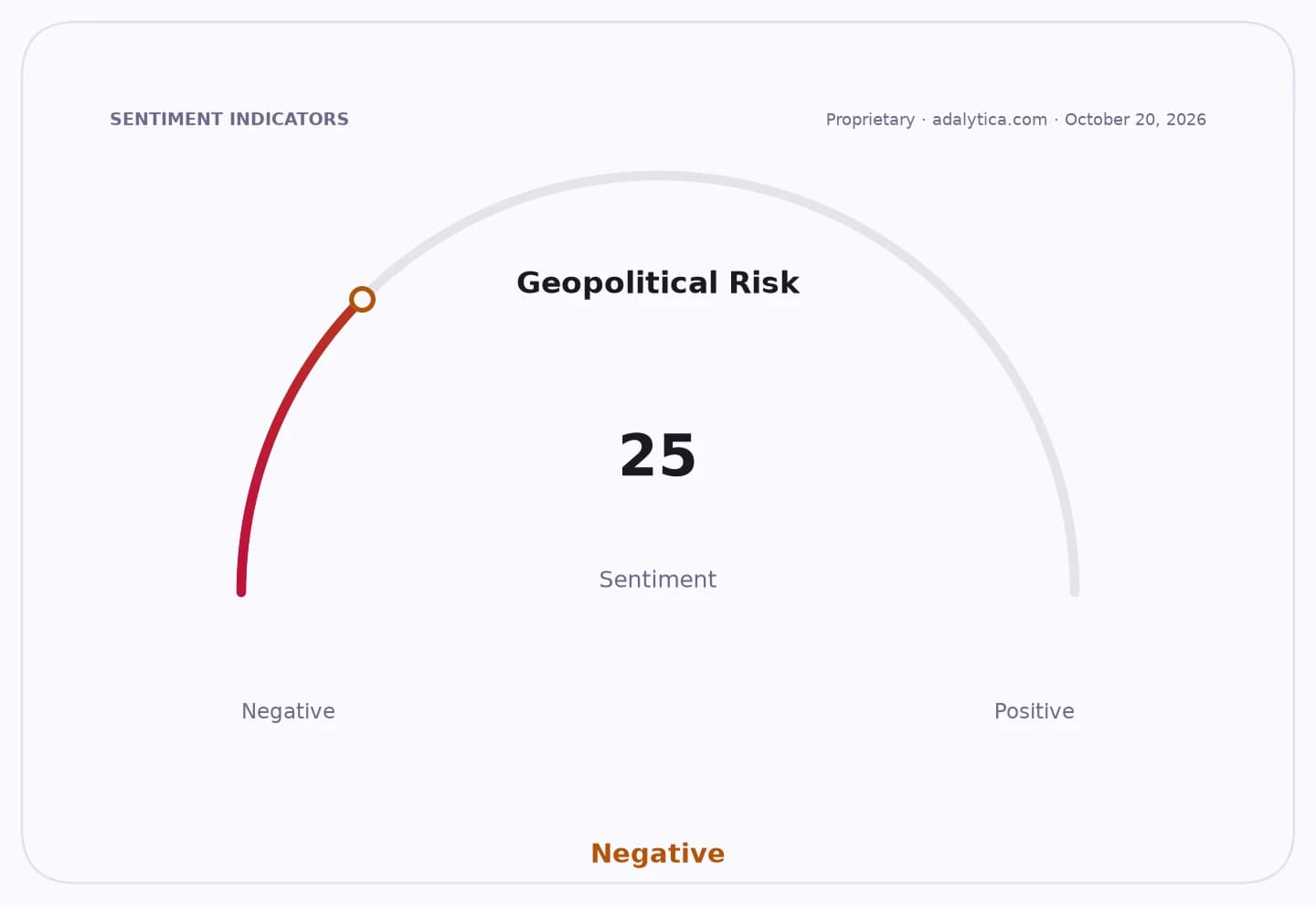
Sentiment IndicatorsⓘProprietary · adalytica.com · October 21, 2026
This is a snapshot — live sentiment, awareness and momentum for 130+ markets update continuously in the dashboard.Open AlphaPulse

Meta said the update was only a consolidation of existing advertising terms and not an expansion of its crawling practices. The company added that the revised language is now limited to “ads and business products” and that website owners can still manage crawlers through robots.txt. The original clause had triggered concern because it suggested Meta could use content from any site linked to a business account, including webpages and URLs, for training and other product development purposes.
The issue lands at a moment when AI data use is drawing broader political and legal pushback, especially around privacy, copyright and the use of sensitive information. Reuters and other recent reporting has also underscored how leaks and breaches involving AI-generated or AI-processed material are intensifying fears over how data is stored, summarized and reused.

For investors, the immediate market effect is limited, but the episode reinforces a bigger investment question around Meta and its peers: whether AI monetization can keep accelerating without triggering heavier compliance costs, product restrictions or reputational damage. Meta shares have still been trading well above the 50-day moving average, but recent price action shows the stock has pulled back from September highs as RSI readings cool from overbought levels, suggesting traders are becoming more selective after a strong run.
The broader takeaway is that AI strategy is increasingly a governance story as much as a technology story. Any future change to Meta’s terms, or any regulatory move over data use in AI training, could affect how quickly the company can scale its commercial AI products and how much risk investors are willing to price into the name.
| Entity | Gains | Losses |
|---|---|---|
| Meta | ▲reduces immediate backlash | ▼faces trust and scrutiny risk |
| Publishers / website owners | ▲retain more control | ▼lose leverage if terms broaden later |
| Advertisers / business users | ▲clearer terms | ▼possible product uncertainty |
| AI rivals | ▲less controversy spillover | ▼may still face similar scrutiny |