OpenAI says it disrupted an Iranian influence operation that used ChatGPT to generate anti-U.S. and anti-Israel propaganda, underscoring how generative AI is becoming a low-cost engine for geopolitical messaging and a growing liability for the platforms that build it.
OpenAI Disrupts Iranian ChatGPT Propaganda Campaign
The San Francisco company said the campaign produced social media posts, seven fake journalists and long-form articles aimed at making Washington and Tel Aviv look bad on the world stage. OpenAI said it identified nearly 100 articles tied to the effort across about a dozen small and midsize online outlets in several countries, with output in Persian and English and a pickup in activity after the U.S.-Iran war.
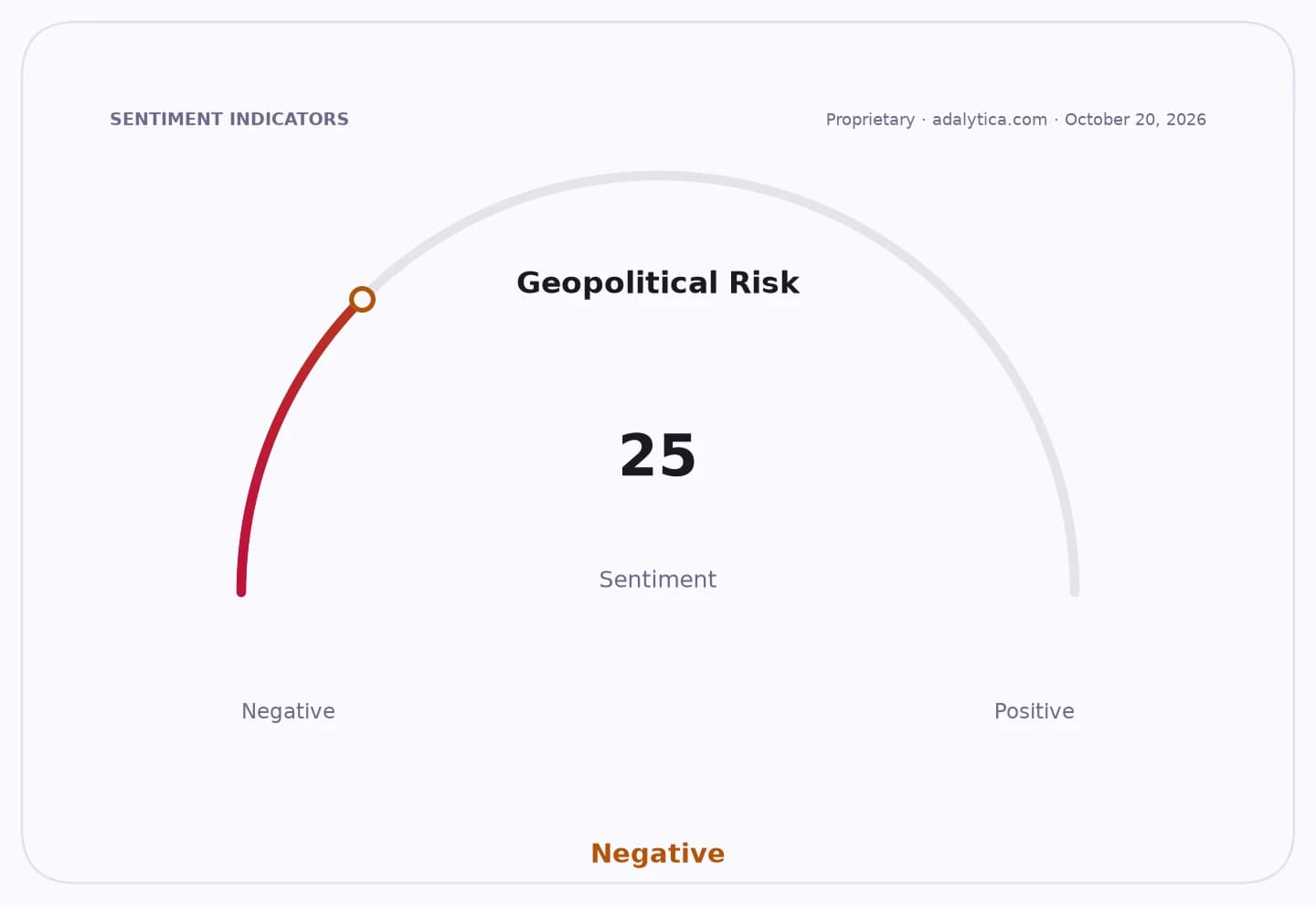
Sentiment IndicatorsⓘProprietary · adalytica.com · October 20, 2026
This is a snapshot — live sentiment, awareness and momentum for 130+ markets update continuously in the dashboard.Open AlphaPulse
That matters because AI has collapsed the cost of influence operations. What once required a newsroom, translators and a distribution network can now be scaled with a chatbot and a handful of accounts. For governments and investors alike, the implication is clear: misinformation is no longer just a social media problem, but an infrastructure risk embedded in the AI stack itself. The same models driving enterprise productivity and cloud demand can also be weaponized to flood the information market with plausibly written content at industrial scale.
The direct winners are the security and content-moderation layers around the major platforms. Meta, Microsoft and Google are all exposed to the reputational and regulatory fallout from synthetic media, inauthentic accounts and manipulated news flows, even as they race to monetize AI. Their filings already flag abuse of platforms, false identities and misleading content as material risks. That makes trust-and-safety tooling, cybersecurity, identity verification and AI governance increasingly important spending categories, not compliance afterthoughts.
For investors, the deeper takeaway is that geopolitical competition is becoming an AI capex story. As state-backed actors adapt faster to generative tools, the market should expect more spending on detection, monitoring and platform controls across the ecosystem. That is a structural tailwind for cybersecurity names such as Palo Alto Networks, CrowdStrike and Zscaler, and a strategic pressure point for the megacap platforms whose AI ambitions depend on user trust.
The market underestimates how quickly this theme can move from headline risk to budget line item. With global stability sentiment at extreme fear, the next wave of AI investment is likely to favor the picks-and-shovels that make these systems safer, not just the model builders. In our view, the opportunity is to own the companies that sell verification, threat detection and content integrity before regulation and repeated abuse make them mandatory.
| Entity | Gains | Losses |
|---|---|---|
| Cybersecurity firms | ▲Higher demand for detection tools | ▼-- |
| Meta, Microsoft, Google | ▲-- | ▼Trust and moderation costs |
| Iranian influence ops | ▲Cheap content generation | ▼Exposure to takedowns |
| Investors in AI safety | ▲Regulatory tailwind | ▼-- |