X says it has suspended more than 13,000 accounts linked to suspected foreign influence operations from China, Russia and Iran, underscoring how election disinformation remains a live policy and platform risk ahead of the U.S. midterms.
X suspends 13,000 accounts tied to foreign influence
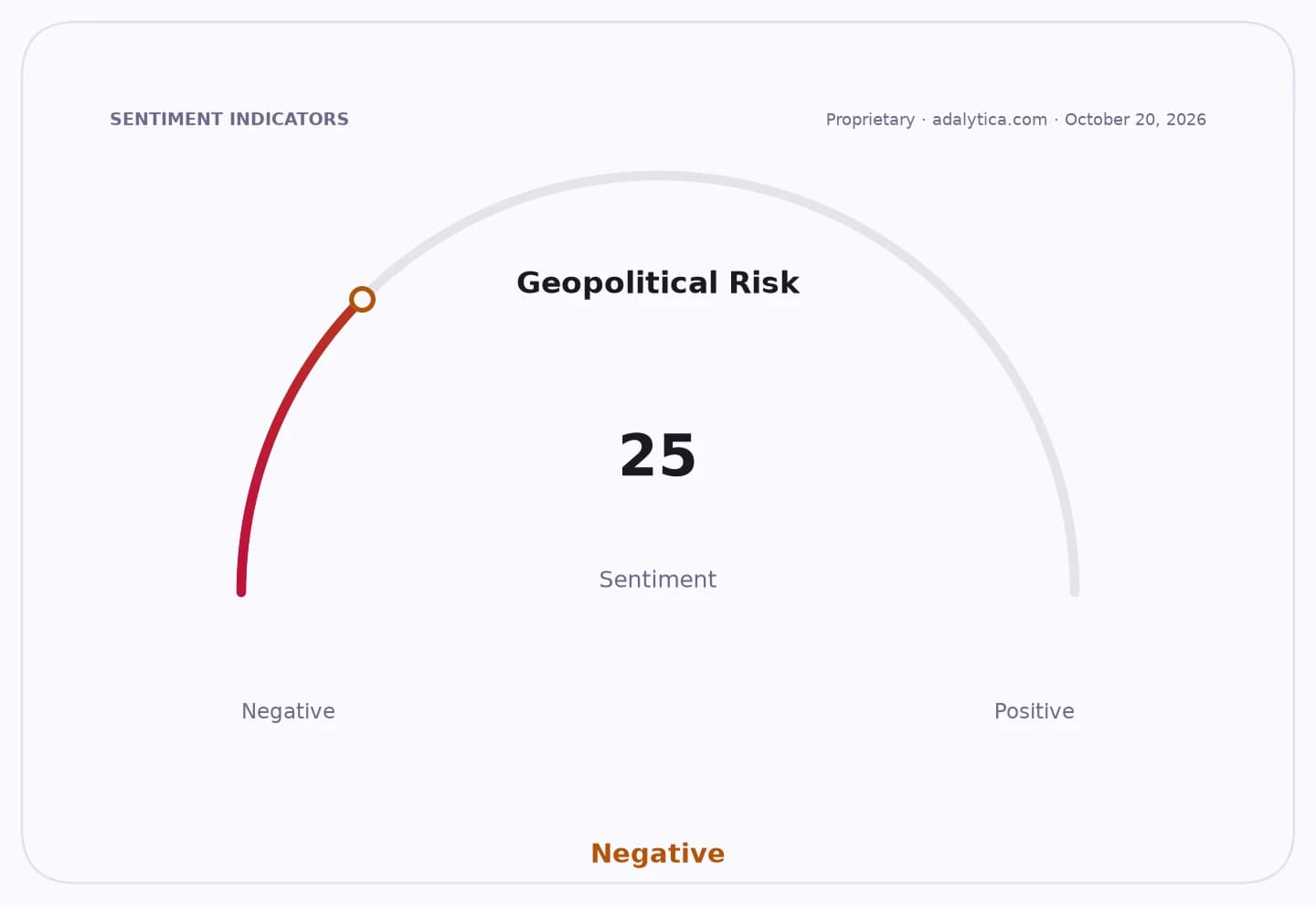
The move matters because social media manipulation can distort political discourse, weaken trust in digital platforms and draw fresh scrutiny from regulators and advertisers. It also comes as U.S.-China tensions remain elevated, with Adalytica’s US–China relations sentiment gauge at 79, or “Greed,” even as awareness of geopolitical risk sits at an “Extreme Fear” level of 4.
Sentiment IndicatorsⓘProprietary · adalytica.com · October 19, 2026
This is a snapshot — live sentiment, awareness and momentum for 130+ markets update continuously in the dashboard.Open AlphaPulse
X said the accounts used inauthentic behavior to post and amplify political content aimed at candidates and public figures across the spectrum. The company did not disclose evidence supporting the takedown or break down how many accounts were tied to each country, limiting the ability to assess the scale of the campaigns.
The platform framed the removals as part of its authenticity and civic integrity policies, which target spam networks, coordinated manipulation and misleading election content. X said users can report suspicious posts through its in-app election reporting tools and that enforcement will continue through Election Day and beyond.
The disclosure lands in a broader race among major tech companies to show they can police influence operations without overreaching into speech moderation. OpenAI said in June it had disrupted two China-linked influence operations using ChatGPT to generate political posts, comments and images, while governments have kept foreign interference in the spotlight as a national-security issue.
For investors, the issue cuts directly to platform trust, regulatory exposure and advertiser confidence, especially for companies whose revenue depends on engagement and brand safety. X is privately held, but the pressure spills over to listed peers such as Meta and Snap, which face similar expectations to detect fake accounts and limit election abuse.
Meta shares closed at $705.44 on Oct. 19, below its 50-day moving average of $657.23 but above its 200-day average of $631.30, while Snap finished at $6.27, above both its 50-day average of $5.61 and 200-day average of $5.54. Those levels suggest investors are still pricing in platform-specific risk management alongside broader digital-ad demand and regulatory headlines.
The bigger question is whether the removals reflect a one-off cleanup or an ongoing escalation in state-linked information warfare as the election cycle advances. With U.S.-China relations still fragile and platforms under pressure to prove authenticity, further takedowns or government action could remain a catalyst for social-media stocks and a renewed flashpoint in tech regulation.
| Entity | Gains | Losses |
|---|---|---|
| X | ▲Trust and moderation credibility | ▼User criticism over opaque enforcement |
| Regulators | ▲Evidence for oversight pressure | ▼Less room to argue platform inaction |
| Advertisers | ▲Safer brand environment | ▼Continued election-related volatility |
| Foreign influence networks | ▲None | ▼Accounts, reach and access |