New Zealand’s warning that China is its most persistent and capable state-backed cyber threat is another sign that cybersecurity spending is becoming a permanent line item in geopolitics, not just an IT budget. For investors, the message is simple: the world’s intelligence services are treating cyber defense as strategic infrastructure, and that keeps demand for network security, endpoint protection and managed detection rising even when broader enterprise spending cools.
New Zealand Warns China Is Top Cyber Threat

Wellington’s National Cyber Security Centre said it had identified activity suspected to originate from foreign state actors that put sensitive New Zealand information at risk, with links to China, Russia, Iran and North Korea. But it singled out China as the most persistent and capable threat, echoing an earlier warning from August that said Beijing was the only country New Zealand had detected conducting espionage “at scale.”
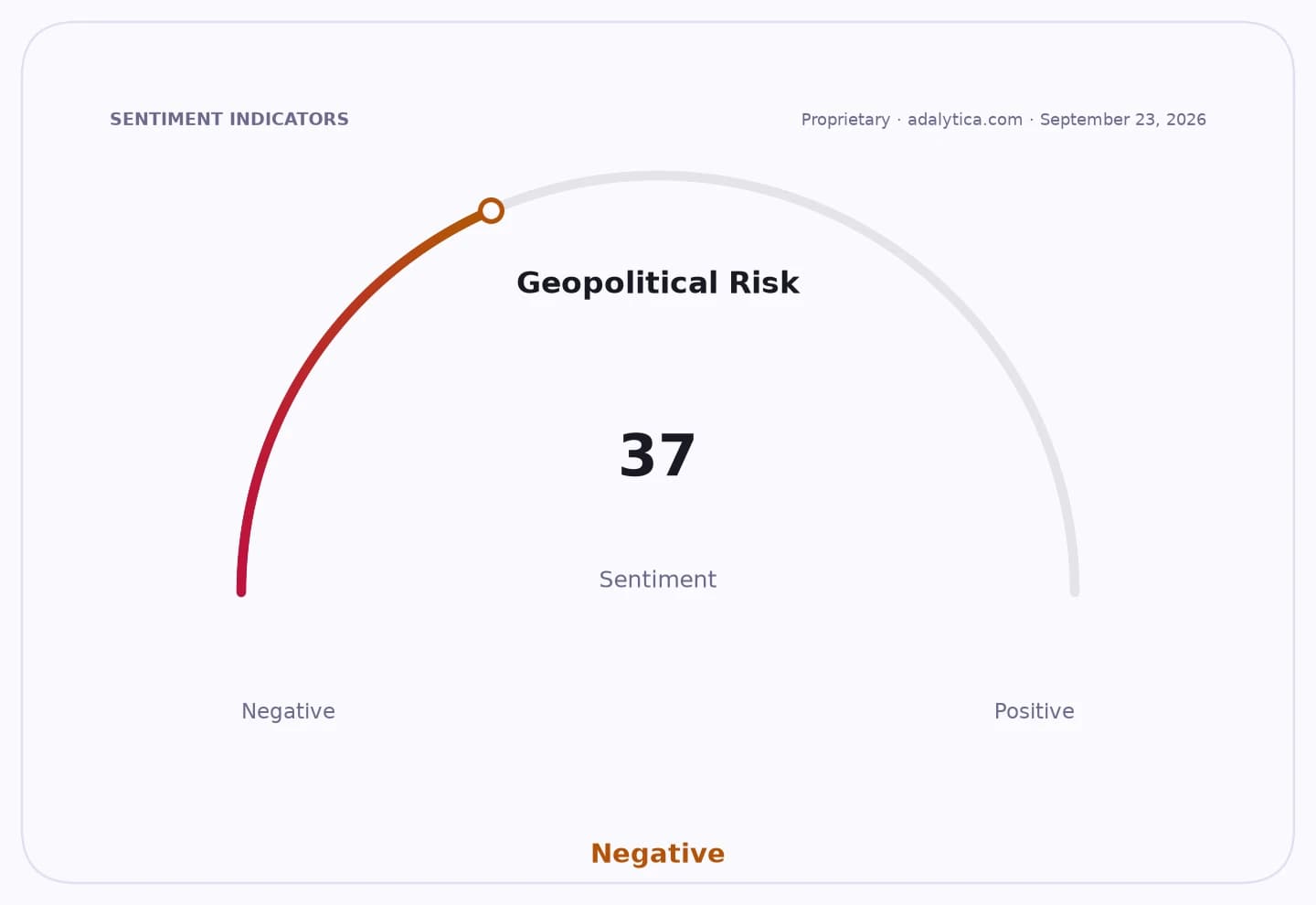
Sentiment IndicatorsⓘProprietary · adalytica.com · September 28, 2026
This is a snapshot — live sentiment, awareness and momentum for 130+ markets update continuously in the dashboard.Open AlphaPulse
The scale of the problem matters. The report said 86 of 369 cyber incidents deemed potentially nationally significant in the year to June 2026 had suspected links to state-sponsored actors. Those incidents hit government agencies, health, education and IT managed-service providers — exactly the kind of interconnected targets that can spread risk across an economy once a foothold is found. That is why cyber security is no longer a niche software category; it is a basic cost of operating in a world where espionage and disruption increasingly overlap.
The broader geopolitical backdrop is even more important. New Zealand said competition between states is increasingly playing out in the South Pacific, where it is aware of cyber espionage targeting governments and infrastructure. That raises the odds of more public-sector spending on security, tighter vendor screening and deeper scrutiny of cloud and managed-service providers that sit inside critical networks. In market terms, that is a tailwind for firms that can secure identities, endpoints, workloads and operational technology across distributed environments.
This is where the investable opportunity gets interesting. Cyber names are not just trading on breach headlines; they are being pulled by a structural escalation in state-backed operations, long-dwell intrusions and the need to monitor essential services. CrowdStrike, Palo Alto Networks and Fortinet remain the obvious bellwethers, but the second-order winners can be even more compelling: the tools that secure remote access, protect sensitive data and harden public-sector and infrastructure networks may see the most durable demand. The market often prices cyber as a reactive category. It should be priced as a geopolitical necessity.
Technically, several leading cyber names have already started to reflect that shift. CrowdStrike’s shares have rebounded sharply and are trading well above both the 50-day and 200-day moving averages, with RSI readings in overbought territory near 75. Palo Alto Networks has also pushed back toward its highs, while Fortinet has regained momentum after a mid-year pullback. That does not change the long-term thesis, but it does suggest investors are beginning to position for another leg higher in security spending.
The hidden upside is that the problem is getting harder, not easier. New Zealand said cyber espionage can sit undetected for months or years before being used for intelligence gathering or disruption, and long-running intrusions can compromise operational technology and expose corporate and personal data. That means the spending cycle is likely to persist, not fade after the next breach headline. If the market still treats cyber as a cyclical trade, this warning from New Zealand is a reminder that it is really a secular arms race.
The trade here is to stay with the infrastructure layer of cyber, not chase the news cycle. I believe the next phase of the rally belongs to the vendors that can prove persistent detection, faster response and stronger coverage of critical infrastructure. For investors, that means treating cyber security as a long-duration geopolitical megatrend — and buying the picks and shovels before the next escalation forces the market to catch up.
| Entity | Gains | Losses |
|---|---|---|
| Cybersecurity vendors | ▲Higher demand | ▼Harder sales cycle if budgets tighten |
| New Zealand agencies | ▲Stronger urgency for funding | ▼Larger security burden |
| China | ▲Intelligence reach if intrusions persist | ▼More scrutiny and pushback |
| Critical infrastructure operators | ▲Better protection spending | ▼Higher compliance costs |