Washington’s latest takedowns of Chinese hacker infrastructure underscore how exposed U.S. critical systems remain, even as the contest with Beijing shifts toward faster, AI-assisted attacks that are getting cheaper to mount and harder to stop.
U.S. Cyber Takedowns Lift Security Vendor Demand

The Justice Department and FBI said in August they seized platforms used by Chinese hackers to hit NASA, the Federal Reserve and other government and private networks. The operation followed earlier actions against a botnet that controlled thousands of infected internet-of-things devices and malware removed from more than 4,000 U.S. computers this year. But the headline damage is not the takedowns themselves; it is the fact that federal agencies are still playing whack-a-mole against an adversary that has built a cyber apparatus rivaling the United States in scale and sophistication.
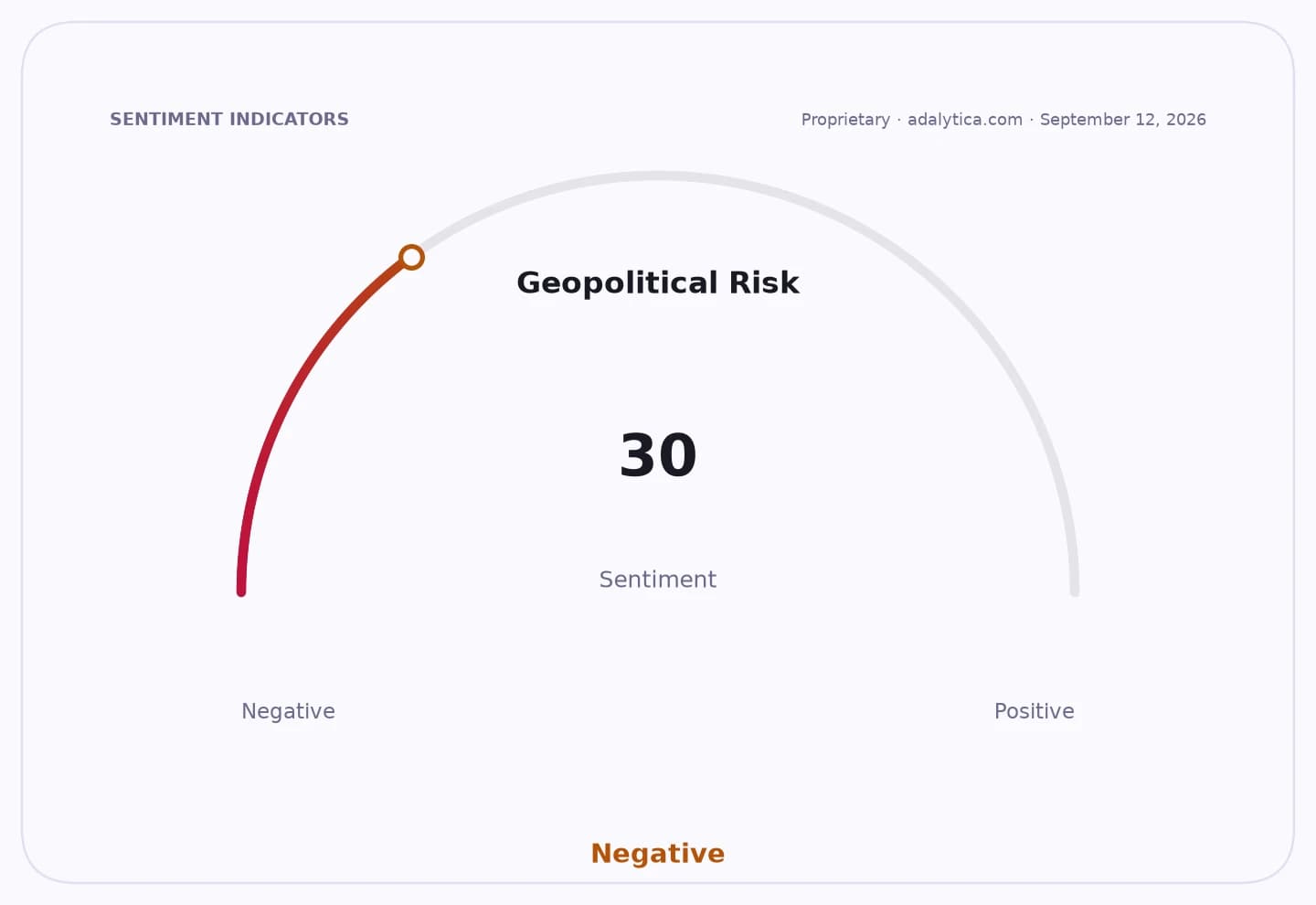
Sentiment IndicatorsⓘProprietary · adalytica.com · September 20, 2026
This is a snapshot — live sentiment, awareness and momentum for 130+ markets update continuously in the dashboard.Open AlphaPulse
That asymmetry matters economically because the most exposed targets are the systems that keep the U.S. economy running: water treatment plants, gas pipelines, power installations, telecom networks and transport nodes. A successful compromise can disrupt output, raise operating costs, force emergency spending and, in the worst cases, cascade into broader industrial shutdowns. The threat is not theoretical. Suspected Iran-linked hackers targeted monitoring and control networks at water and wastewater utilities in at least 12 states in July, a reminder that even modestly resourced actors can exploit weakly defended infrastructure.
For investors, the story is a straight read on cybersecurity demand and on the durability of current spending. U.S. enterprises and public agencies are likely to keep increasing budgets for detection, response and network resilience, which supports vendors such as Palo Alto Networks, CrowdStrike and Fortinet. Their shares have also shown how sensitive the market is to any sign that security spending may persist. But the bull case for the sector is not just more software sales; it is that government policy, procurement and baseline infrastructure requirements could force a structural upgrade cycle if Washington moves beyond episodic crackdowns.
The bear case is that the U.S. keeps relying on disruptive law-enforcement actions without fixing the underlying fragility of its networks. The Council on Foreign Relations report in the data set argues the government has poor visibility into Chinese cyber activity, lacks a clear national strategy and still has weak tools to impose costs. It recommends deeper integration with private-sector threat intelligence, tougher measures against enabling infrastructure, stronger critical-infrastructure standards and a rebuilt federal cyber workforce. Those prescriptions would not be cheap, and some would face industry resistance or Beijing retaliation, but the report’s central point is that delay widens the gap.
Artificial intelligence is sharpening the stakes. New large language models can automate parts of malware development, vulnerability discovery and exploit coding, lowering the barrier to sophisticated attacks. That cuts both ways: the side that can use AI faster for defense may blunt the other side’s advantage, but only if it has the sensors, talent and authorities to act on what it sees. China is racing to close the model gap, which means the window for U.S. defensive superiority is narrowing rather than expanding.
That is why the issue is now geopolitical as much as technical. President Donald Trump may raise cyber issues with President Xi Jinping, but rhetoric that equates U.S. and Chinese behavior weakens deterrence. Beijing is already signaling confidence on multiple fronts, from technology controls to South China Sea tensions. Without a clearer deterrent strategy, the U.S. risks normalizing a contest in which Chinese access threatens the systems Washington relies on to govern, defend and function.
For markets, the near-term implication is continued support for security vendors and infrastructure hardening contractors, but with valuation pressure if spending fails to translate into measurable resilience. For policymakers, the message is less comfortable: every year of delay makes the eventual fix more expensive and the damage from the next intrusion more likely.
| Entity | Gains | Losses |
|---|---|---|
| U.S. cybersecurity vendors | ▲Higher demand for defense tools | ▼Margin pressure if competition intensifies |
| U.S. critical infrastructure operators | ▲Better protection if reforms land | ▼Higher compliance and modernization costs |
| China’s cyber operators | ▲Continued leverage against exposed networks | ▼Greater risk of takedowns and retaliation |
| U.S. government | ▲More urgency for funding and authority | ▼Credibility if defenses remain fragmented |