Meta Platforms is moving to put generative AI directly inside WhatsApp, and the real significance is not just convenience — it is that the company is trying to make AI feel private enough to live inside the world’s most personal messaging app.
Meta WhatsApp tests private AI writing help
That matters because WhatsApp is one of Meta’s most valuable consumer franchises, with billions of users and a trust premium that has long been hard to translate into new monetization. If Meta can make AI assistance part of everyday messaging without spooking users, it deepens engagement, strengthens WhatsApp’s product moat and gives the company another way to keep people inside its ecosystem as competition for attention intensifies.
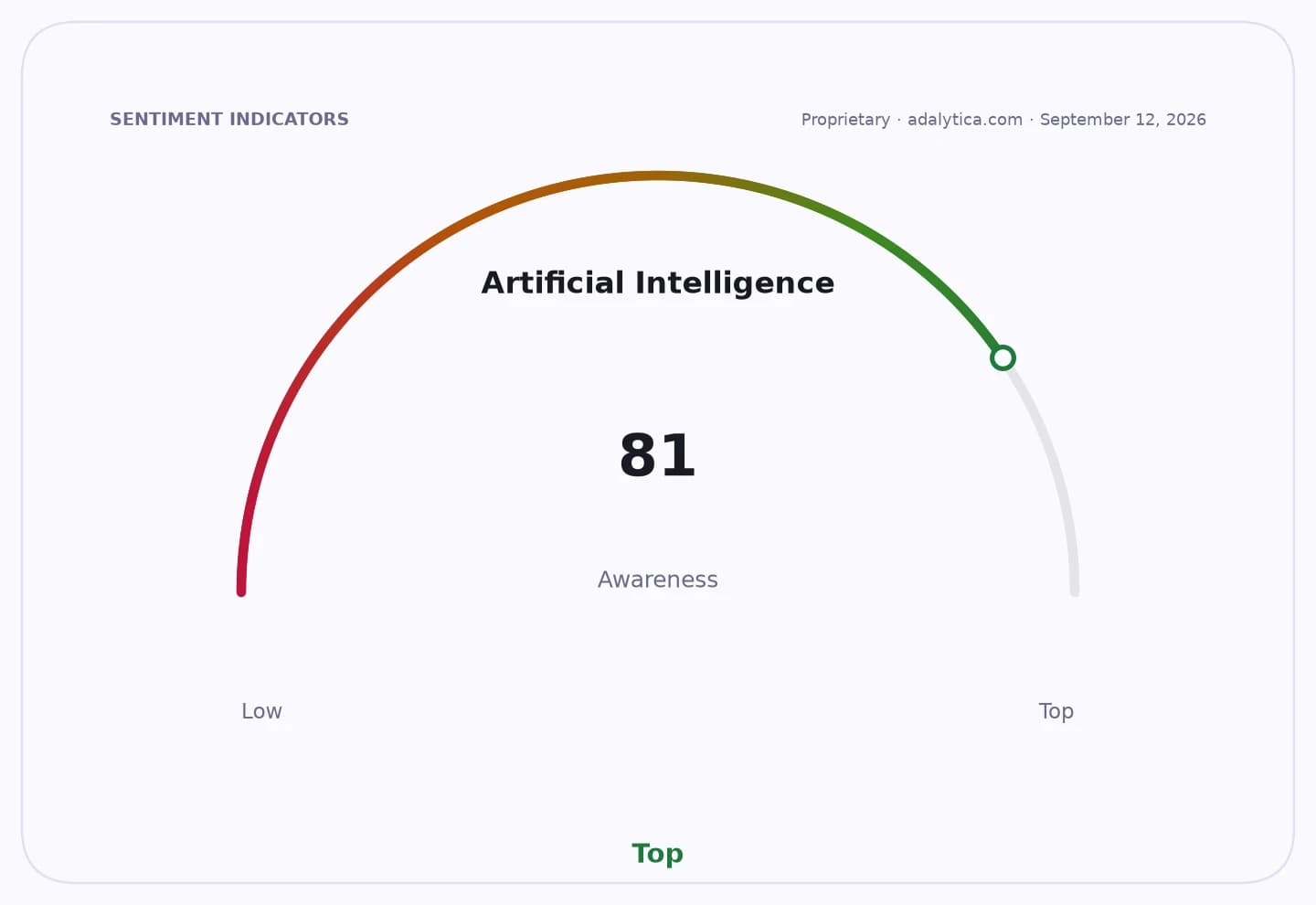
Sentiment IndicatorsⓘProprietary · adalytica.com · September 12, 2026
This is a snapshot — live sentiment, awareness and momentum for 130+ markets update continuously in the dashboard.Open AlphaPulse
The feature, called Write Help, is still in beta for Android users and offers at least three rewrite suggestions when a person taps an AI button. Meta says it relies on a “Private Processing” architecture using encrypted connections and anonymous routing so requests are not tied to a user’s identity. The company is also giving the tool five tones — professional, funny, supportive, spelling correction and paraphrasing — which makes it useful for ordinary consumers, not just early AI adopters.
That privacy emphasis is the key to the story. Messaging is different from social feeds or search boxes. People use it for personal, family and work communication, which means any AI feature has to overcome a higher level of skepticism around data use. Meta is trying to answer that concern before it becomes a growth ceiling. If users believe the assistant can help polish a message without exposing the conversation, adoption could be much broader than a typical AI add-on.
For investors, the appeal is straightforward: this is another step in Meta’s long-term effort to make AI a utility across its apps rather than a separate product. The company has already been expanding AI features across its platforms, and embedding them in WhatsApp could reinforce user retention while creating future opportunities in business messaging and premium tools. Meta shares have also been volatile, and recent technical readings show the stock trading above both its 50-day and 200-day moving averages, with momentum improving again after a sharp midyear pullback.
The bigger competitive question is whether Meta can do this better than rivals that are also racing to weave AI into communication products. Apple, Google and others are all operating in a market where privacy concerns and regulation are rising, and Meta’s own filings have highlighted the need to evolve its advertising and product systems around privacy-enhancing technologies. That makes WhatsApp a useful test case: if Meta can demonstrate that AI and privacy can coexist in messaging, it strengthens the case for broader deployment across its ecosystem.
Adalytica’s Microsoft earnings sentiment gauge shows investors remain highly focused on AI execution across the sector, even as broader market signals have weakened. For Meta, that means the bar is high: users will not tolerate a clumsy privacy trade-off, and investors will not reward AI for novelty alone. The prize is durable engagement, better product stickiness and a bigger platform advantage over time.
If Meta can turn private AI assistance into a habit inside WhatsApp, it could become one of those quiet product changes that compounds for years. For long-term investors, it is worth watching closely.
| Entity | Gains | Losses |
|---|---|---|
| Meta | ▲Higher engagement; stronger moat | ▼Privacy missteps; slower adoption |
| WhatsApp users | ▲Easier message drafting | ▼Added AI trust concerns |
| Rivals | ▲Pressure to match privacy-first AI | ▼Product differentiation |
| AI skeptics | ▲Clearer privacy standards | ▼Fewer arguments against embedded AI |