Meta is developing an artificial-intelligence assistant modeled on Chief Executive Mark Zuckerberg for use by employees, a move that underscores how aggressively the company is trying to turn AI into a productivity tool inside its own walls before pushing it harder across its products and advertiser-facing systems.
Meta builds Zuckerberg AI assistant for employees
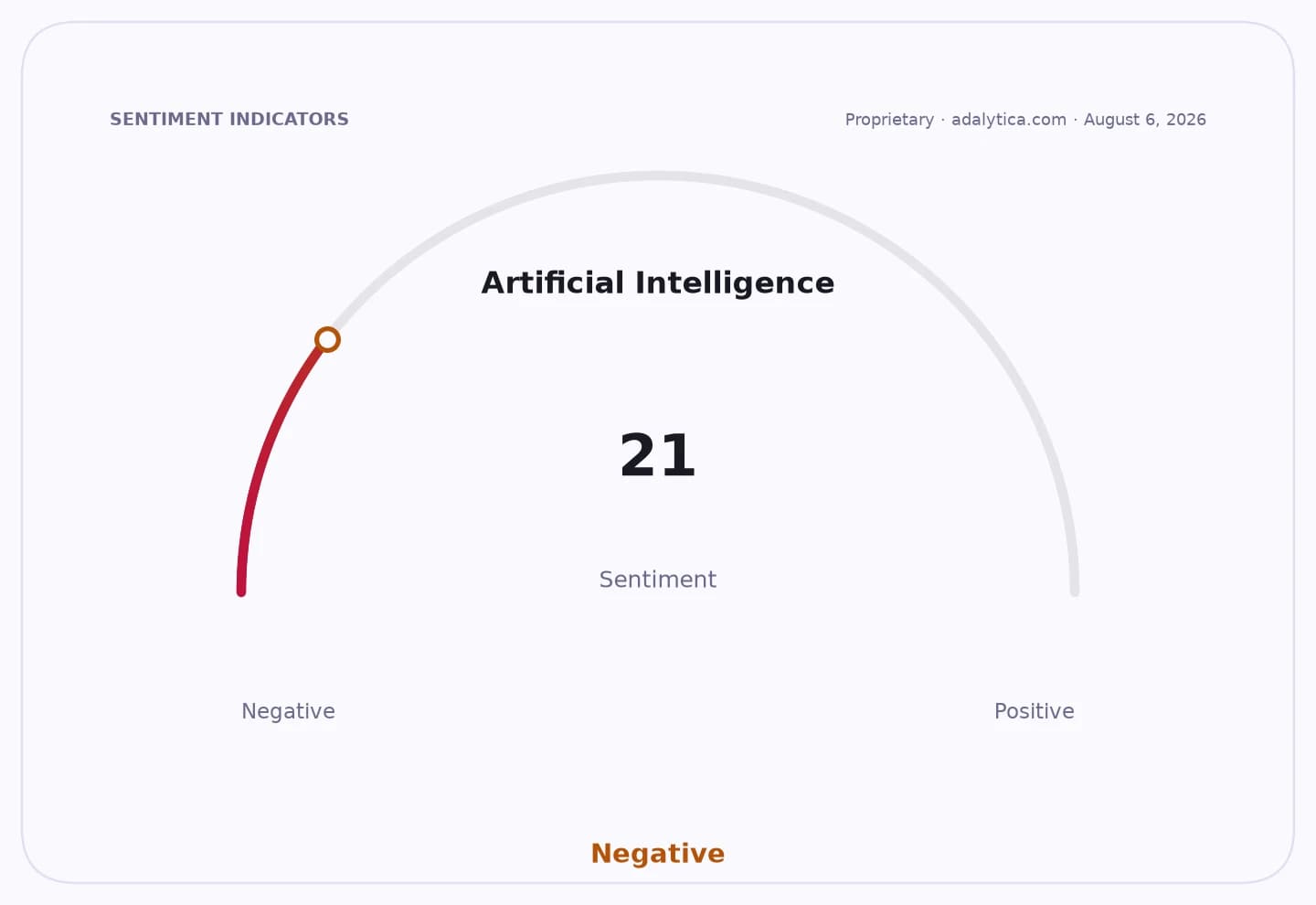
The significance goes beyond an internal novelty. Meta has spent heavily on AI infrastructure and superintelligence research, and the creation of a Zuckerberg-style assistant suggests the company wants to normalize AI as an operating layer across management, engineering and corporate workflows. For investors, that matters because the payoff from these investments will increasingly be judged not just by model quality, but by whether AI reduces costs, speeds execution and supports margin expansion at a time when capital spending across the sector remains elevated.
Sentiment IndicatorsⓘProprietary · adalytica.com · August 6, 2026
This is a snapshot — live sentiment, awareness and momentum for 130+ markets update continuously in the dashboard.Open AlphaPulse
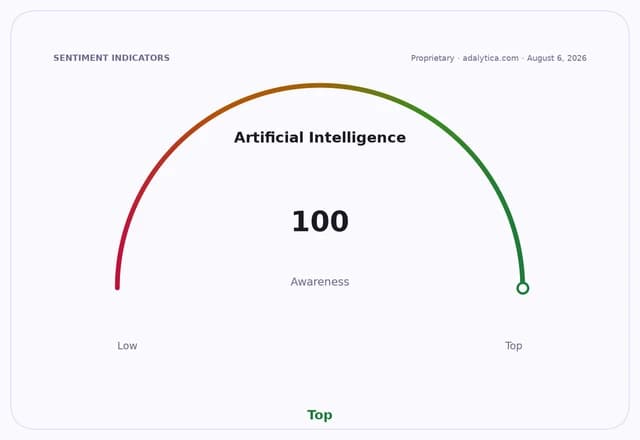
Meta’s latest filing said it has made “significant investments” in AI initiatives and warned those efforts may not succeed. That caution sits alongside a broader industry debate over whether AI adds jobs or displaces them. Nandan Nilekani has said large firms may see net job losses from AI even as applied uses boost productivity, while the World Bank has argued AI could raise productivity in a meaningful share of jobs in developing economies. For Meta, the internal Zuckerberg AI is a concrete example of the applied-AI thesis: automate routine decisions, improve access to institutional knowledge and cut the friction that slows product and ad development.
The move also fits Meta’s strategic pivot away from the metaverse-heavy investment cycle that once dominated its spending narrative. Management has been steering resources toward AI, wearables and next-generation devices, and the company’s willingness to put its own chief executive into a modeled assistant points to a broader push to make AI part of the corporate culture rather than a side project. That could help Meta justify its spending to shareholders if it translates into faster product iteration, more efficient ad tools and stronger monetization of its social platforms.
The stock market has already been treating AI execution as a key differentiator. Meta shares were changing hands around $589.14, below both the 50-day moving average of $600.46 and the 200-day average of $631.13, suggesting the market remains skeptical after a volatile run. The shares have recovered from a sharp late-July selloff, but the technical setup still shows momentum that is weaker than the company’s long-term price trend. Microsoft, by contrast, has been trading near $500.91 after a sharp rebound, reflecting the premium investors continue to assign to AI leaders that can show clearer monetization.
For Meta, the bear case is that internal AI tools become an expensive demonstration of capability rather than a measurable earnings lever. The bull case is that an employee-facing Zuckerberg assistant is exactly the kind of workflow automation that can compound across a company Meta’s size, particularly if it helps the firm ship more ads, products and infrastructure improvements with fewer human bottlenecks. The next test will be whether Meta can show that this kind of applied AI changes the economics of running the business, not just the optics of it.
| Entity | Gains | Losses |
|---|---|---|
| Meta | ▲Faster internal workflows | ▼Higher AI spending risk |
| Employees | ▲Easier access to knowledge | ▼More automation pressure |
| Shareholders | ▲Potential margin gains | ▼No payoff if tools disappoint |
| Microsoft | ▲AI adoption tailwind | ▼Relative valuation pressure |