The Mexican peso was little changed against the dollar on Monday as traders scaled back expectations for another Federal Reserve rate increase this month, a shift that is helping steady one of emerging markets’ most closely watched currencies.
Mexican Peso Holds Near 18.17 vs Dollar

The spot exchange rate was at 18.1737 pesos per dollar, versus 18.1637 on Friday, according to Banco de México. That left the peso with a marginal loss of just 0.06%, even after the dollar firmed broadly and the dollar index rose 0.28% to 102.22.
Sentiment IndicatorsⓘProprietary · adalytica.com · October 6, 2026
This is a snapshot — live sentiment, awareness and momentum for 130+ markets update continuously in the dashboard.Open AlphaPulse

The bigger market driver is not Mexico-specific but the changing outlook for U.S. rates. Friday’s labor data in the United States cooled bets on another Fed hike in October, with CME FedWatch pricing only a 21.6% probability of a 25-basis-point increase. For the peso, that matters because its carry-trade appeal depends heavily on the yield spread between Mexico and the U.S. When expectations rise for higher U.S. rates, the advantage of holding pesos narrows and the currency tends to come under pressure.
That relationship has been visible in recent weeks. The peso weakened sharply at the end of September as Treasury yields rose and oil-market volatility added to risk aversion. Higher U.S. yields can also pull capital toward dollar assets, while Mexico’s relatively high policy rate becomes less compelling if investors think the Fed may stay tighter for longer.
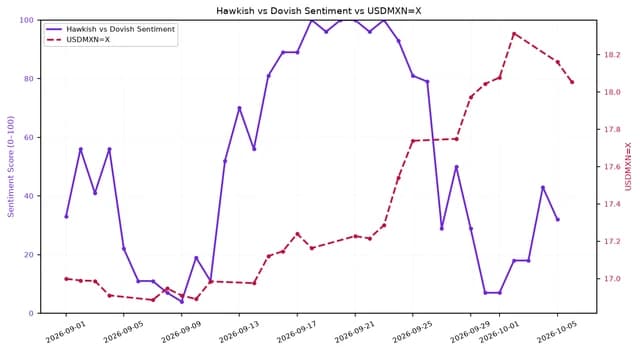
Technical positioning also suggests the currency is in an elevated volatility phase. The peso remains above its 50-day and 200-day moving averages in the data provided, while the RSI readings are stretched higher, indicating the move from stronger levels has been sharp enough to leave it sensitive to any renewed dollar buying. That does not change the fundamental story, but it helps explain why intraday swings have remained wide even as the currency held near 18.17.
Monex Grupo Financiero said the peso opened under pressure from a stronger dollar, but later found support as risk aversion eased and local macro data helped a technical rebound. In practice, that leaves the currency pinned between two forces: a still-firm U.S. dollar and a market that is increasingly willing to believe the Fed’s tightening cycle is close to peaking.
This week’s calendar is important because it will test that view. The Fed’s meeting minutes are due Wednesday, followed by the Bank of Mexico’s minutes and September inflation data in Mexico on Thursday. Any sign that U.S. policymakers remain inclined to keep rates higher for longer could revive dollar demand and weigh on the peso. A softer signal, or evidence that Mexican inflation is cooling enough to support Banxico policy stability, would reinforce carry-trade inflows and help the peso hold near current levels.
For investors, the immediate question is whether the peso’s stability reflects durable support or just a pause after a recent selloff. If U.S. rate expectations keep easing, the peso could regain some of the ground lost at month-end. If Treasury yields resume climbing, the currency’s sensitivity to the Fed will remain the dominant force.
| Entity | Gains | Losses |
|---|---|---|
| Mexican peso bulls | ▲Stable carry appeal | ▼Risk from stronger dollar |
| Dollar bulls | ▲Firmer U.S. yields | ▼Softer Fed-hike expectations |
| Mexican exporters | ▲More predictable FX | ▼Less competitive peso support |
| Peso shorts | ▲Limited follow-through | ▼Rebound risk on dovish Fed signals |