A growing backlash against workplace AI is putting Microsoft and other big employers under a new kind of talent risk: some workers are quitting rather than using the tools they say erode quality, judgment and job satisfaction.
Microsoft AI adoption faces worker resistance
The fight matters economically because AI adoption is no longer just a capital-spending story for companies; it is becoming a labor and productivity story too. If employees resist or refuse AI systems, firms may face slower rollout, higher training costs, lower morale and, in some cases, the loss of experienced staff who can be hard to replace.
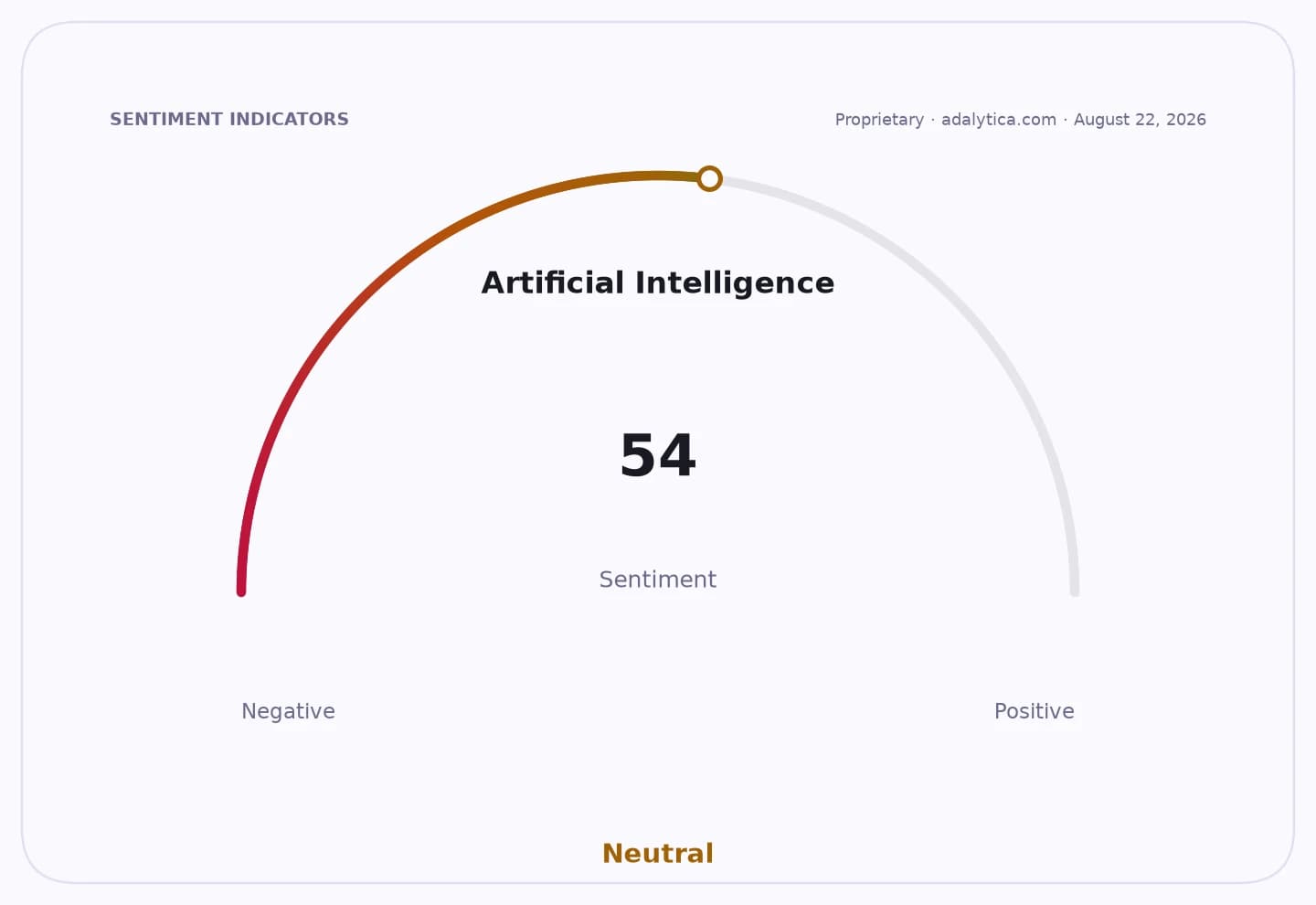
Sentiment IndicatorsⓘProprietary · adalytica.com · August 22, 2026
This is a snapshot — live sentiment, awareness and momentum for 130+ markets update continuously in the dashboard.Open AlphaPulse
That tension sits in the middle of Microsoft’s own AI strategy. The company has made artificial intelligence central to its products and earnings narrative, and its shares have climbed to $483.24 as of Aug. 21, well above the 50-day moving average of $419.09 and the 200-day average of $429.43. But the stock has also shown volatility, with the relative strength index easing to 59.5 from overheated levels near 70 earlier in the week, while sentiment on Microsoft earnings remains elevated at 89 on Adalytica’s scale even as awareness is flagged at extreme fear.
The broader market backdrop underscores how closely investors are watching AI adoption. Nvidia, the most direct chip supplier to the AI buildout, has pulled back to $214.72 from a recent peak above $223, while Alphabet traded at $344.82, both still reflecting heavy AI exposure. The mixed moves suggest investors still favor the AI trade, but are increasingly sensitive to whether the technology’s rollout is smooth enough to justify the spending.
That is why the labor reaction matters. Workers who reject AI are effectively pushing back on a technology employers increasingly view as a way to raise output, cut costs and speed up workflows. For companies, that can turn AI from a margin tailwind into a management headache, especially if resistance spreads beyond isolated cases and starts affecting recruiting, retention and execution.
Microsoft’s own filings highlight the stakes, warning that AI systems can produce unintended consequences and be used in unforeseen ways. The company also says customers could reduce or shift AI workloads to competing platforms if adoption slows, a reminder that enthusiasm can evaporate quickly if the rollout feels forced or poorly governed.
For investors, the key question now is whether AI remains a growth engine or starts to encounter real-world friction from the people expected to use it. If worker resistance grows, it could slow enterprise adoption and temper the payoff from years of spending. The next test will be whether big tech can keep pushing AI deeper into the workplace without alienating the employees it still needs to make the software work.
| Entity | Gains | Losses |
|---|---|---|
| Microsoft and big tech | ▲Faster AI monetization | ▼Labor pushback and rollout friction |
| AI supporters and managers | ▲Higher productivity potential | ▼More training and change-management costs |
| Workers resisting AI | ▲Preserve judgment and craft | ▼Risk being sidelined in AI-first workplaces |
| Nvidia and AI suppliers | ▲Continued demand for AI buildout | ▼Slower enterprise adoption if resistance spreads |