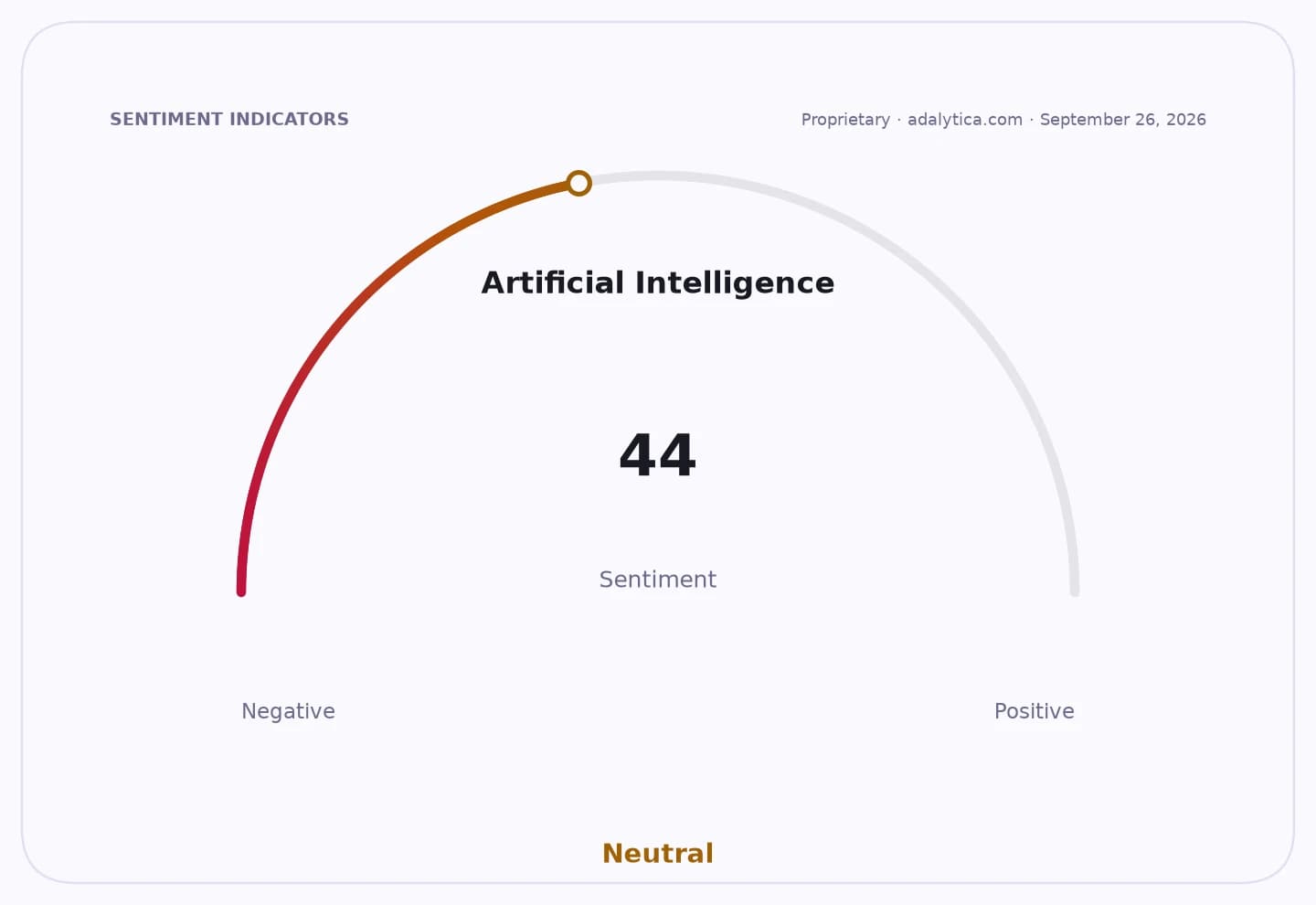
Microsoft’s latest surge and Nvidia’s rebound are telling investors the same thing: the AI trade is no longer just about chips and cloud demand, but about who can automate labor fastest and protect margins while everyone else pays up for talent, pensions and disability costs.
Microsoft, Nvidia rebound above key averages
That matters because the next phase of AI investment is moving from flashy model launches to hard operational leverage. Companies that can replace repetitive work with software agents, embed AI into workflows and keep headcount from outrunning revenue will expand profits even if overall spending stays elevated. Those that cannot will see wage bills, benefits and restructuring charges eat into the gains from digital transformation.
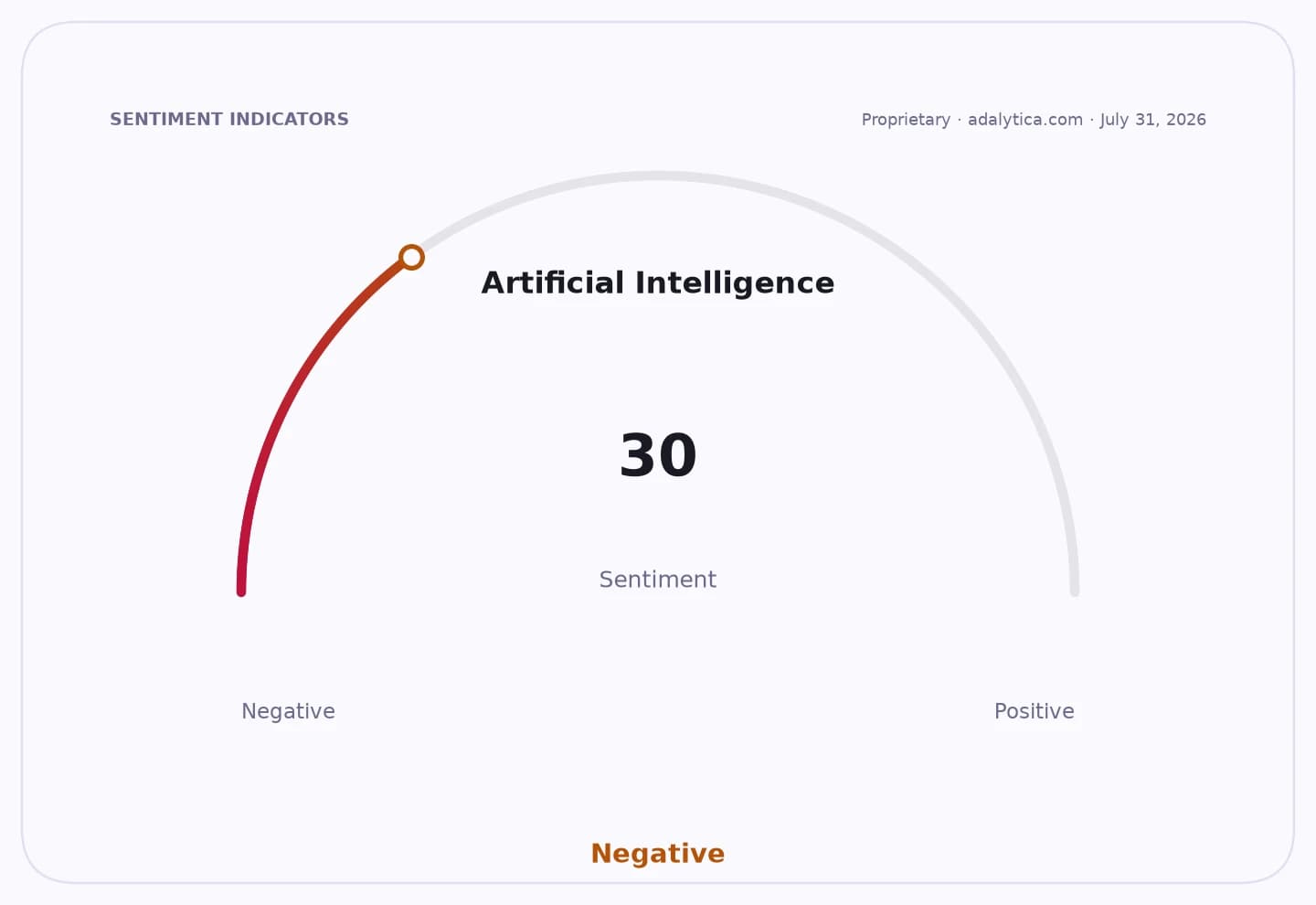
Sentiment IndicatorsⓘProprietary · adalytica.com · July 31, 2026
This is a snapshot — live sentiment, awareness and momentum for 130+ markets update continuously in the dashboard.Open AlphaPulse
Microsoft closed at $464.34 on Friday, up sharply from $390.54 two days earlier and back above its 50-day moving average after a brutal midyear selloff. Nvidia finished the week at $197.36, also recovering from a pullback. The technical picture on both names now looks healthier, with Microsoft’s RSI at 74.9 and Nvidia’s at 44.7, a sign that momentum has improved even after volatility. For investors, that combination is important: the market is rewarding the firms that sit closest to the AI productivity stack, not just the ones selling the biggest models.
The earnings backdrop reinforces the trade. Microsoft’s latest annual filing says AI is being used to “deliver measurable business outcomes” and provide a “unified intelligence layer” for enterprise customers, language that captures where the real value pool is shifting — into corporate automation, workflow software and cloud infrastructure. That is exactly why the talent story matters. As companies from industrial groups to financial firms experiment with AI “employees,” the economic pressure shifts from hiring to redesigning work. In plain English: fewer humans are needed for certain tasks, and the bill for the remaining workforce becomes a more visible line item.
That creates a powerful second-order effect across the market. Software and infrastructure leaders gain as firms spend on compute, data systems and AI agents. Human capital-intensive businesses face the opposite: higher benefit costs, more restructuring, and slower margin expansion. The supplied filings from peers and suppliers point to a sector still wrestling with workforce optimization, pension-related charges and termination costs — the kind of friction that shows up when management teams try to reprice labor for an AI era.
For Microsoft, the near-term risk is less about demand and more about execution: investors now expect AI to show up in operating leverage, not just in capital expenditure. For Nvidia, the question is whether the AI buildout continues to broaden beyond a few hyperscalers into the enterprise and industrial layer. If it does, the winners are not just the chip makers and cloud platforms, but the companies that provide the tools to automate knowledge work, streamline operations and cut labor intensity.
The market is still underestimating how fast “AI fluency” becomes a balance-sheet issue. Over the next several quarters, that should favor the picks-and-shovels of automation and infrastructure while punishing firms with bloated benefit costs and weak pricing power. In this setup, I believe investors should stay aligned with the AI productivity stack — Microsoft and Nvidia remain core holdings — while looking for the next beneficiaries of labor substitution in enterprise software, industrial automation and AI-enabled services.
| Entity | Gains | Losses |
|---|---|---|
| Microsoft | ▲AI productivity leverage | ▼Legacy labor-heavy workflows |
| Nvidia | ▲Higher AI infrastructure spend | ▼Slower AI capex growth |
| Enterprises using AI | ▲Lower operating costs | ▼More restructuring pressure |
| Talent-intensive firms | ▲N/A | ▼Pension and disability costs |