Bank of Morocco kept its benchmark interest rate unchanged at 2.25% for a sixth straight meeting, underscoring a cautious policy stance as weaker domestic growth and falling inflation give it room to wait while global and local risks remain elevated.
Morocco Central Bank Holds Rate at 2.25%
The decision matters because Morocco’s central bank is now balancing two opposing forces: headline inflation is easing far faster than expected, but the economic backdrop is deteriorating enough that the bank has chosen not to ease further for now. With consumer prices falling 0.3% in August from a year earlier for a second consecutive month, the case for near-term rate cuts is stronger on paper. Yet the bank flagged geopolitical tensions, energy and food supply risks, higher sovereign bond yields and weather-related uncertainty at home as reasons to stay on hold.
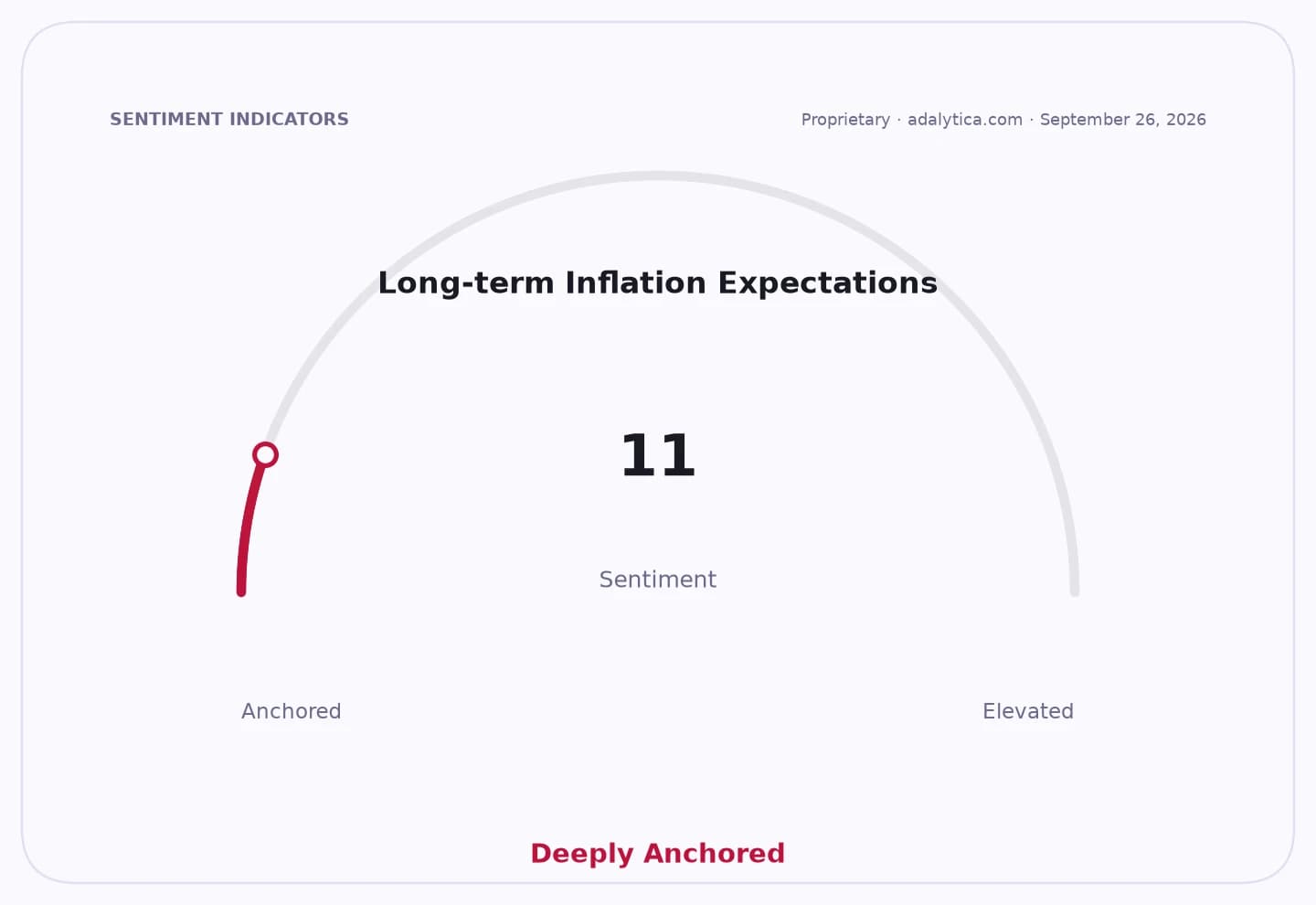
Sentiment IndicatorsⓘProprietary · adalytica.com · September 26, 2026
This is a snapshot — live sentiment, awareness and momentum for 130+ markets update continuously in the dashboard.Open AlphaPulse
It also marked down its macro outlook, cutting expected 2026 inflation to 1.5% from 2.1% and lowering 2026 growth to 4.4% from 5.2%. The downgrade signals that policy support may not be enough to offset a softer non-farm economy, especially in mining and other non-agricultural industries. The bank also trimmed its 2027 growth forecast to 2.9% from 3.1% and lowered its inflation estimate for that year to 0.7% from 1.5%, suggesting price pressures may remain contained even as activity cools.
For investors, the message is one of slower nominal growth and a more stable rate environment. That is typically positive for government bonds if inflation continues to undershoot, but it can also reflect weaker earnings momentum for domestically exposed companies. Lower inflation and a steady policy rate can help preserve household purchasing power and support credit quality, yet the growth downgrade raises questions about loan demand and corporate revenue trajectories.
The central bank said higher energy costs have already fed into imports and some industries reliant on foreign inputs, while government subsidies on transport and administered prices for cooking gas and electricity have blunted the pass-through to local prices. It expects Morocco’s energy bill to climb 28.4% to 138.1 billion dirhams this year before easing to 116 billion dirhams, a reminder that the external account remains vulnerable to oil and gas swings even as reserves are projected to rise to 502.8 billion dirhams in 2026 and 515.3 billion in 2027.
The broader narrative is that Morocco is moving into a phase of disinflation without momentum. If growth weakens faster than expected, the central bank may be forced to revisit easing sooner; if imported energy costs rise again, it may need to stay cautious despite soft domestic prices. For now, the hold decision suggests policymakers are prioritising stability over stimulus until the growth outlook becomes clearer.
| Entity | Gains | Losses |
|---|---|---|
| Borrowers | ▲Stable rates | ▼No fresh easing |
| Bondholders | ▲Lower inflation outlook | ▼Slower growth backdrop |
| Exporters/energy importers | ▲Stronger reserves profile | ▼Higher energy bill |
| Domestic companies | ▲Steadier policy setting | ▼Weaker demand growth |