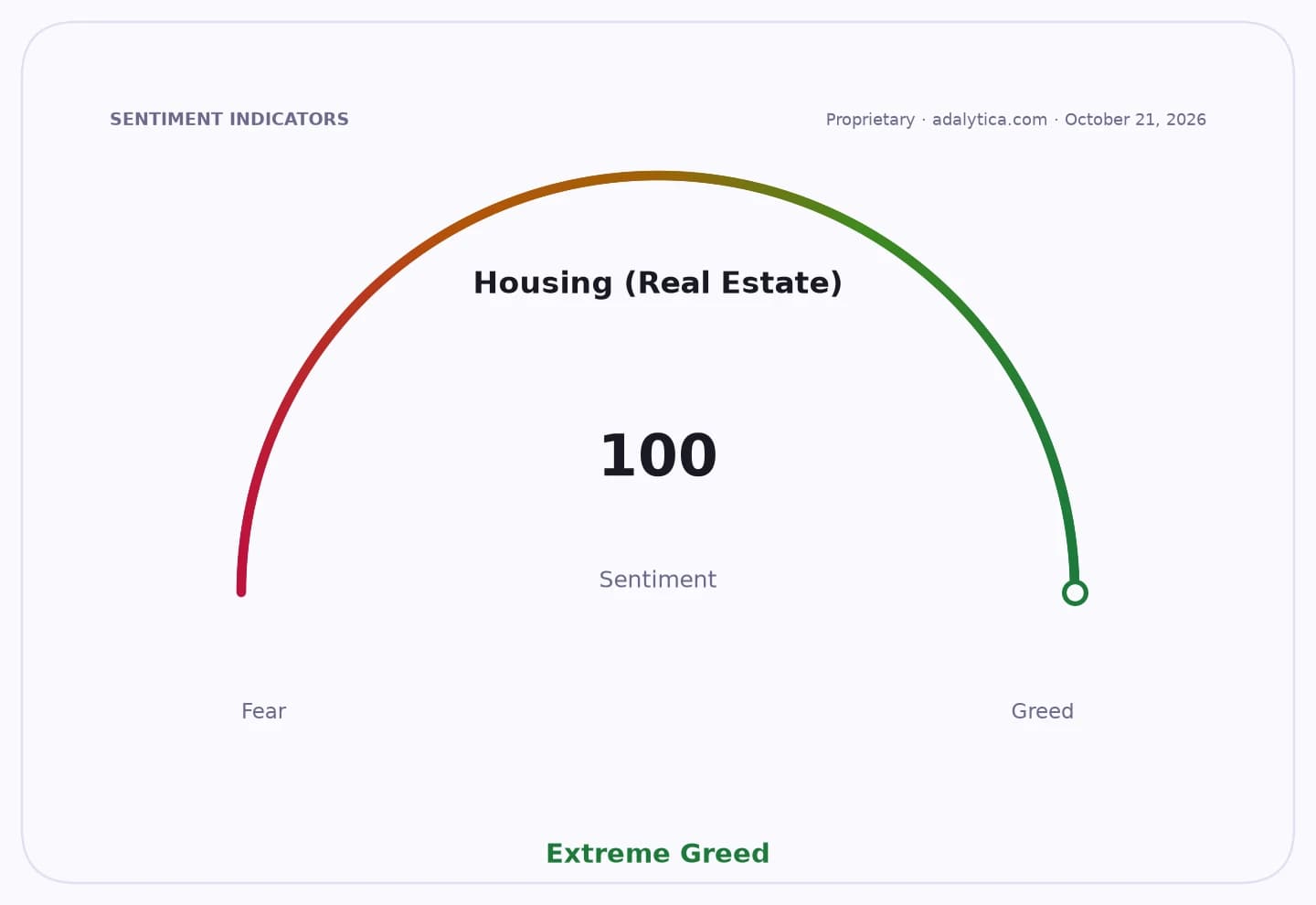
Mortgage-backed demand for new apartments in Moscow is weakening even as monthly volumes bounce, a sign that Russia’s largest housing market is starting to feel the strain of higher borrowing costs and stretched affordability.
Moscow New-Home Mortgage Deals Fell 33% This Year

The clearest signal in fresh Rosreestr data is the drop in the year-to-date tally: mortgage deals for new-builds in the capital fell 33% in January-September from a year earlier, to 24,500 contracts. That matters because new developments are the financing-sensitive end of the housing market, where demand depends heavily on mortgage availability, rates and subsidy programs. When buyers step back from primary-market purchases, developers typically face slower absorption, more pressure on pricing and a greater need to offer discounts or incentives to keep projects moving.

The share of mortgage-backed deals held up better than the headline volume suggests, slipping just 1.5 percentage points to 42%. But that still leaves a market that is much smaller than a year ago and increasingly dependent on a narrower pool of financed buyers. For developers, that is a warning sign: the market may not be collapsing, but it is losing momentum in a way that can quickly hit cash flow, project launches and land-banking decisions.
There is a short-term counterpoint. September mortgage registrations jumped 47% from August to 3,200, and the second quarter was 10% stronger than the first. That points to some volatility in transaction timing rather than a straight-line decline. But the broader message is unchanged: buyers are not abandoning Moscow housing altogether, they are becoming more selective, and they are pushing back most visibly in the primary market.

That dynamic matters for the Russian property cycle. Moscow usually sets the tone for the country’s mortgage market, and the capital also accounts for some of the strongest demand in the Moscow region. If new-build financing continues to soften, the pressure will likely shift toward developers, lenders and policymakers to sustain activity through rate support, promotional financing or more aggressive pricing.
For investors, the key takeaway is that the market is moving from volume growth to margin defense. In housing, that often marks the point where the winners become the best-capitalized developers, mortgage lenders with disciplined underwriting and contractors exposed to repair and renovation rather than speculative new supply. The losers are the highly leveraged builders counting on easy mortgage demand to clear inventory.
The next catalyst will be whether September’s rebound is the start of stabilization or just a temporary lift before affordability bites again. If mortgage demand fails to recover into year-end, Moscow’s new-build market could enter 2027 with weaker pricing power and a more cautious development pipeline.
| Entity | Gains | Losses |
|---|---|---|
| Cash-rich developers | ▲Pricing flexibility | ▼Smaller competitors |
| Mortgage lenders | ▲Selective lending demand | ▼High-volume growth |
| Secondary housing market | ▲Relative resilience | ▼New-build segment |
| Buyers without financing | ▲More negotiating power | ▼Developers seeking rapid sales |