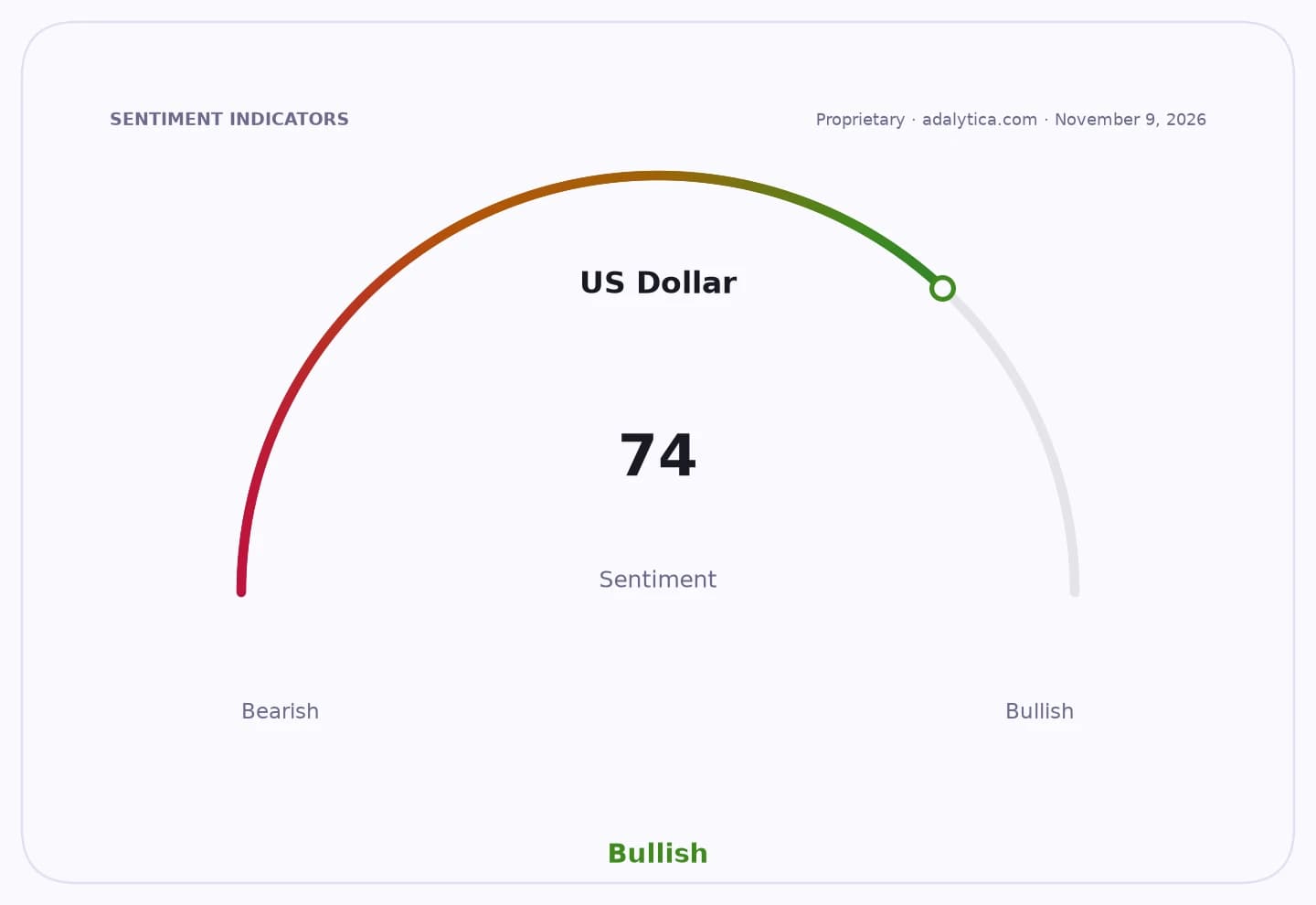
The naira edged higher against the dollar on the official market Tuesday, but the more important story for investors is that the currency is still trading at historically weak levels even as Nigeria’s reserves slip, leaving the recovery fragile and dependent on sustained dollar supply.
Naira Edges Higher as Nigeria Reserves Slip

The Central Bank of Nigeria said the naira closed at N1,346.93 per dollar, up from N1,347.94 a day earlier. That N1.01 gain is modest, but it matters because it shows the official market is still managing to stabilize the currency after a weak start to November. The parallel market was unchanged at N1,390 per dollar, underscoring how wide the gap remains between official pricing and street trading.
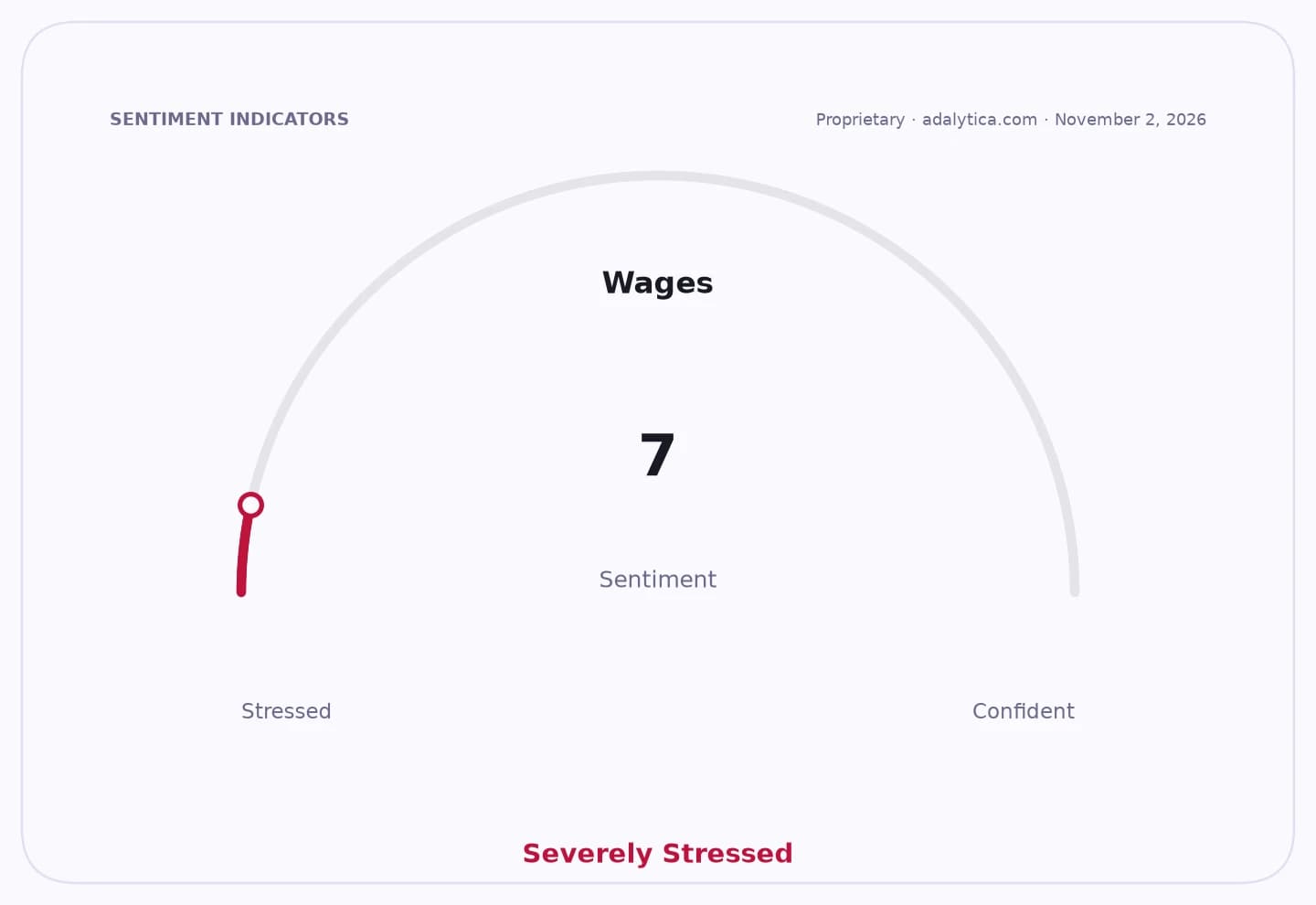
Sentiment Indicators
For Africa’s largest economy, exchange-rate stability is about more than optics. A weaker naira feeds directly into imported inflation, raises the local cost of fuel, machinery and consumer goods, and makes it harder for businesses to plan prices and margins. Even a small move lower in the exchange rate can ripple through household budgets and corporate earnings because so much of Nigeria’s economy still depends on imports and foreign-currency pricing.
The latest move also comes with a caution flag: external reserves fell to $55.16 billion on November 2 from $55.22 billion two days earlier. That is not a dramatic drop, but it reinforces the basic investor concern — the naira’s near-term performance depends on whether the central bank can keep dollars flowing into the market without eroding its reserve cushion.
FX Vol Index
That is why this one-day appreciation matters less as a turning point than as a test of credibility. A steady currency can help anchor inflation expectations, support consumer confidence and improve the outlook for companies exposed to imported inputs. But if the official rate continues to move only in small steps while the parallel market stays much weaker, investors will keep questioning how durable the stabilization really is.
The broader narrative is familiar: Nigeria is trying to defend a more orderly FX regime while global dollar conditions, local demand for hard currency and reserve management all pull in different directions. For now, the naira’s bounce is a modest win, not a decisive victory — and investors should treat it as something to watch, not something to celebrate too soon.
| Entity | Gains | Losses |
|---|---|---|
| Nigerian importers | ▲Lower near-term FX pressure | ▼Still face high dollar costs |
| Nigerian consumers | ▲Slight relief on inflation pass-through | ▼Prices remain vulnerable |
| Central Bank of Nigeria | ▲Short-term credibility boost | ▼Reserve pressure and policy scrutiny |
| Dollar holders / parallel market traders | ▲Little immediate change | ▼Miss out on naira strength |