The naira extended its recent rebound in Nigeria’s official foreign-exchange market on Thursday, strengthening to N1,315.67 per dollar as intraday trading briefly touched N1,302, a move that matters because it points to improving dollar liquidity and a firmer buffer for the Central Bank of Nigeria after months of currency pressure.
Naira strengthens to N1,315.67 in official market

The local currency gained about N11 in a single day from N1,326.69 on the previous session, according to Central Bank data, bringing it closer to the psychologically important N1,300 level. Market transactions were quoted between N1,302 and N1,324, suggesting that supply and demand in the official window were more balanced than in recent trading sessions.
Sentiment IndicatorsⓘProprietary · adalytica.com · September 5, 2026
This is a snapshot — live sentiment, awareness and momentum for 130+ markets update continuously in the dashboard.Open AlphaPulse

That improvement is economically important because a stronger naira can ease imported inflation, reduce pressure on households and companies reliant on foreign inputs, and lower the cost of servicing dollar demand in the formal market. For the central bank, it also suggests that recent efforts to deepen liquidity are beginning to work, at least at the margin.
A key support came from a sharp rise in activity in the Nigerian Foreign Exchange Market, where turnover jumped more than 62% to $152.04 million from $93.66 million a day earlier. The number of deals also increased to 153 from 105, reinforcing the view that more participants are now transacting in the official market.

Analysts and market participants have pointed to increased activity from financial institutions acting as market makers, helping smooth trading and improve price discovery. That matters for investors because deeper turnover tends to reduce volatility and can make the official rate more credible as a reference point for trade and portfolio decisions.
Nigeria’s gross external reserves, which are nearing $54 billion after fresh inflows, provide another layer of support. Bigger reserves give the CBN more room to manage liquidity and intervene when needed, which is especially relevant in a market that has long been vulnerable to shocks from oil prices, capital flows and dollar demand from importers.
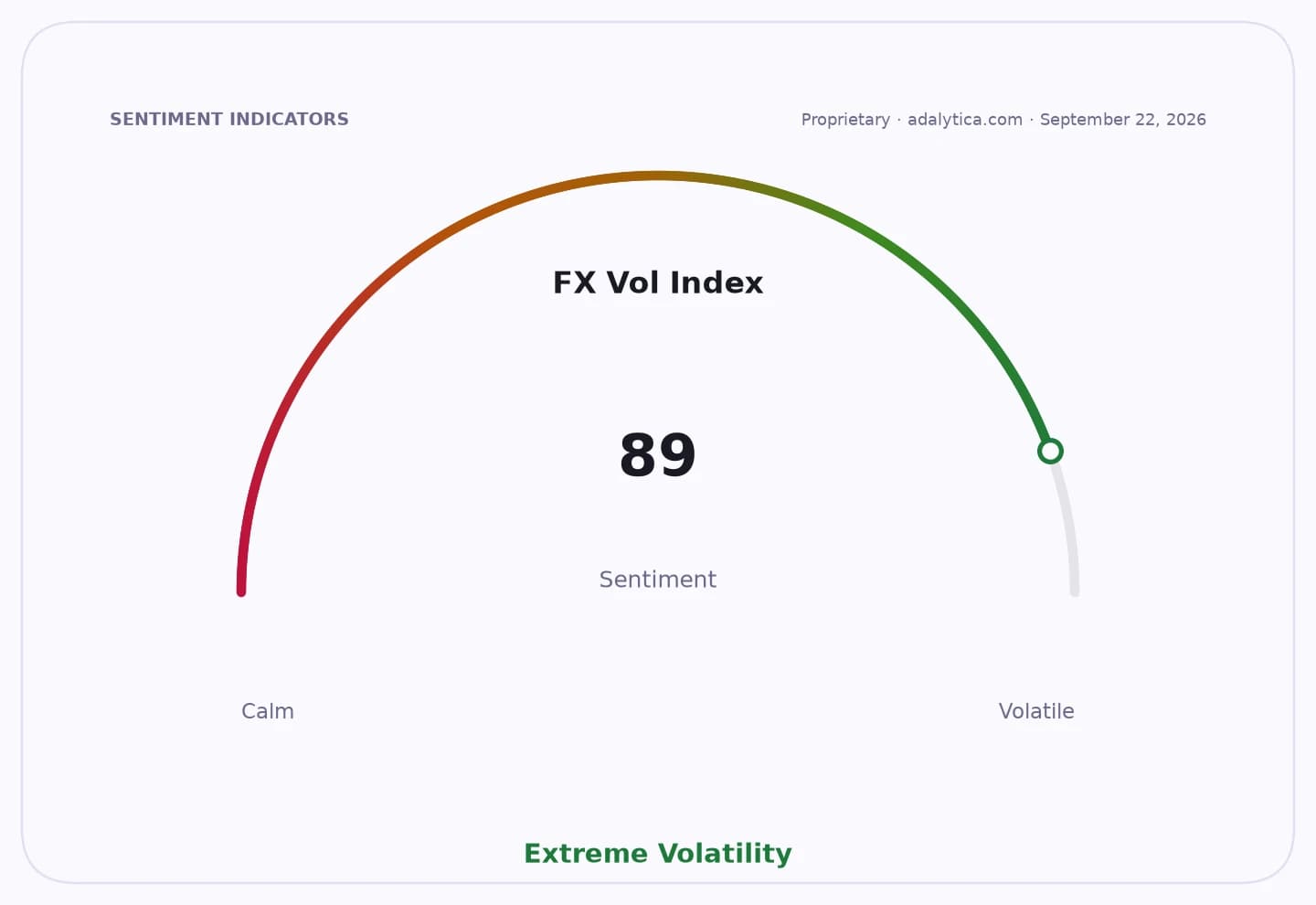
Adalytica.com’s FX volatility trading signals show extreme fear in the currency-volatility gauge, even as dollar sentiment remains neutral, a mix that suggests traders still see room for sharp moves despite the recent stability. The broader narrative is that Nigeria’s FX market is tightening in the right direction, but it has not yet reached a point where confidence can be taken for granted.
For investors, the near-term question is whether the naira can hold above the N1,300 threshold without a fresh wave of reserve spending. If inflows persist and oil prices remain supportive, the currency could continue to firm. If dollar demand picks up or reserves slow, the current rally could lose traction quickly.
| Entity | Gains | Losses |
|---|---|---|
| Nigerian naira | ▲Stronger official rate | ▼Importers holding dollar needs |
| CBN | ▲More FX liquidity | ▼Speculators betting on weakness |
| Local businesses | ▲Lower FX pressure | ▼Dollar-dependent cost structures |
| Dollar holders | ▲Less immediate volatility | ▼Naira bulls |