Nigeria’s central bank is likely to leave interest rates unchanged this month even after inflation eased for a third straight month, as policymakers weigh slower price growth against fresh energy and FX risks that could quickly reverse the disinflation trend.
Nigeria Central Bank Seen Holding Rates as Inflation Eases

CardinalStone Research said the Monetary Policy Committee is expected to keep the benchmark rate steady at its Sept. 21-22 meeting, arguing that the recent moderation in inflation is not yet enough to justify a cut. Headline inflation slowed to 15.39% year-on-year in August from 15.43% in July, while month-on-month inflation cooled to 0.71% from 1.57%, helped by a softer food basket and a surprise deflation in core prices.
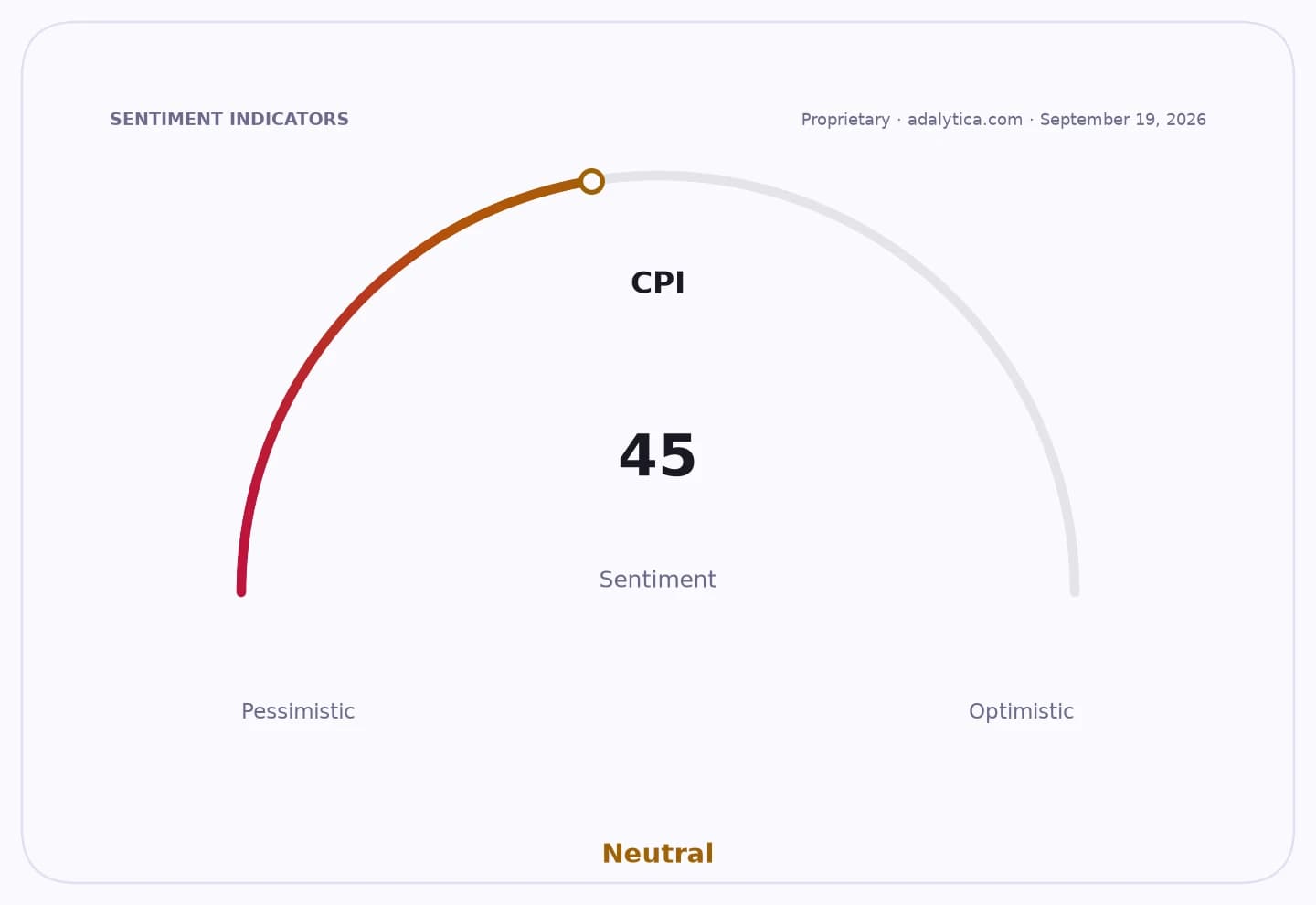
Sentiment IndicatorsⓘProprietary · adalytica.com · September 19, 2026
This is a snapshot — live sentiment, awareness and momentum for 130+ markets update continuously in the dashboard.Open AlphaPulse
The case for patience is straightforward: inflation is easing, but it is doing so from a still-high level, and the drivers of relief remain fragile. Food inflation, which carries heavy weight in household budgets and political sentiment, dropped to 19.57% from 20.31%, while core inflation fell more sharply to 13.29% from 14.97%. CardinalStone said the improvement partly reflected a 2.43% monthly naira appreciation, supported by better foreign-exchange liquidity and stronger inflows from NNPC remittances and international oil company receipts.
For the MPC, that matters because monetary easing too early could weaken the naira and reignite imported inflation just as the economy is beginning to stabilize. The committee has to balance the optics of inflation moving closer to its long-run average against the risk that the current disinflation owes more to temporary FX and supply effects than to durable demand restraint.
The biggest near-term threat is energy. CardinalStone said Dangote Refinery has raised PMS gantry prices several times since Aug. 21, lifting them to N1,350 a litre from N1,165, a 15.9% increase. Pump prices have climbed to between N1,395 and N1,450 depending on location, a move that can feed quickly into transport, logistics and food costs across Africa’s largest economy.
That pricing pressure comes alongside geopolitical uncertainty in the Middle East and Brent crude above $100 a barrel, both of which raise the risk that fuel costs stay elevated. The research firm expects September inflation to come in flat at 15.40%, but said further energy volatility could push prices higher.
The policy backdrop is also less forgiving than it was a few weeks ago. A recent 25-basis-point rate hike by the US Federal Reserve and higher global yields could narrow carry differentials and tempt portfolio investors to pull money from higher-risk markets, including Nigeria, if returns deteriorate. That adds another reason for the MPC to avoid loosening too soon.
For investors, the message is that the first rate move after this disinflation phase is more likely to be delayed than accelerated. Fixed-income traders may see support for short-dated naira assets if the central bank keeps rates elevated, while equities reliant on consumer demand could benefit only if easing inflation translates into real purchasing power, not just lower nominal price growth. The naira’s stability remains the key watchpoint: if FX inflows hold and harvest-season food prices ease into October, the case for cuts strengthens; if fuel costs and election-related spending add pressure, the MPC is more likely to keep policy tight well into 2027.
| Entity | Gains | Losses |
|---|---|---|
| CBN / MPC | ▲Policy credibility | ▼Growth support |
| Naira holders | ▲FX stability | ▼Near-term yield cuts |
| Bond investors | ▲Higher carry | ▼Policy easing hopes |
| Consumers / businesses | ▲Slower inflation later | ▼Fuel and food costs |