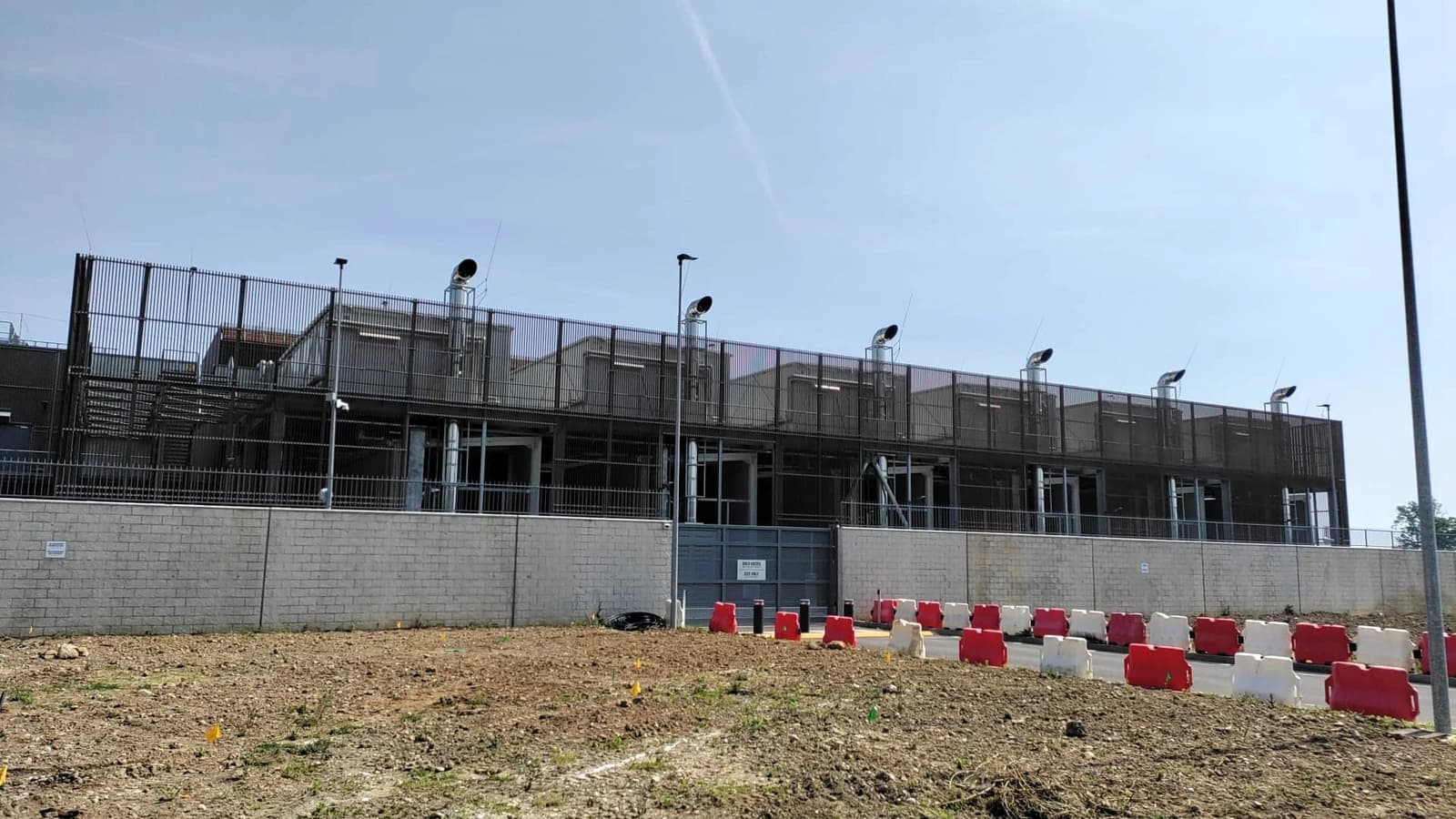
Nebius shares steadied after a sharp selloff, but the bigger story for investors is that the market is still questioning whether fast-growing AI infrastructure companies can finance their expansion without letting debt outrun profits.
Nebius Shares Steady After Selloff Over Debt Concerns
The stock rose 0.71% to $171.45 on the Nasdaq after swinging lower intraday, a modest recovery that followed Monday’s bounce and came after a broad rout in neocloud names late last week. That rebound matters because it shows the market is not abandoning Nebius outright — yet it also makes clear that confidence in the sector remains fragile. The latest pressure did not come from Nebius itself so much as from fears that the model may be carrying too much leverage, too early in its buildout.
Sentiment IndicatorsⓘProprietary · adalytica.com · October 25, 2026
This is a snapshot — live sentiment, awareness and momentum for 130+ markets update continuously in the dashboard.Open AlphaPulse
Those worries were sharpened by CoreWeave, where bond investors pushed the yield on its 2032 notes with a 9.625% coupon to about 15%, a glaring sign that credit risk is being repriced across the AI infrastructure trade. CoreWeave’s second-quarter revenue more than doubled to $2.58 billion, but interest expense surged to $640 million, far above its $128 million in adjusted operating profit, leaving a $626 million net loss. For investors, that is the central warning: growth alone is not enough if financing costs consume the gains.
Nebius is not in the same shape, but it is not immune to the same question. Revenue jumped 454% in the second quarter of 2026 to $582.3 million and adjusted EBITDA turned positive at $236.2 million, yet the company still posted a loss from continuing operations of $190.4 million as interest expense climbed to $119.1 million from just $4.8 million a year earlier. As of June 30, cash of $8.04 billion roughly matched long-term financial debt of $8.5 billion, a far more manageable position than CoreWeave’s, but one that has already shifted as Nebius tapped the market for more funding.
Since then, Nebius has raised $775 million through a secured financing and completed a $5.75 billion convertible bond sale, while existing holders swapped $800 million of convertibles into about 15.8 million shares. That helps fund the company’s expansion, but it also brings dilution risk and the possibility of hedging pressure on the stock. The company has warned as much itself.
The reason the market still cares is simple: neoclouds are trying to build enormous AI data-center capacity ahead of demand, and that requires front-loaded capital spending long before the revenue stream is fully proven. Gartner has said operators may need to generate $8.5 trillion of cumulative revenue by 2030 to justify their announced investments and financing costs at a 12% return, while the market for AI services may top out at $3.6 trillion. Even if those numbers prove too pessimistic, they underscore why lenders and equity investors are growing cautious.
Nebius does have one meaningful offset: customer prepayments. Management said it expects more than $9 billion of customer prepayments in 2026, with about 70% of contracts in the quarter including advance payments that cover 50% to 60% of related capital spending. That lowers the need for debt financing and helps de-risk the expansion, but it does not eliminate the burden. For long-term investors, the key question is whether Nebius can keep compounding revenue fast enough to outrun the rising cost of capital.
The next test comes with third-quarter results, which should show whether the company can keep scaling without provoking another round of skepticism from bondholders and equity investors. For now, Nebius remains one of the more credible neocloud names, but the sector’s debt debate is likely to stay front and center. Investors should keep it on the watchlist, not the sidelines.
| Entity | Gains | Losses |
|---|---|---|
| Nebius | ▲Lower funding risk than peers | ▼Dilution and interest burden |
| CoreWeave | ▲Revenue growth narrative | ▼Bondholder confidence |
| Equity investors | ▲Potential long-term AI upside | ▼Volatility from leverage fears |
| Bond investors | ▲Higher yields on riskier debt | ▼Greater default concern |