New Zealand businesses have cut their one-year inflation expectations back into the Reserve Bank’s 1% to 3% target band, but the drop comes against a still-sticky price backdrop shaped by high jet fuel costs and persistent pressure in key household expenses.
New Zealand inflation expectations fall to 2.99%
The latest survey showed 1-year-ahead inflation expectations at 2.99%, down from 3.68% in the prior quarter and just inside the central bank’s comfort zone. The move gives policymakers some evidence that inflation psychology is easing, but it does not yet erase the risk that imported energy costs and domestic supply constraints keep near-term prices elevated.
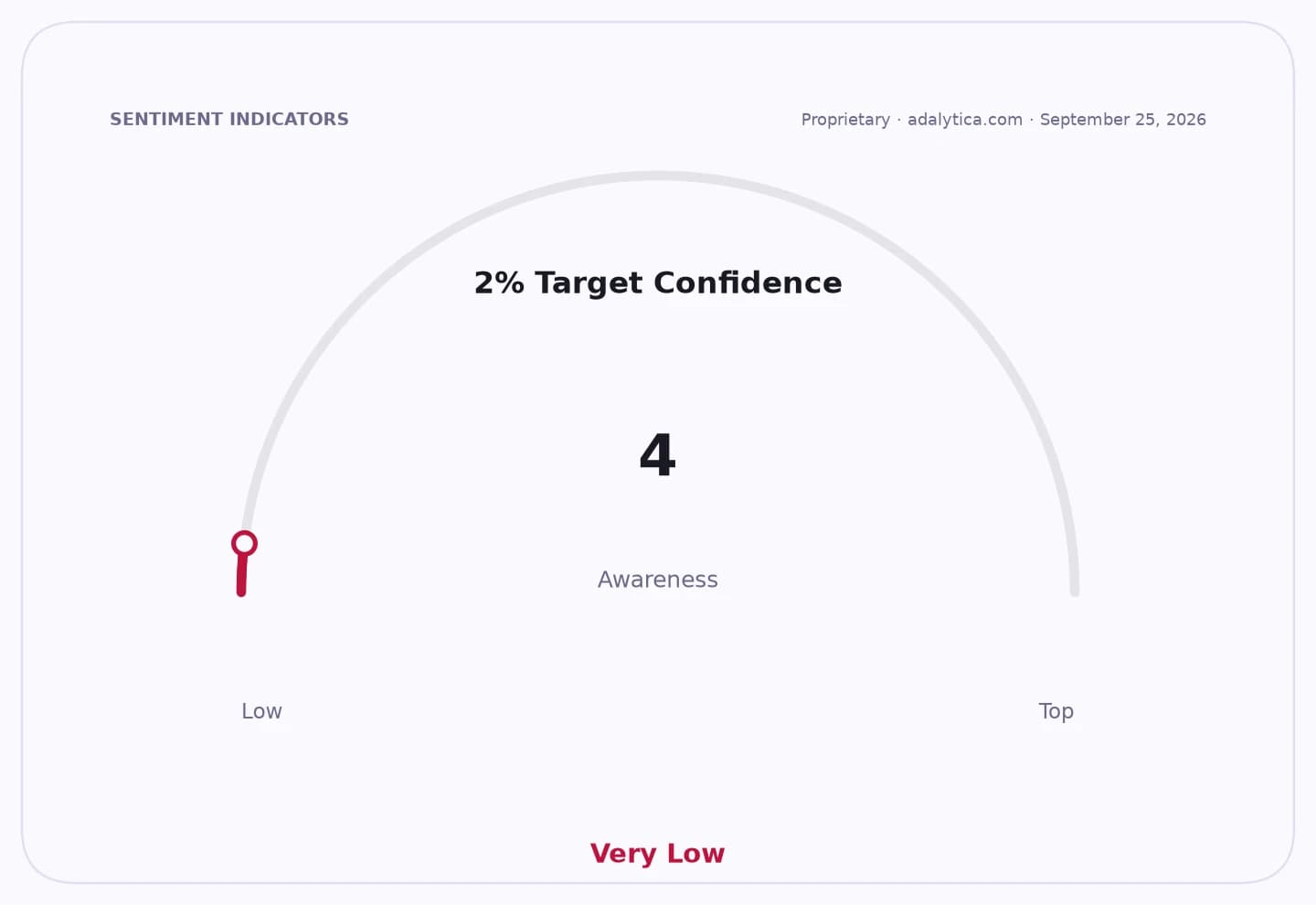
Sentiment IndicatorsⓘProprietary · adalytica.com · August 24, 2026
This is a snapshot — live sentiment, awareness and momentum for 130+ markets update continuously in the dashboard.Open AlphaPulse
That matters because inflation expectations feed directly into wage demands, business pricing and the Reserve Bank of New Zealand’s room to maneuver. If firms expect slower price growth, they are less likely to pre-emptively raise prices, which can help contain second-round inflation effects without further tightening. But with jet fuel still a source of cost pressure and the economy absorbing a weaker population growth backdrop, the inflation outlook remains uneven.
For investors, the message is that New Zealand rate-cut timing still depends on whether softer expectations translate into softer realized inflation. A cooler expectations reading can ease pressure on yields and support rate-sensitive assets, while a renewed spike in fuel or freight costs would keep the RBNZ cautious and bolster the kiwi only if markets start pricing a higher-for-longer stance.
The broader story is one of an economy where inflation is easing, but not cleanly. Stalling population growth reduces demand momentum, yet it also complicates the growth outlook for retailers, housing-related sectors and wage formation. That leaves the RBNZ trying to judge whether inflation is finally losing its grip or merely pausing.
The next test is whether upcoming price data and RBNZ commentary confirm that expectations near 3% are the start of a durable downtrend, or just a brief reset in a still-fragile disinflation path.
| Entity | Gains | Losses |
|---|---|---|
| RBNZ | ▲More room to hold steady | ▼Less urgency to tighten |
| Borrowers | ▲Lower rate-pressure risk | ▼Higher-for-longer uncertainty |
| Savers/term deposit holders | ▲Better yields if rates stay elevated | ▼Real returns if inflation fades faster |
| Importers/airlines | ▲Softer demand from weaker population growth | ▼Higher jet fuel costs |