Tokyo stocks opened sharply lower, with the Nikkei dropping 2.2% as a global unwind in AI-linked shares and renewed currency pressure hit one of Asia’s most crowded trades.
Nikkei Falls 2.2% on AI Selloff and Yen Pressure

The slide matters because Japan’s benchmark has become highly sensitive to swings in global technology valuations and to moves in the yen, which can quickly alter earnings expectations for exporters and pressure equity multiples. A weaker Nikkei at the open points to a broader de-risking in Asia rather than a stock-specific setback, with the Topix also down 1.12%, underscoring that the selloff is extending beyond the biggest index names.
Sentiment Indicators

The Nikkei was quoted at 61,691.94, while the broader Topix fell to 3,886.14. That follows a sharp late-week rout in Japanese equities, with the Nikkei already down 5.7% for the week, its worst weekly performance since 2020. The move has been tied to fears that the AI-driven rally has run too far, leaving semiconductor and other growth stocks vulnerable to profit-taking when sentiment turns.
That is particularly important for investors because Japan has been a major beneficiary of global enthusiasm for technology and AI hardware, and because foreign flows into the market have been helped by the view that the country offers better governance and earnings leverage than many other developed markets. A pullback of this size raises the risk that leverage and momentum positioning are being unwound at the same time, which can magnify intraday moves and spill over into regional risk assets.
Japanese Yen — 30-day sentimentadalytica.com
Explore this data interactively — full history, time series and cross-market comparisons.
Japanese Yen
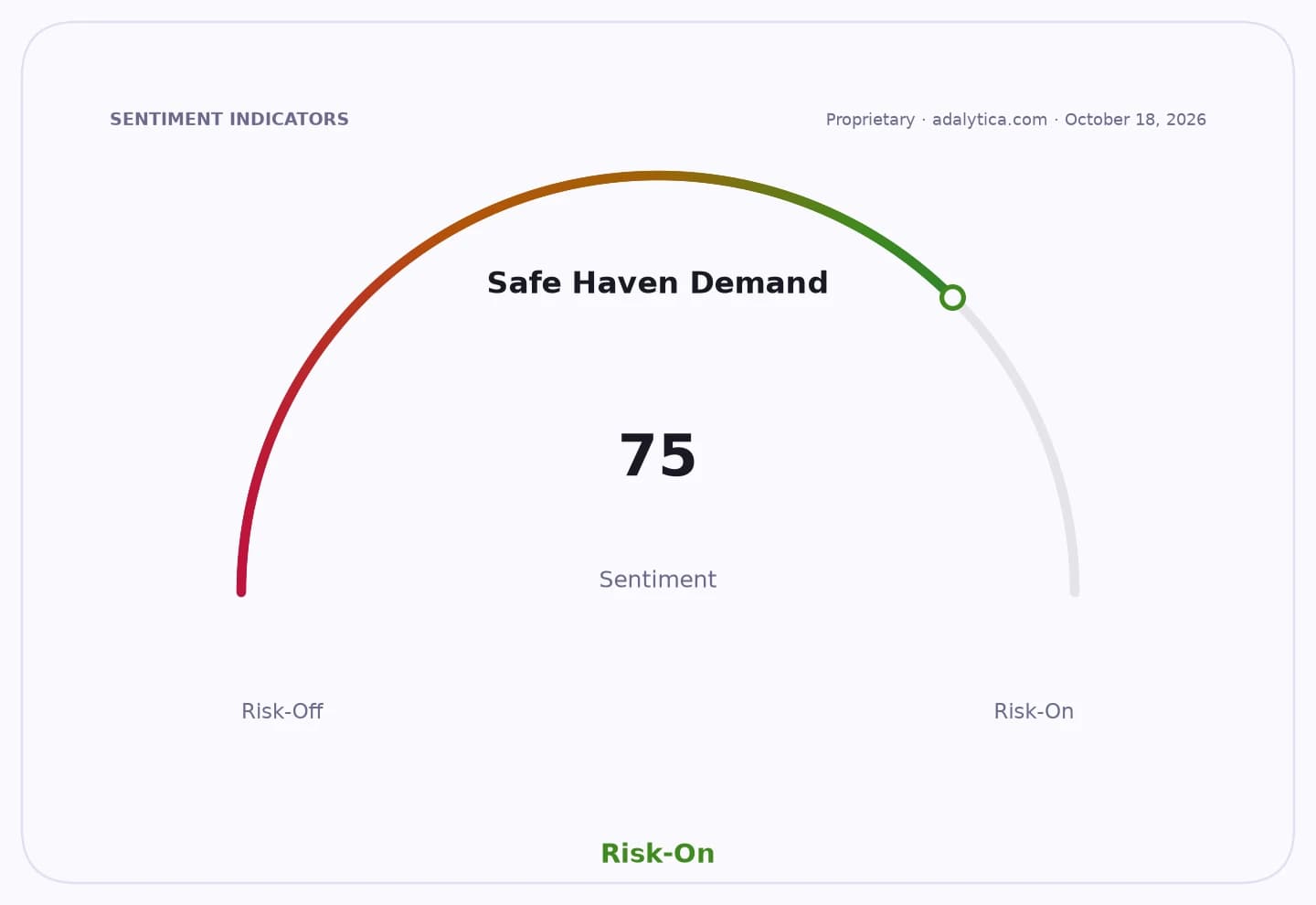
Currency dynamics are adding to the stress. Adalytica’s Japanese yen trade signals show sentiment at 19, or “Fear,” while the related safe-haven gauge points to “Fear” as well, suggesting a market that is increasingly anxious about Japan-specific and global risk factors. A softer yen can support exporters over time, but in the current environment it is not providing enough offset to offset the hit from weaker global tech sentiment and a broader rise in caution.
Technically, the Nikkei’s latest drop has pushed it further below its 50-day moving average and left momentum indicators weak, with the RSI at 21.7 indicating oversold conditions. That does not guarantee a rebound, but it does show the market is now stretched enough that any stabilization in US tech or the currency could trigger a sharp relief bounce. By contrast, continued weakness in AI leaders or another leg lower in global equities would likely keep Japanese shares under pressure.
For investors, the immediate question is whether this is a temporary reset after an extended run or the start of a deeper valuation correction. A durable floor will likely require calmer US technology trading, less volatility in the yen and evidence that Japan’s own earnings outlook can absorb the shock. Until then, the market is likely to remain vulnerable to further outsized moves in both the Nikkei and the broader Asian complex.
| Entity | Gains | Losses |
|---|---|---|
| Exporters | ▲Softer yen support | ▼Equity multiples under pressure |
| Domestic buyers | ▲Potentially cheaper shares | ▼Portfolio values fall |
| Short sellers | ▲Lower prices to trade against | ▼Relief bounce risk |
| Long-only investors | ▲Oversold rebound potential | ▼Near-term drawdowns |