Asia’s stock markets opened the week on a divided note as mounting concern over the cost of the artificial-intelligence boom knocked Japan lower, while stronger-than-expected Chinese growth steadied sentiment in mainland markets.
Japan Stocks Fall as China Growth Beats Forecasts

The Nikkei 225 fell 1.2% to 64,534 and the broader Topix lost 0.4% as investors sold chip and tech shares after weak Wall Street cues and renewed worries that AI spending will keep pressure on margins and interest rates. Tokyo market participants are also weighing comments from Bank of Japan Governor Kazuo Ueda, who said core inflation is near the 2% target and that robust AI demand is adding to price pressure.
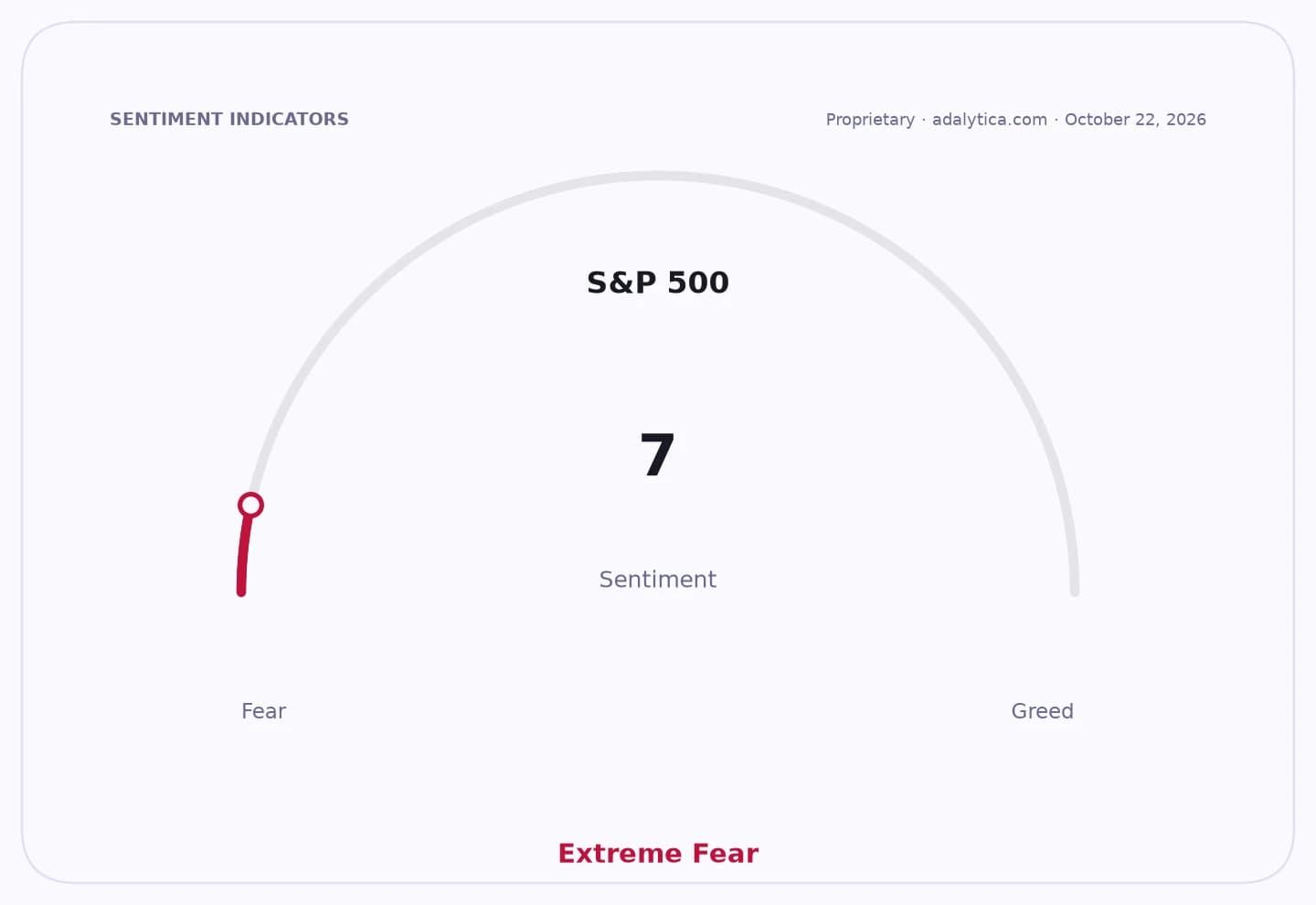
Sentiment IndicatorsⓘProprietary · adalytica.com · October 23, 2026
This is a snapshot — live sentiment, awareness and momentum for 130+ markets update continuously in the dashboard.Open AlphaPulse
That combination matters for investors because Japan has been one of the region’s biggest beneficiaries of the global AI trade, and a reassessment of how much companies must spend to keep up could hit chip suppliers, equipment makers and other high-beta names. Yuta Okamoto of Tokai Tokyo said chip-related stocks were dragging the index lower, while value and defensive shares should help cushion the market.
In mainland China, the mood was better. The Shanghai Composite rose 0.3% to 3,728 and the CSI 300 added 0.4% to 4,186 after gross domestic product expanded 4.5% in the third quarter, beating expectations and easing pressure on Beijing to roll out more aggressive stimulus.
That eases one immediate macro risk for global investors: if Chinese growth stabilizes, policymakers may be less likely to flood the market with fresh support, but the data also suggests the world’s second-largest economy is not weakening fast enough to force emergency measures. For equity traders, that keeps China in a relatively steadier lane than Japan, where AI enthusiasm is meeting a tougher valuation and policy backdrop.
The split underscores a broader Asia trade in which investors are still chasing AI winners, but only selectively, while rotating toward markets with clearer growth support. Near term, the focus stays on whether Japanese tech can stabilize after the selloff and whether China’s improved data reduces the case for near-term policy easing.
| Entity | Gains | Losses |
|---|---|---|
| China equities | ▲Stronger growth outlook | ▼Stimulus expectations fade |
| Japan tech shares | ▲None | ▼AI-cost and rate worries |
| Value/defensive stocks | ▲Rotation inflows | ▼Less upside than chip names |
| Chip suppliers | ▲AI demand remains intact | ▼Margin pressure and profit taking |