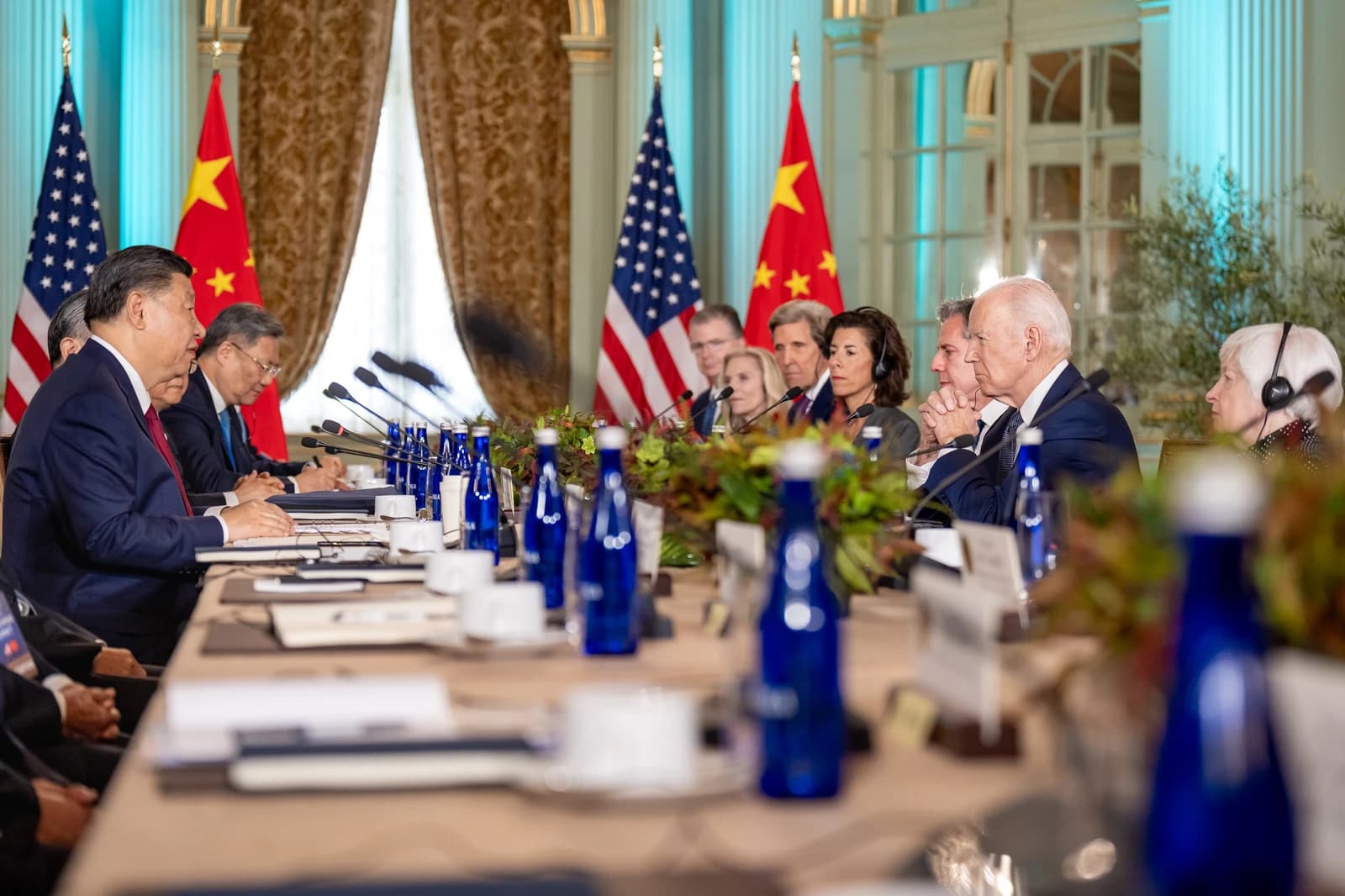
Asia’s equity market is being pulled in two different directions: a powerful AI-led surge in technology shares is pushing regional indexes higher, while China’s mainland market is hesitating ahead of President Xi Jinping’s trip to Washington and the possibility of a thaw in trade tensions.
Asia Stocks Rally on AI Demand, China Lags
That split matters because it shows where capital is willing to commit and where it is still waiting for policy clarity. Nikkei futures traded around 66,745, nearly 2,000 points above Friday’s close, signaling a sharp rebound when Japan reopens, while the MSCI index for Asia-Pacific shares excluding Japan rose 0.7% for a sixth straight session. The CSI 300, by contrast, fell 0.4% and Shanghai slipped 0.3%, underscoring how geopolitical uncertainty is still suppressing risk appetite in China even as investors chase the AI trade elsewhere.
Sentiment IndicatorsⓘProprietary · adalytica.com · September 27, 2026
This is a snapshot — live sentiment, awareness and momentum for 130+ markets update continuously in the dashboard.Open AlphaPulse
The strongest bid remains in the semiconductor and infrastructure side of the AI boom. Traders are still treating the sector as the cleanest way to play the explosion in demand for AI applications, data-center buildouts and the hardware that powers them. That is why Japan’s market, heavily exposed to industrial automation, chip equipment and cloud-linked supply chains, is being rewarded so aggressively in futures trading.
For investors, the message is that AI is no longer just a U.S. equity story. Asia is becoming a major transmission channel for the capex cycle, and the winners are the companies that sell the picks and shovels — from chipmakers and equipment suppliers to power and networking firms. If U.S. tech continues to make new highs, the spillover into Asian technology could keep broadening, especially in markets with leverage to semiconductors and advanced manufacturing.
China is the counterweight. Investors there are holding back until they see whether Xi’s Washington visit produces anything concrete on tariffs, technology access or AI cooperation. That caution is rational: a real de-escalation in the U.S.-China trade fight would be a positive for Chinese equities, but until then, domestic shares remain trapped between weak sentiment and hopes for diplomatic progress. Adalytica’s China growth-target sentiment gauge is flashing extreme fear, a sign of how fragile confidence remains despite the broader regional rally.
The broader market setup still favors momentum over caution. With the MSCI Asia ex-Japan index climbing for a sixth day and U.S. Nasdaq futures likely to stay supported by AI enthusiasm, Asia’s next move may depend less on macro data than on whether Washington and Beijing can turn a diplomatic meeting into something investors can actually price. For now, Japan’s futures are telling the cleaner story: in an AI-driven market, the region’s most exposed supply chains are where the upside is still being repriced.
| Entity | Gains | Losses |
|---|---|---|
| Japan equities / Nikkei futures | ▲AI supply-chain repricing | ▼Short sellers |
| Asian semiconductor and tech stocks | ▲Data-center and AI demand | ▼Non-tech laggards |
| China mainland equities | ▲Potential trade thaw, if realized | ▼Caution before Xi trip |
| U.S.-China negotiators | ▲De-escalation opportunity | ▼Geopolitical brinkmanship |