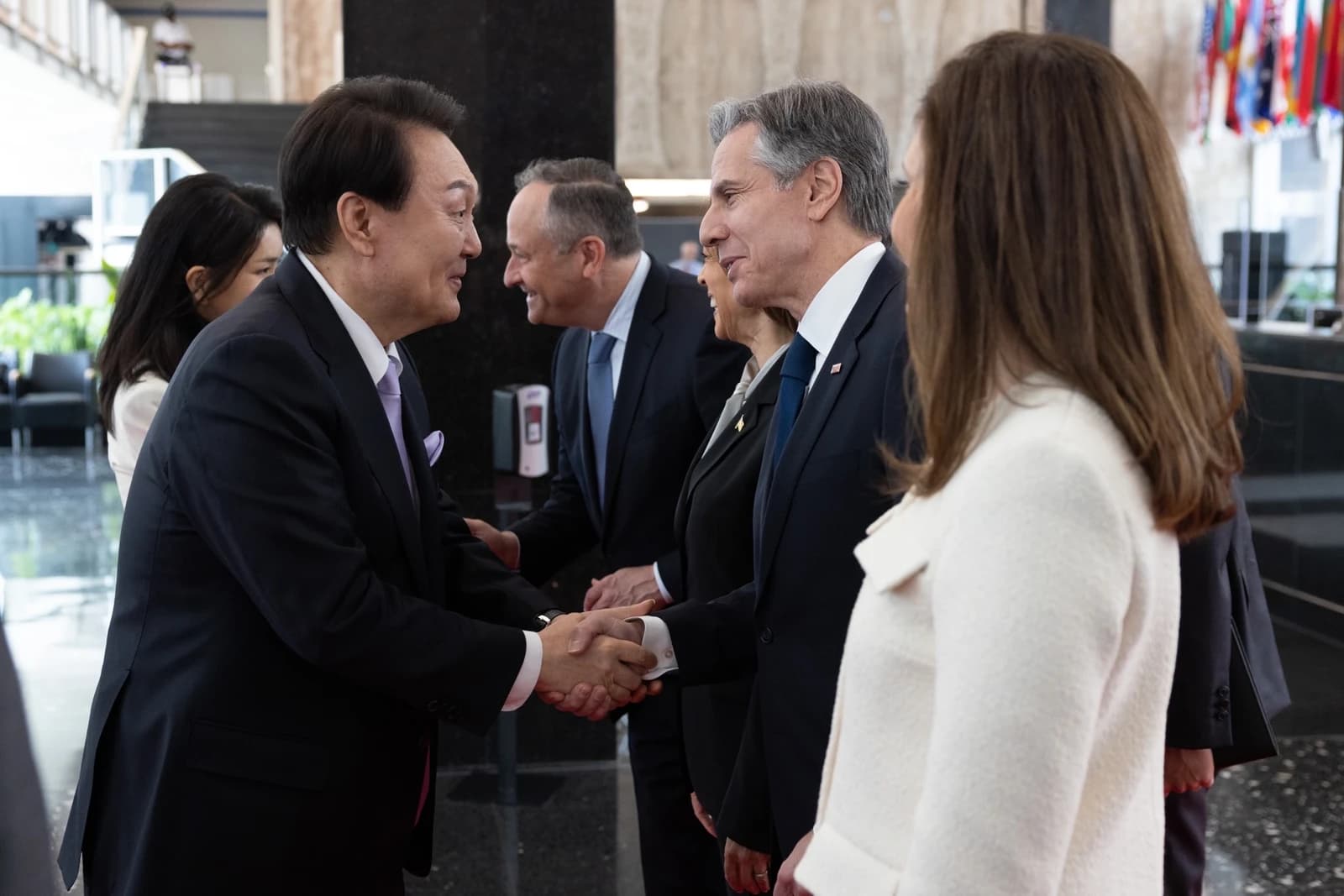
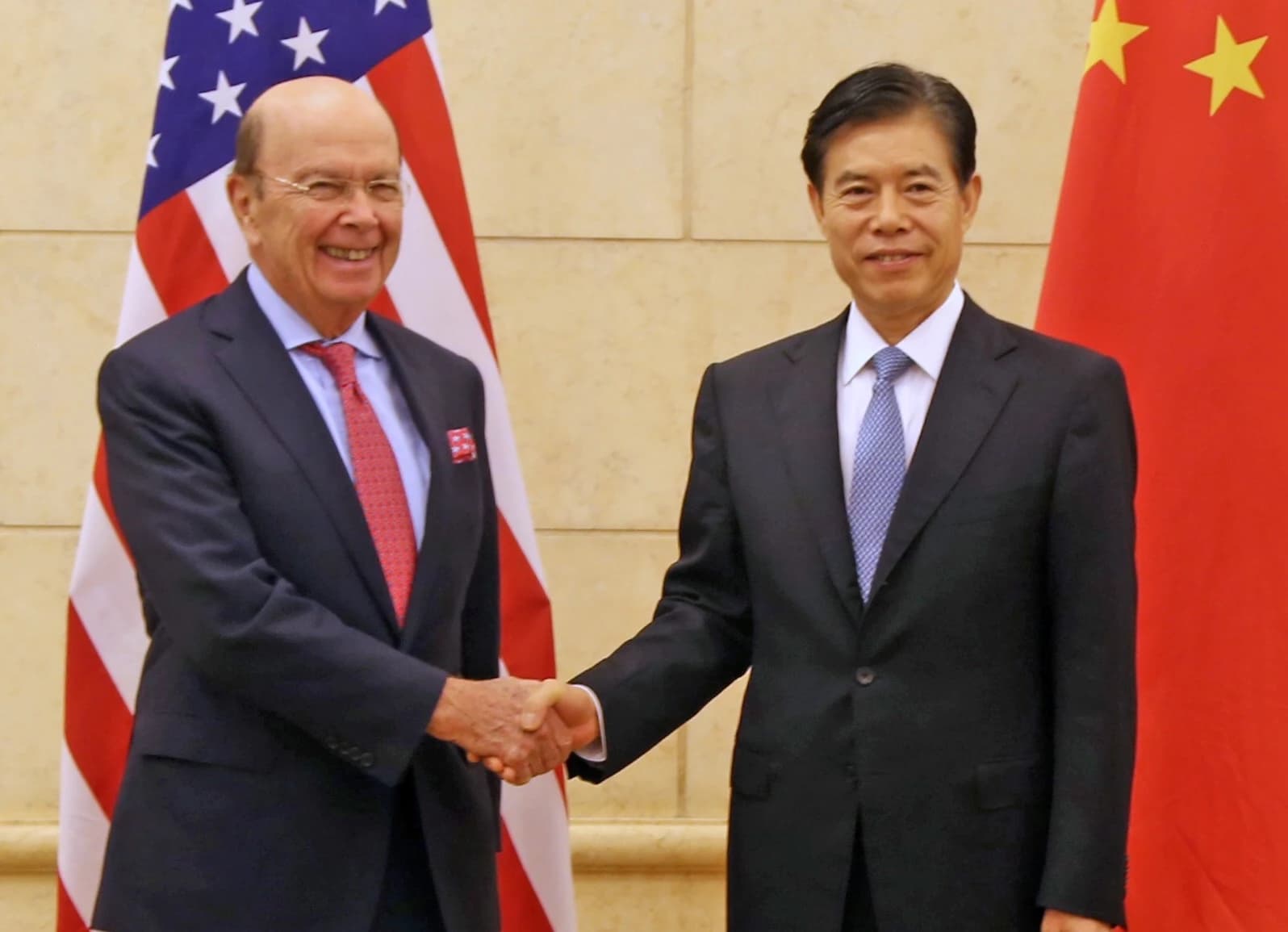
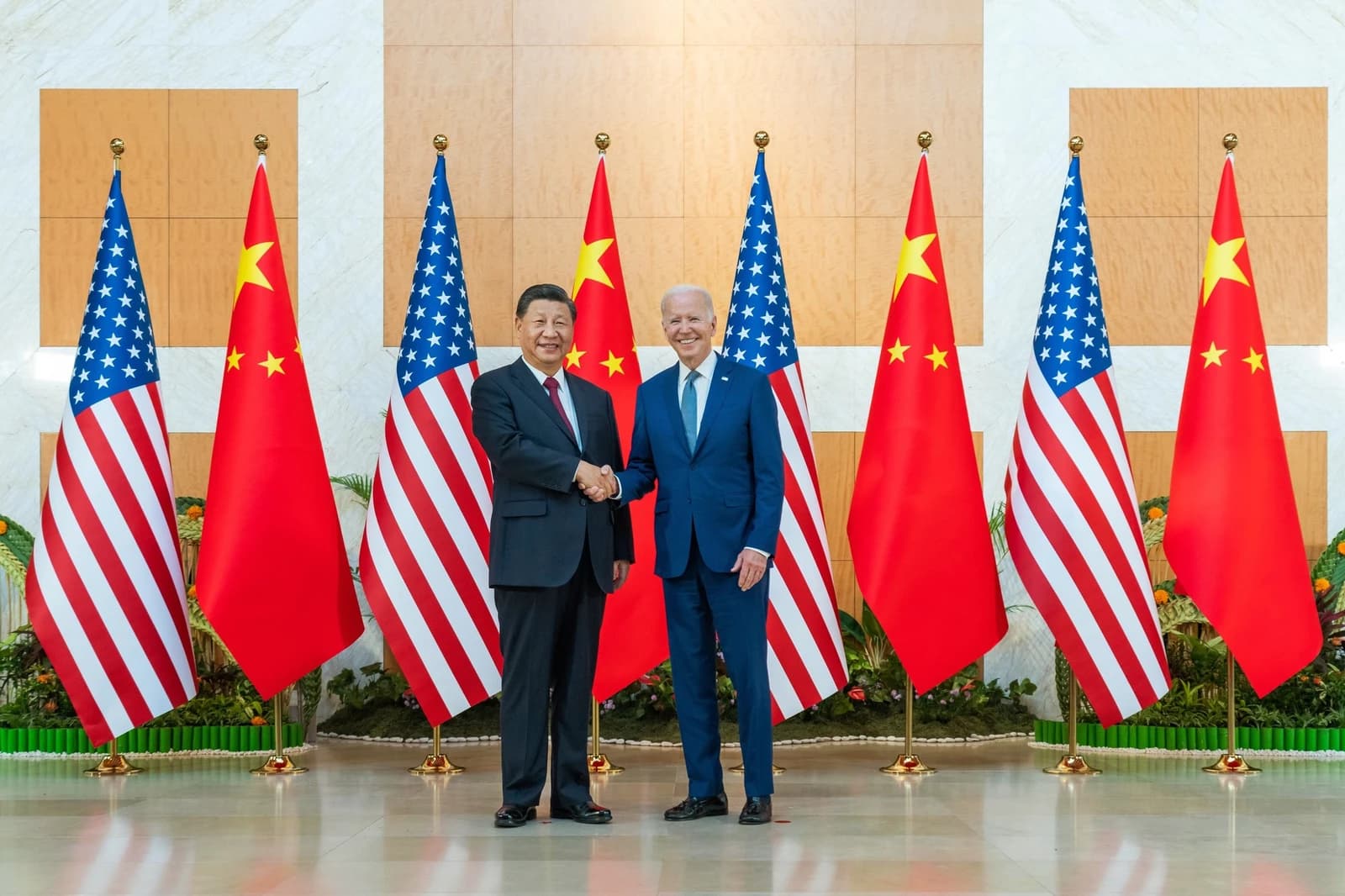
Trump and Xi Jinping are set to keep the world’s two biggest economies talking, but the most important economic outcome may be what does not change: no fresh tariff war, no dramatic escalation over Taiwan and no immediate shift in the technology choke points that still shape global capital spending.
Trump-Xi talks may avoid new tariffs, tech escalation
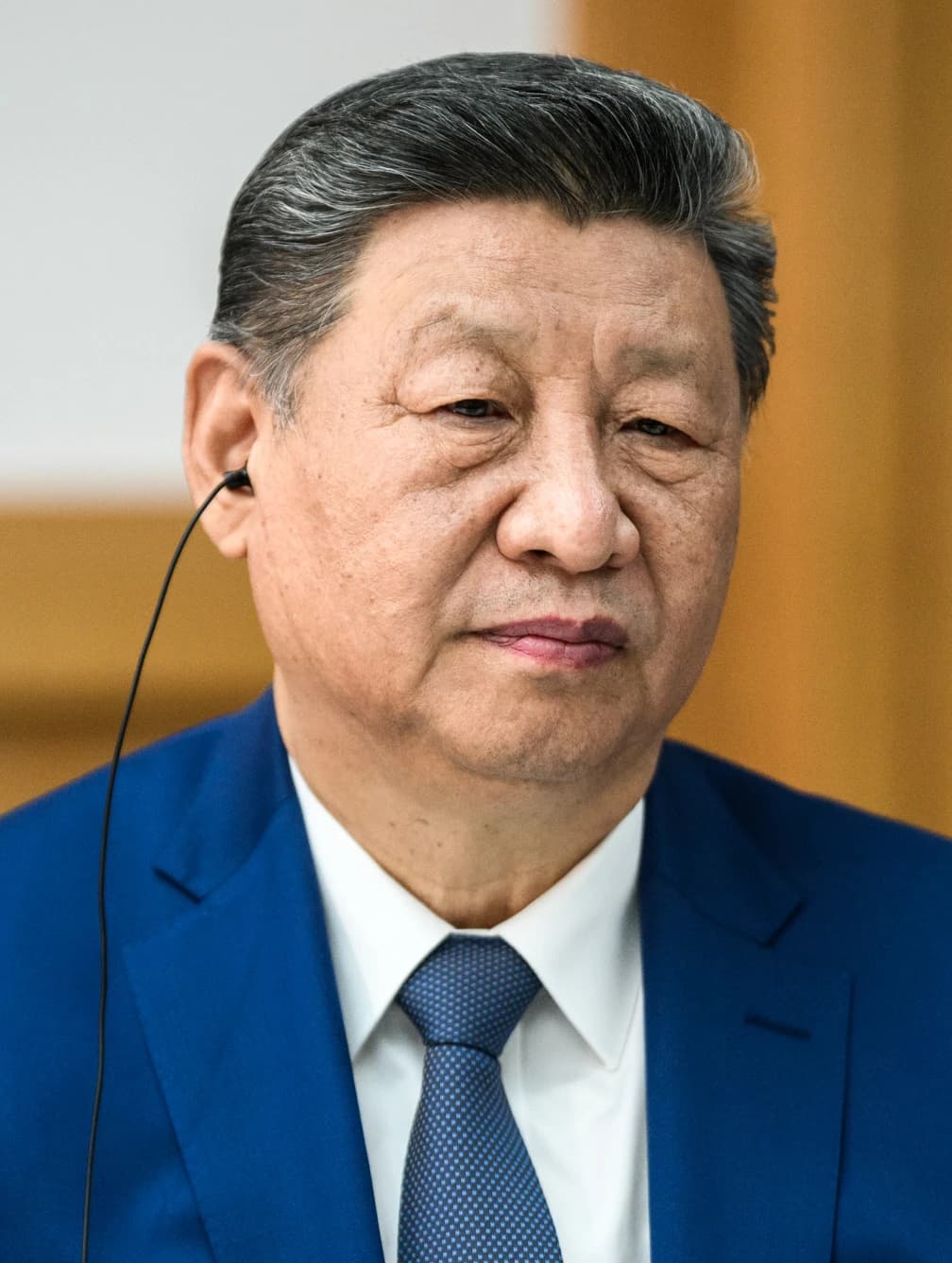
That matters because investors are pricing not just diplomacy, but the stability that lets supply chains, chipmaking, cloud build-outs and commodity flows keep functioning. A renewed trade understanding would extend the current truce, preserve access to critical minerals and reduce the odds of another round of retaliatory measures that would hit margins from semiconductors to consumer electronics.
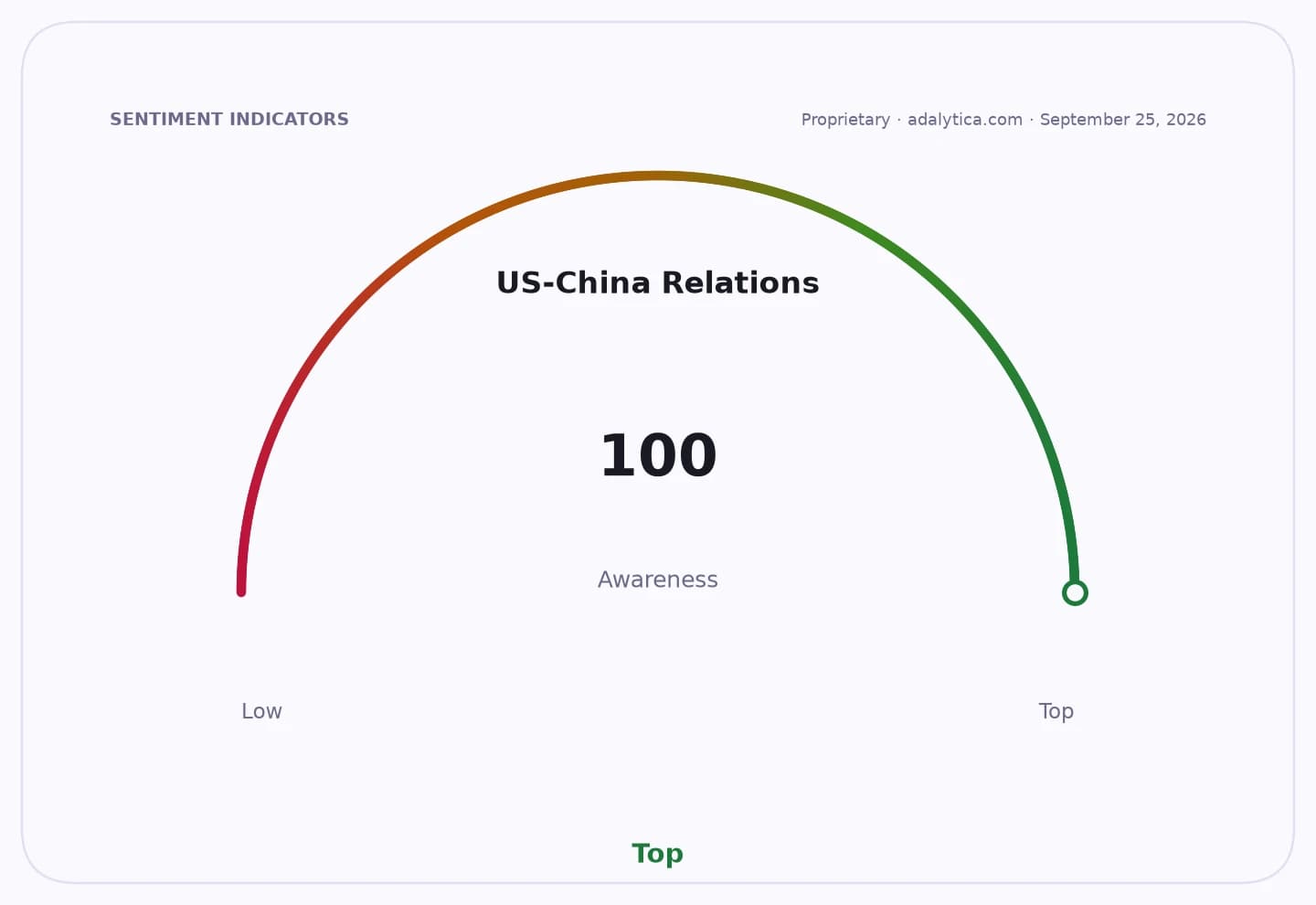
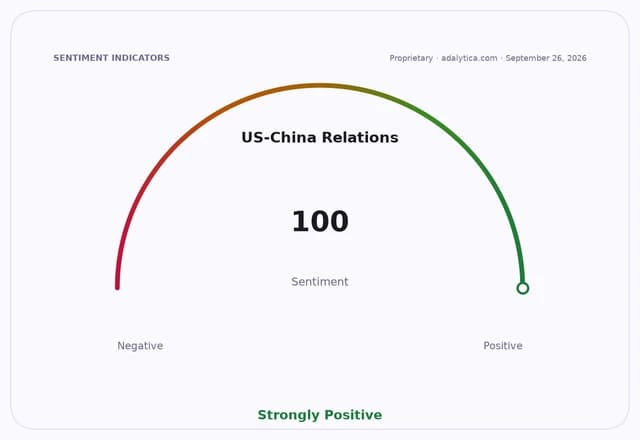
Sentiment IndicatorsⓘProprietary · adalytica.com · September 26, 2026
This is a snapshot — live sentiment, awareness and momentum for 130+ markets update continuously in the dashboard.Open AlphaPulse
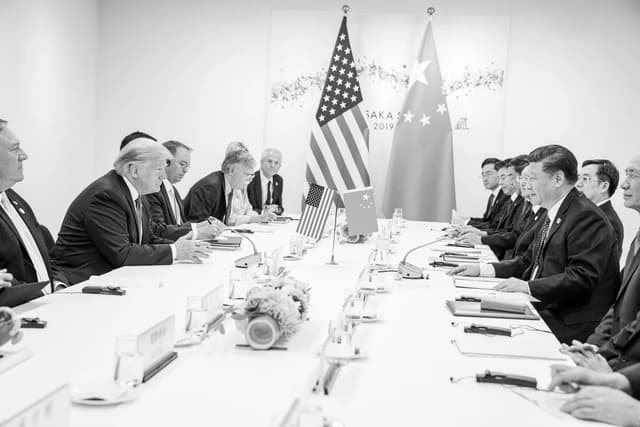
The summit’s significance is less about a breakthrough than about preventing a breakdown. The talks are expected to center on the familiar “three T’s” — trade, Taiwan and technology — with AI now a bigger strategic variable than at earlier meetings. Both sides have reason to keep the machinery of dialogue moving, especially with more encounters likely at the G20 and APEC. In a market still hypersensitive to tariff headlines and export-control risks, simply keeping a channel open can support risk appetite.
For investors, the trade piece is the most immediate. China has been a vital buyer, supplier and policy lever in global industrial supply chains, while the U.S. wants assurance that critical minerals keep flowing and that lower-tech consumer imports do not get hit by another round of punitive tariffs. That is why the market often responds more to the absence of escalation than to grand rhetoric. The current setup favors companies with exposure to cross-border manufacturing and AI infrastructure, but it also leaves them vulnerable if either side decides to weaponize policy again.
US-China Relations — 30-day sentimentadalytica.com
Explore this data interactively — full history, time series and cross-market comparisons.Open AlphaPulse
The technology angle is where the real long-term money is. AI safety discussions and the idea of a hot line for national-security risk show that the two countries understand how quickly an advanced-model race can spill into industrial policy. Yet the more important reality is that neither Washington nor Beijing appears ready to give the other side a strategic advantage. That means export controls, licensing regimes and hardware restrictions remain a structural feature of the investment landscape, not a temporary disruption.
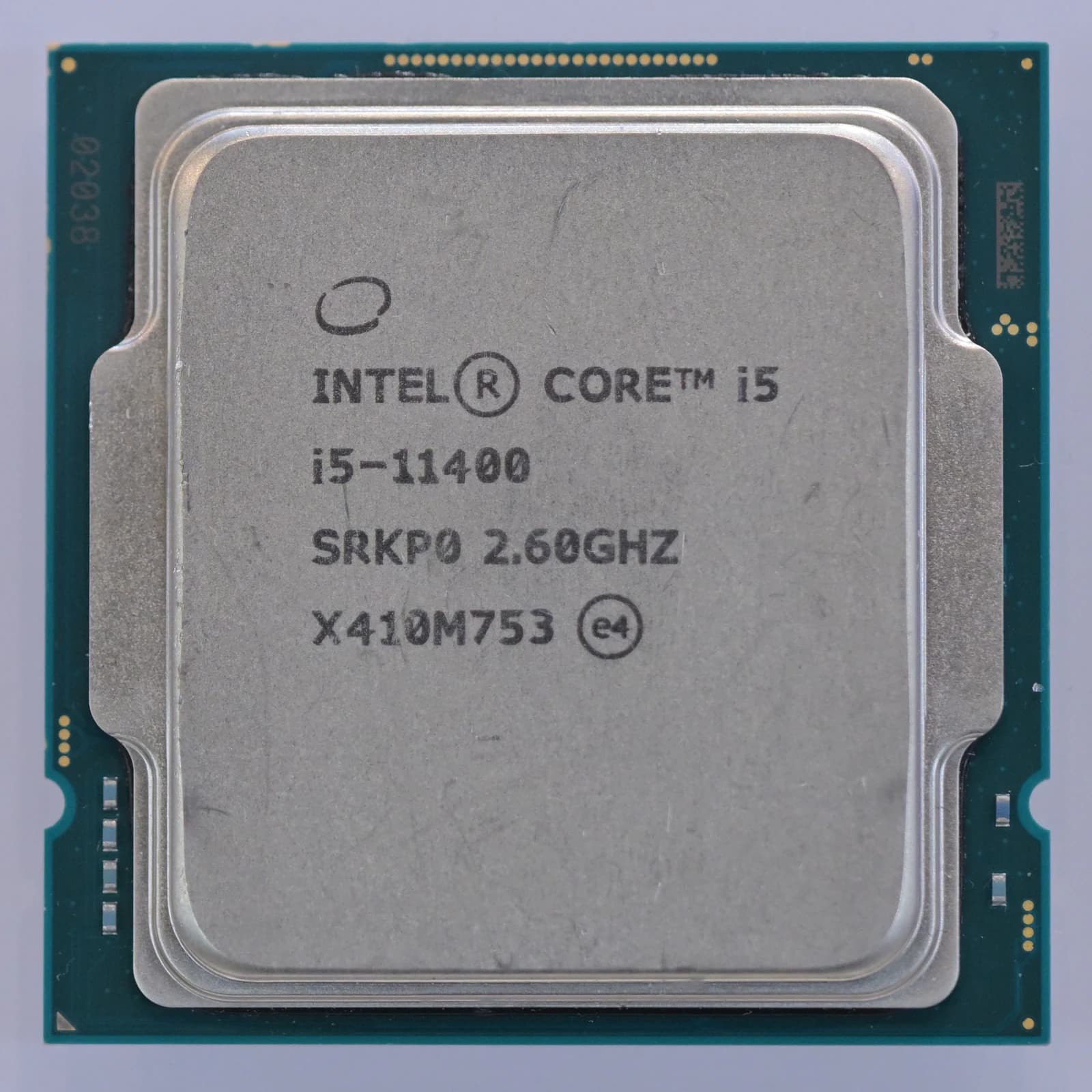
That is why semiconductor names and their suppliers stay at the center of the thesis. Nvidia, AMD, Qualcomm, Intel and Taiwan Semiconductor all sit inside a policy regime that can swing demand, supply and valuation multiples. Nvidia has already warned that export controls can disrupt its supply chain and distribution channels, while TSMC’s stock has remained close to record territory as investors bet that AI capex will overpower geopolitical noise. If Washington and Beijing avoid fresh escalation, the beneficiaries are the companies with direct China exposure and the broader AI hardware stack; if the talks go sour, the first casualties will be the same names.
The Taiwan issue remains the least soluble and the most dangerous. The status quo is not a solution, just a holding pattern. Beijing is likely to keep using military pressure, economic incentives and international isolation to shape the island’s future, while Washington sticks to strategic ambiguity. For markets, that means a persistent geopolitical premium on chip supply chains, shipping lanes and defense spending — a premium that never fully disappears, only expands or contracts with the news flow.
The investable takeaway is straightforward: this summit is best viewed as a risk-management event, not a grand bargain. I believe the market underestimates how valuable even a modest extension of the trade truce is for semiconductors, AI infrastructure and multinational manufacturers, while overestimating the odds of a near-term diplomatic reset. Use any relief rally to stay aligned with the winners of the AI capex cycle, especially TSMC and the broader chip ecosystem, while treating U.S.-China détente as a trading opportunity, not a reason to abandon geopolitical hedges.
| Entity | Gains | Losses |
|---|---|---|
| TSMC | ▲Stable chip demand | ▼Less premium from fear |
| Nvidia, AMD, Qualcomm | ▲Easier China access | ▼Export-control uncertainty |
| Multinationals with China supply chains | ▲Fewer tariff shocks | ▼Bargaining leverage |
| Taiwan and defense names | ▲Persistent security premium | ▼Any thaw in tensions |