Japan’s stock market looks set for renewed consolidation on Monday after the Nikkei 225 snapped a six-session slide on Friday but still faces pressure from a sharp global risk-off move, surging oil prices and renewed weakness in technology shares.
Japan Stocks Face Pressure as Oil and Tech Weigh

The benchmark rose 1.39% to 65,324.29 on Friday, ending a losing streak that had erased more than 9% from recent highs. But the rebound came against a fragile backdrop: U.S. markets closed lower, Nasdaq heavyweights were hit by fresh concern over debt-fueled AI spending, and Brent-linked crude topped $100 a barrel again as tensions in the Strait of Hormuz flared.
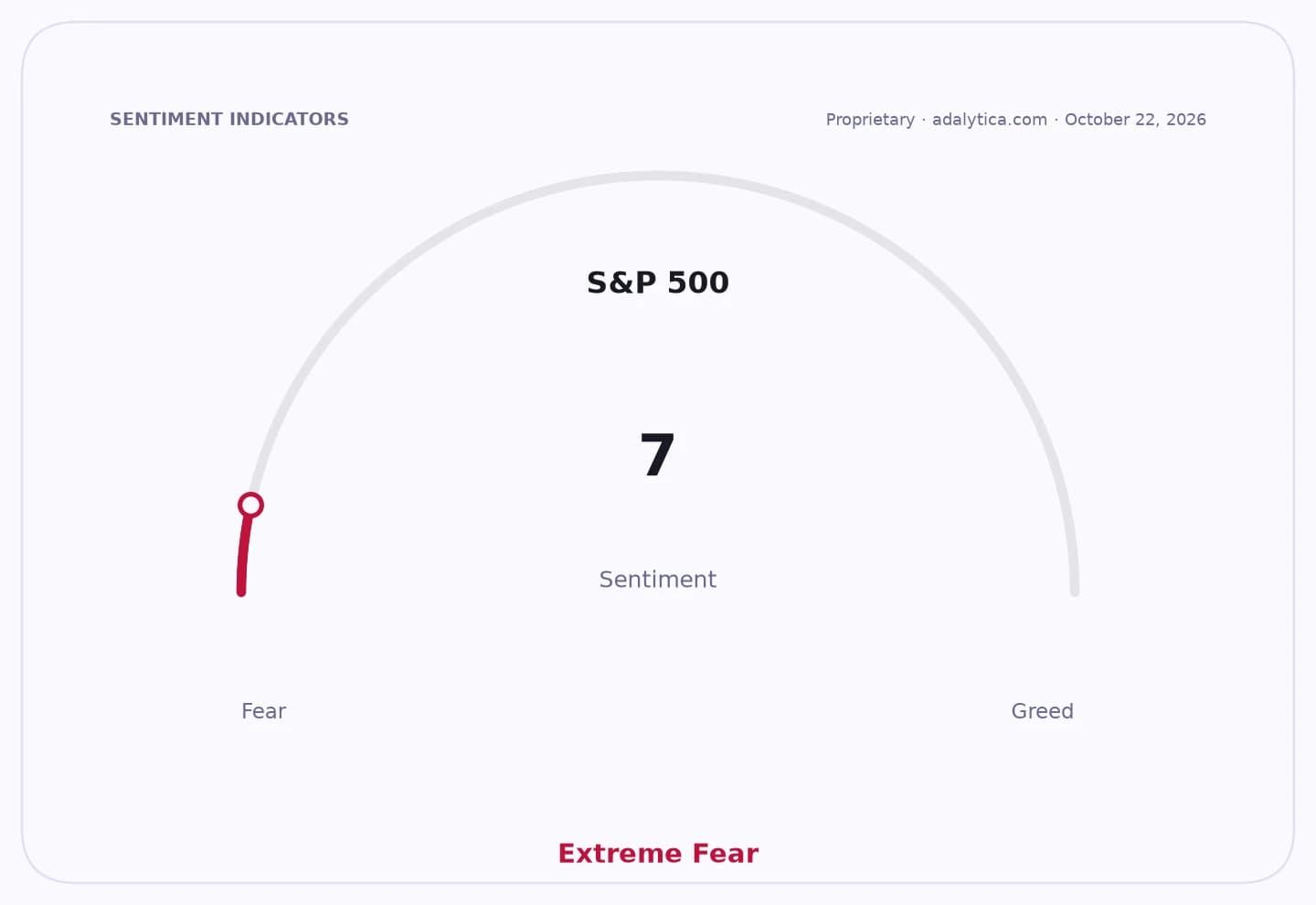
Sentiment IndicatorsⓘProprietary · adalytica.com · October 22, 2026
This is a snapshot — live sentiment, awareness and momentum for 130+ markets update continuously in the dashboard.Open AlphaPulse

That combination matters for Japan because the Nikkei is heavily exposed to exporters, banks and chip-related names, all of which can react quickly to swings in U.S. technology sentiment, energy costs and the yen. Rising crude can add to inflation pressure in an economy already struggling to keep imported costs contained, while a weaker Wall Street session tends to weigh on Tokyo’s tech and auto shares at the open.
The U.S. backdrop was especially unhelpful for Asian risk assets. The Nasdaq fell 2.14% on Friday and the NYSE Arca Computer Hardware Index dropped 5.4% to a two-month closing low as investors retreated from hardware and AI infrastructure plays. At the same time, West Texas Intermediate jumped 3.4% to $101.30 a barrel after Iran re-escalated attacks in the Strait of Hormuz, intensifying fears of higher transport and energy costs.

Japanese equities had rallied late last week on financials, technology and automakers, but the move left the Nikkei vulnerable to another round of profit-taking if overseas futures and oil remain under pressure. The index’s intraday range on Friday also showed how quickly the market is still swinging, with the Nikkei moving between 64,800.90 and 65,712.30.
The broader tone across risk assets remains cautious. The S&P 500 and Dow both finished lower on Friday, while conventional technical readings on Japan-focused funds suggest momentum has cooled after the recent rebound: the EWJ ETF’s relative strength index has fallen to 21.9, a level that points to deep short-term weakness, even as it trades above its 200-day moving average.
For investors, the key question is whether Friday’s bounce marks a base after the six-day washout or just a pause in a broader correction. The near-term focus will be on whether oil stabilizes, whether U.S. tech sentiment improves and whether domestic Japanese data due later in the day can offset the global drag. If not, Monday’s open could bring another round of consolidation in Tokyo rather than a sustained recovery.
| Entity | Gains | Losses |
|---|---|---|
| Japanese exporters | ▲Weaker yen support | ▼Higher oil input costs |
| Tokyo banks/financials | ▲Rotation into value | ▼Risk-off selling if global equities slip |
| U.S. tech stocks | ▲— | ▼AI spending concerns, valuation pressure |
| Oil producers | ▲Higher crude prices | ▼Demand worries if growth slows |