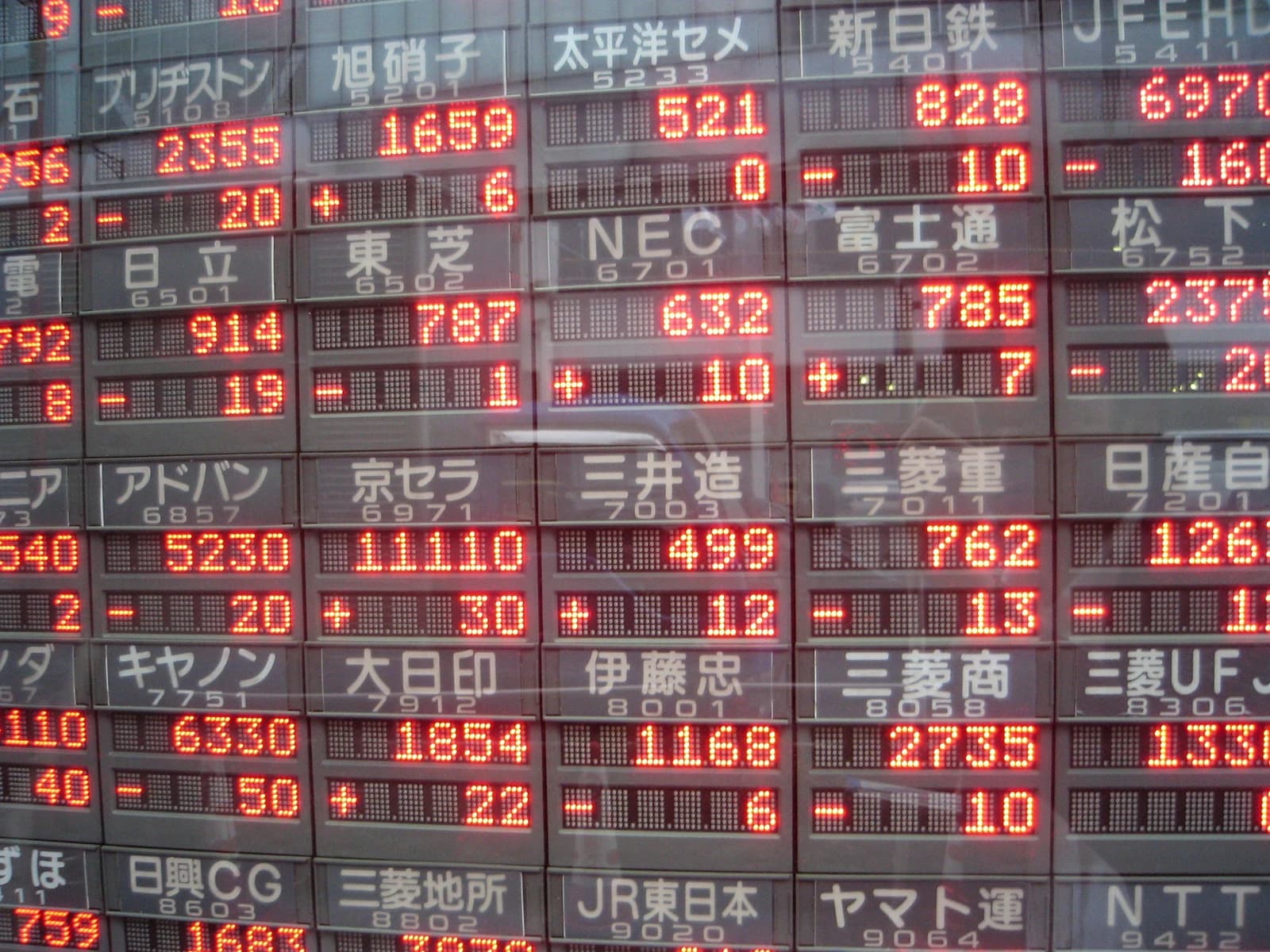
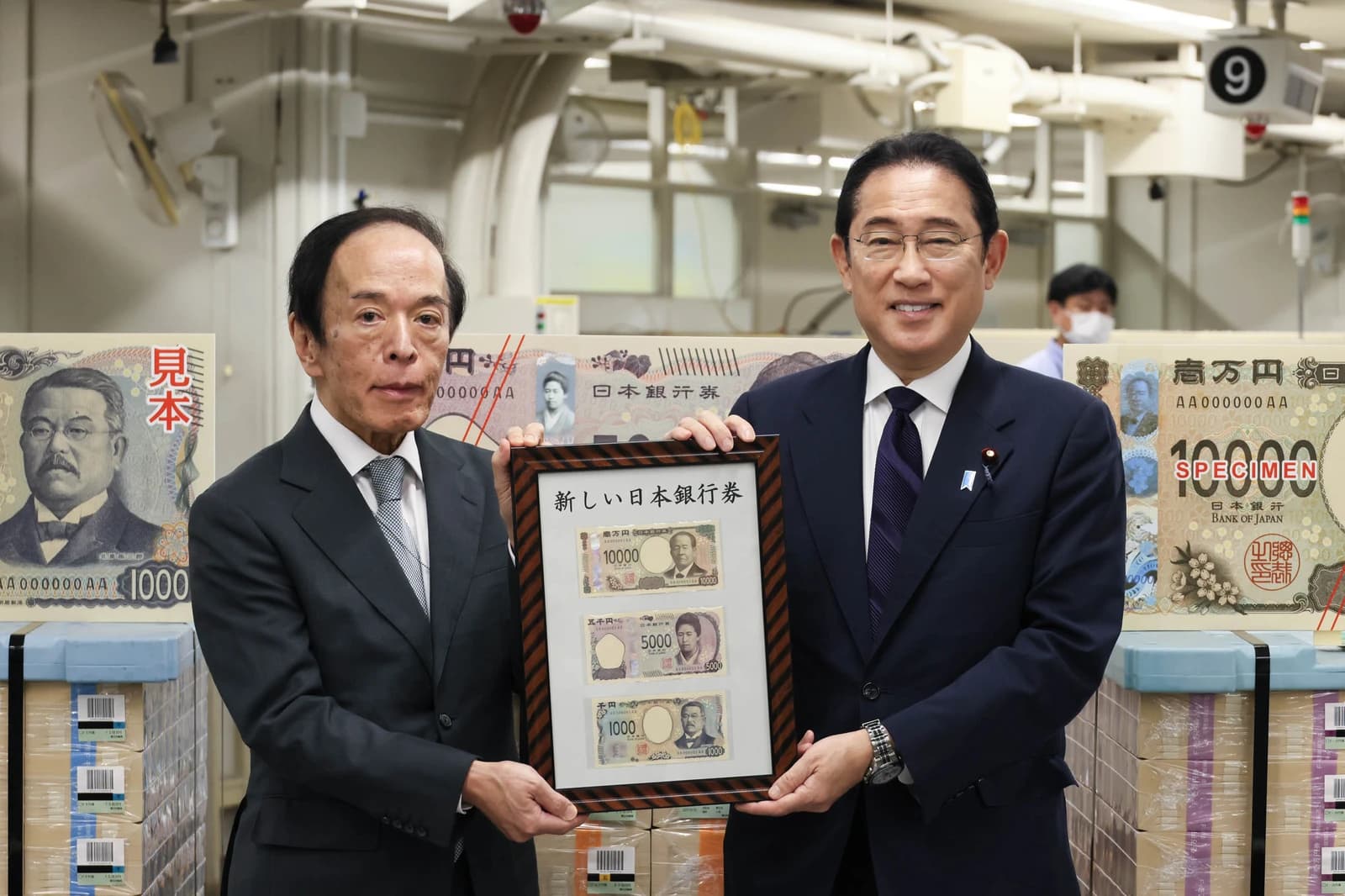
Japan’s Nikkei average briefly rose more than 1,000 points and traded at 65,400 yen, keeping the benchmark near record territory and underscoring how aggressively investors are still bidding up Japanese equities.
Nikkei 225 Holds Near Record Levels
The move matters because Japan remains one of the clearest global equity momentum trades: a stronger domestic market tends to pull in foreign flows, lift broad Japan ETFs and reinforce a re-rating of exporters, banks and other cyclical stocks that benefit from firmer growth expectations and ongoing corporate reforms.
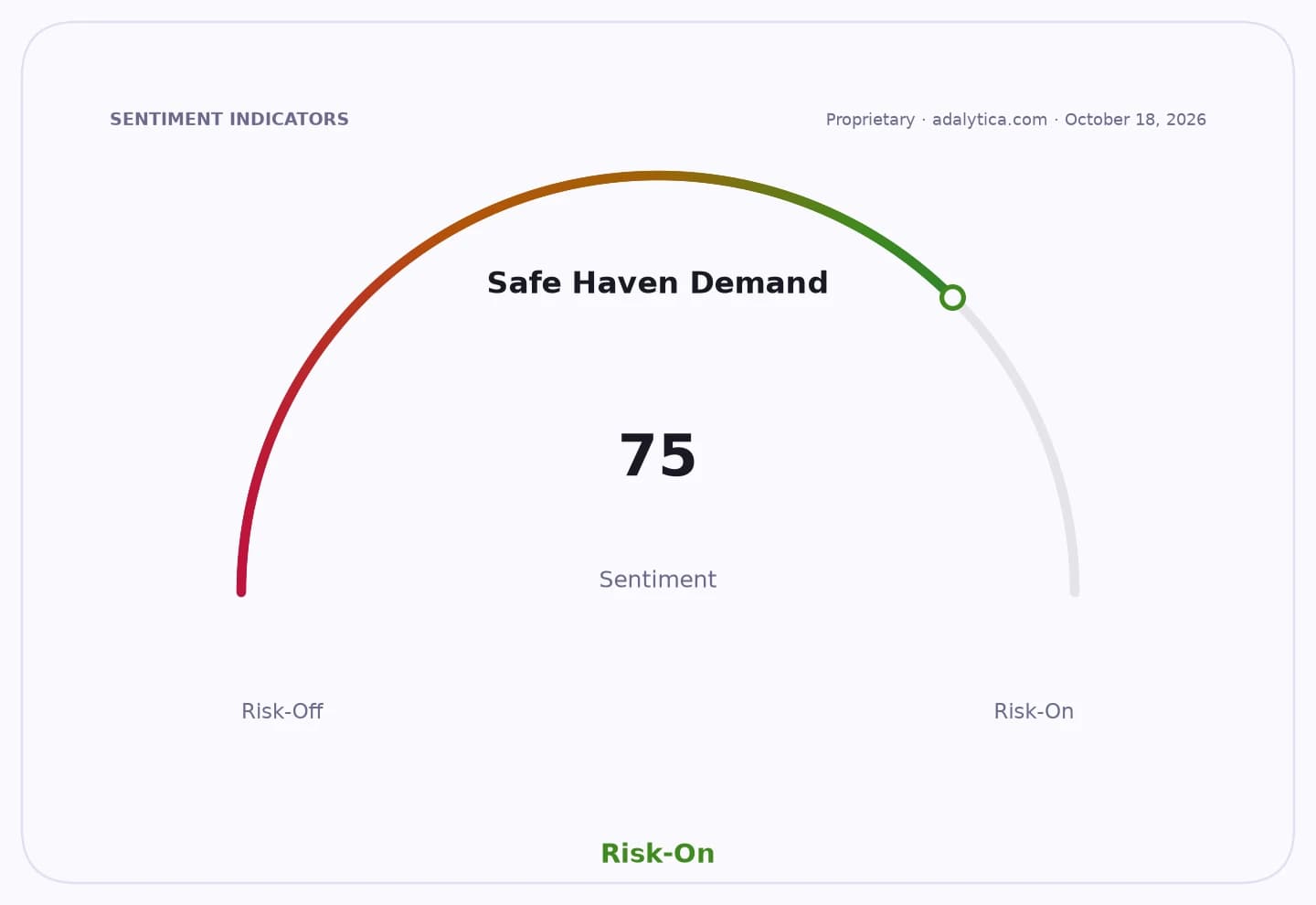
Sentiment IndicatorsⓘProprietary · adalytica.com · October 18, 2026
This is a snapshot — live sentiment, awareness and momentum for 130+ markets update continuously in the dashboard.Open AlphaPulse
The Nikkei has already climbed from 49,823.94 in late November to above 68,000 in early June before consolidating in recent weeks. It was last quoted at 65,324.29, still far above its 50-day average of 66,295.01 and 200-day average of 61,117.66, while the RSI near 46 points to a market that has cooled from overbought levels but remains structurally supported.
U.S.-listed Japan ETFs have tracked the advance. EWJ traded at 94.88, while DXJ, which strips out yen exposure, held at 59.80, reflecting continued demand for Japan exposure even as the yen has swung sharply. The currency backdrop remains a key cross-current for investors: Adalytica’s Japanese yen trade signals show sentiment at 80, or “Greed,” while awareness sits at an “Extreme Fear” reading of 8, highlighting how crowded the debate over the yen’s direction remains.
That matters for portfolio positioning. A softer yen tends to support exporters’ overseas earnings when translated back into yen, while a rally in domestic shares can attract overseas capital into Japanese financials, industrials and technology names. It also keeps pressure on investors underweight Japan to decide whether they are missing a secular revaluation or chasing a move that has already run hard.
The broader backdrop is still favorable for the market, even as headlines on Japan’s policy and corporate environment stay mixed. With the Nikkei holding above the 65,000 mark, traders will now look to whether earnings, buybacks and further governance reforms can justify another leg higher, or whether the index needs a pause after one of its strongest stretches in years.
| Entity | Gains | Losses |
|---|---|---|
| Nikkei 225 bulls | ▲Record-level momentum | ▼Short sellers |
| EWJ holders | ▲Broad Japan equity exposure | ▼Investors underweight Japan |
| DXJ holders | ▲Stronger Japan stocks without yen risk | ▼Currency-sensitive longs |
| Japanese exporters | ▲Translation gains from weaker yen | ▼Yen bulls |