The Nikkei average slipped again on Friday, extending a broad selloff in U.S. stocks and underscoring how quickly global risk appetite is being stripped out of equities.
Nikkei Weakness Signals Broader Global Risk-Off
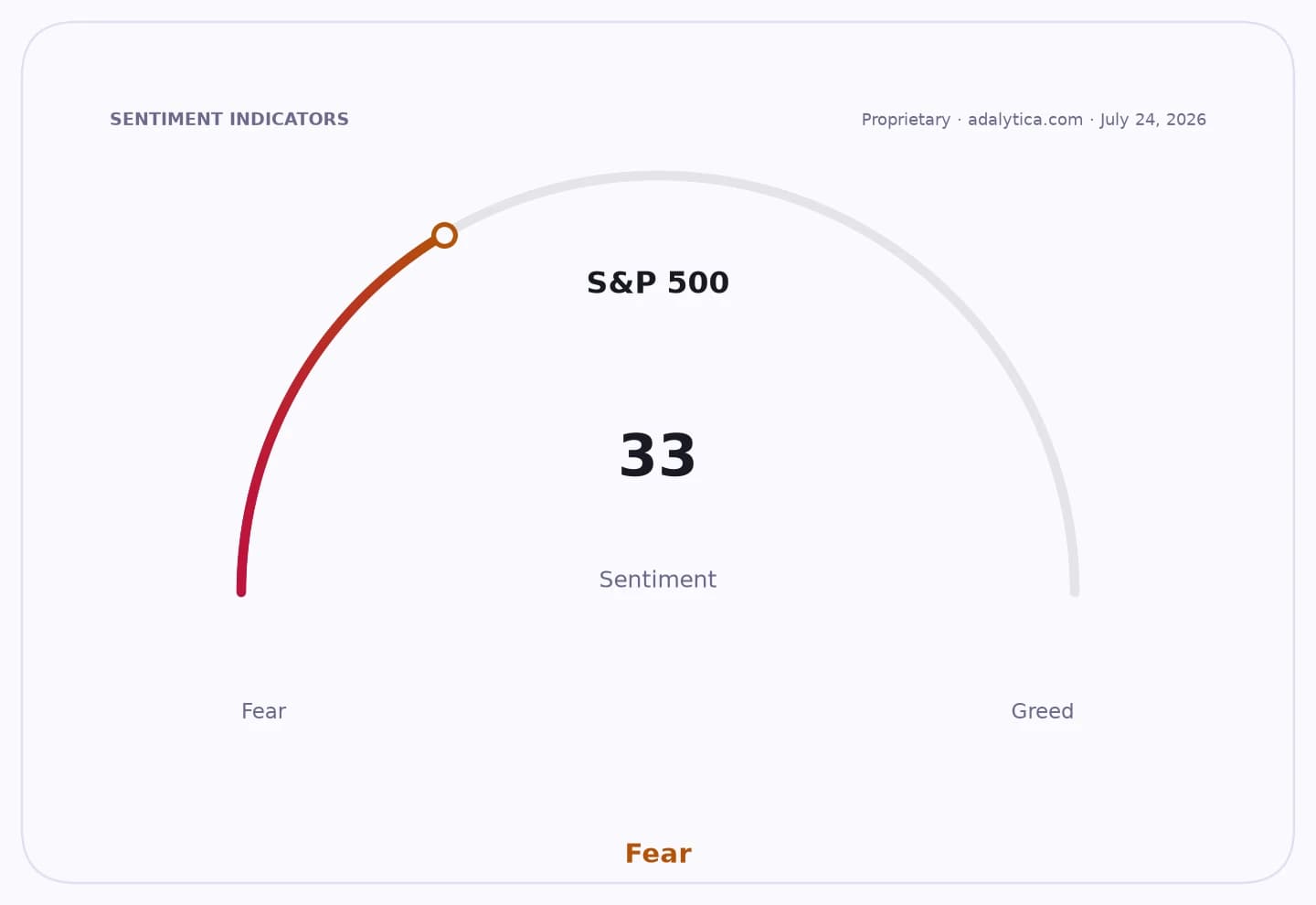
That matters because this is no longer an isolated wobble in Japan. It is a cross-border de-risking event, with the S&P 500 and Dow Jones Industrial Average both showing softer momentum and investors rotating away from crowded equity exposure as macro and geopolitical uncertainty mounts. When U.S. stocks lose altitude, the impact hits Tokyo fast: Japanese exporters, financials and cyclical names are all leveraged to the same global growth expectations that are now being re-priced lower.
The market message is clear. The Nikkei is trading well below its recent highs, and the latest move leaves it below its 50-day moving average, a sign that short-term trend support has weakened. The index’s relative strength reading has also cooled sharply from overheated levels earlier in the year, while the MACD has turned negative, reinforcing the view that momentum is fading rather than resetting for another leg higher. For investors, that combination usually means volatility is not done.
The selloff is being driven by more than just chart damage. Weak guidance from big U.S. consumer names, including Netflix, has reinforced fears that corporate earnings may not justify stretched valuations after a powerful rally. At the same time, geopolitical friction remains elevated, leaving portfolio managers reluctant to add risk into a thinly supported market. Reuters’ broader market reporting also points to pressure across Asia and other major bourses, with Indian equities sliding and U.S. benchmark sentiment softening.
For Japan, the implication is especially important because the Nikkei’s prior advance was built on a narrative of global growth, currency support and strong corporate reform. When U.S. equities weaken, that thesis becomes more fragile. Exporters can still benefit from a weaker yen, but that tailwind is not enough if global demand expectations are being cut and risk premiums are rising. Financials also face a tougher setup if investors start to question the durability of earnings growth and the direction of yields.
The bigger opportunity now may be in understanding who is insulated, not who is merely cheap. I believe the market is underestimating how quickly capital rotates when U.S. leadership cracks: quality cash generators, defense-linked names, and companies tied to domestic Japanese spending and automation may outperform the broad index if the global growth scare deepens. By contrast, the most leveraged cyclicals and exporters remain vulnerable if Wall Street continues to unwind.
This is the kind of tape that rewards patience, selectivity and early positioning. The Nikkei’s pullback may ultimately create a better entry point, but for now the signal is defensive: global stocks are being repriced together, and Japan is not immune. Investors should treat this as a warning that the next move in equities is likely to be dictated by U.S. risk appetite, not local fundamentals alone.
| Entity | Gains | Losses |
|---|---|---|
| Defensive Japanese stocks | ▲Relative resilience | ▼Broad index rotation |
| Exporters and cyclicals | ▲Yen support | ▼Global demand fears |
| U.S. equity bulls | ▲None | ▼Momentum unwind |
| Cash and hedges | ▲Better positioning | ▼Long-only beta exposure |