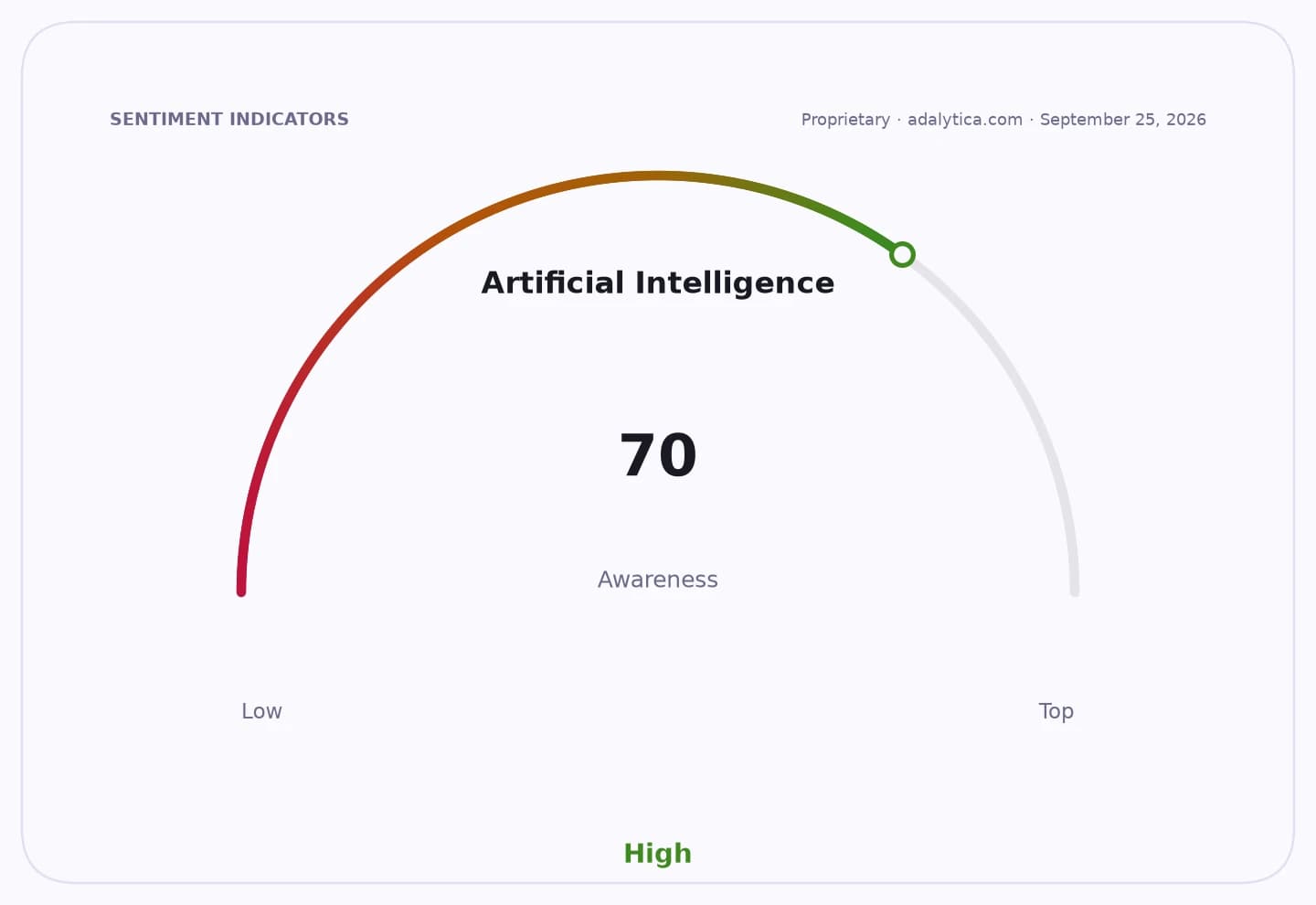
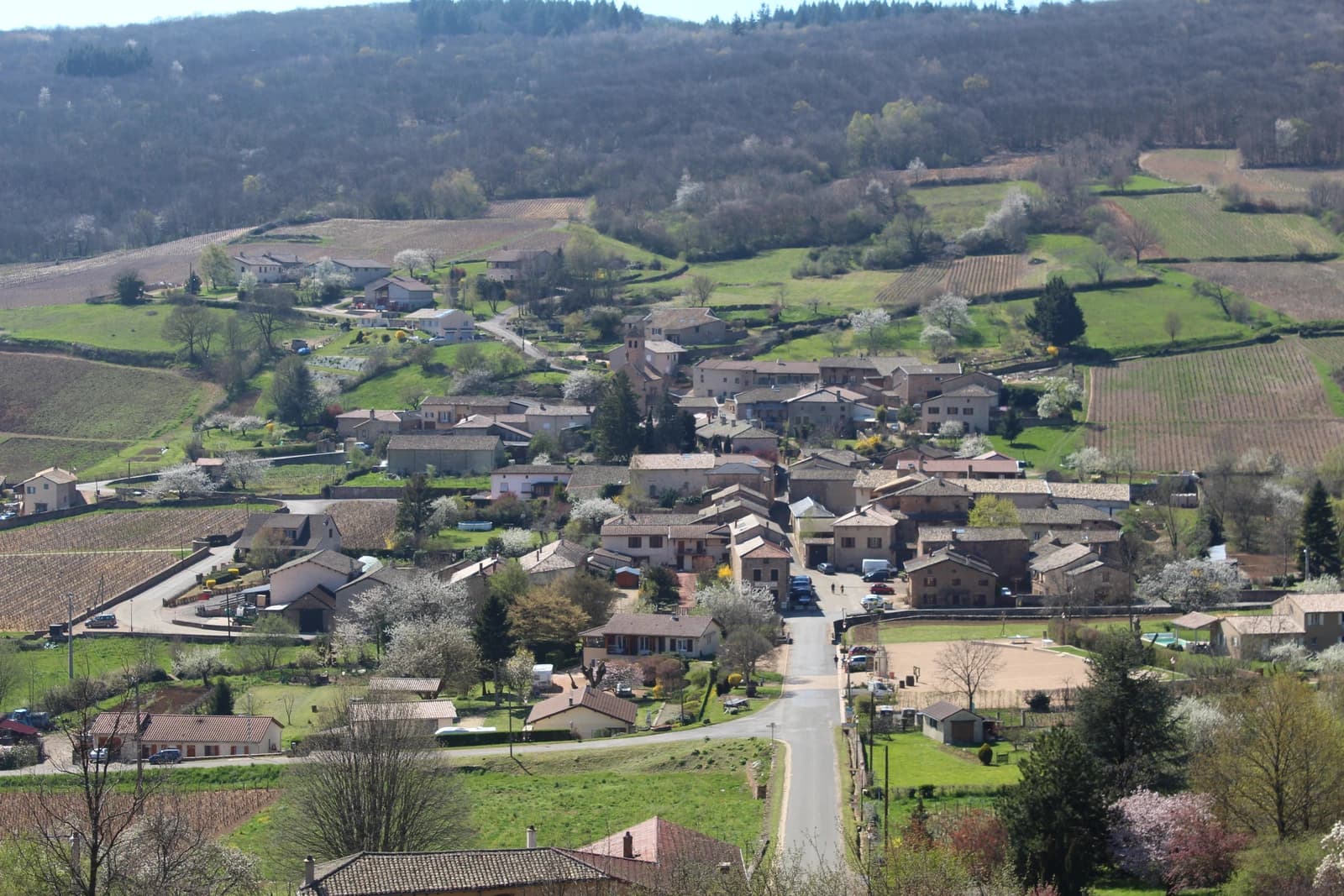
It is in a village of just 650 inhabitants in northern France that Europe’s biggest artificial intelligence investment is taking shape, and the scale of the project is already testing the limits of power supply, farmland use and the idea of digital sovereignty.
Nvidia-backed AI campus planned in Fouju, France
What is being built in Fouju, Seine-et-Marne, is not just another data center campus. Backed by as much as 50 billion euros of Franco-Emirati capital, the scheme underscores how AI is becoming an industrial policy race as much as a technology one. It also shows how the economics of frontier AI are pulling in sovereign wealth funds, state lenders and chipmakers into capital-intensive projects that look increasingly like utilities than software businesses.
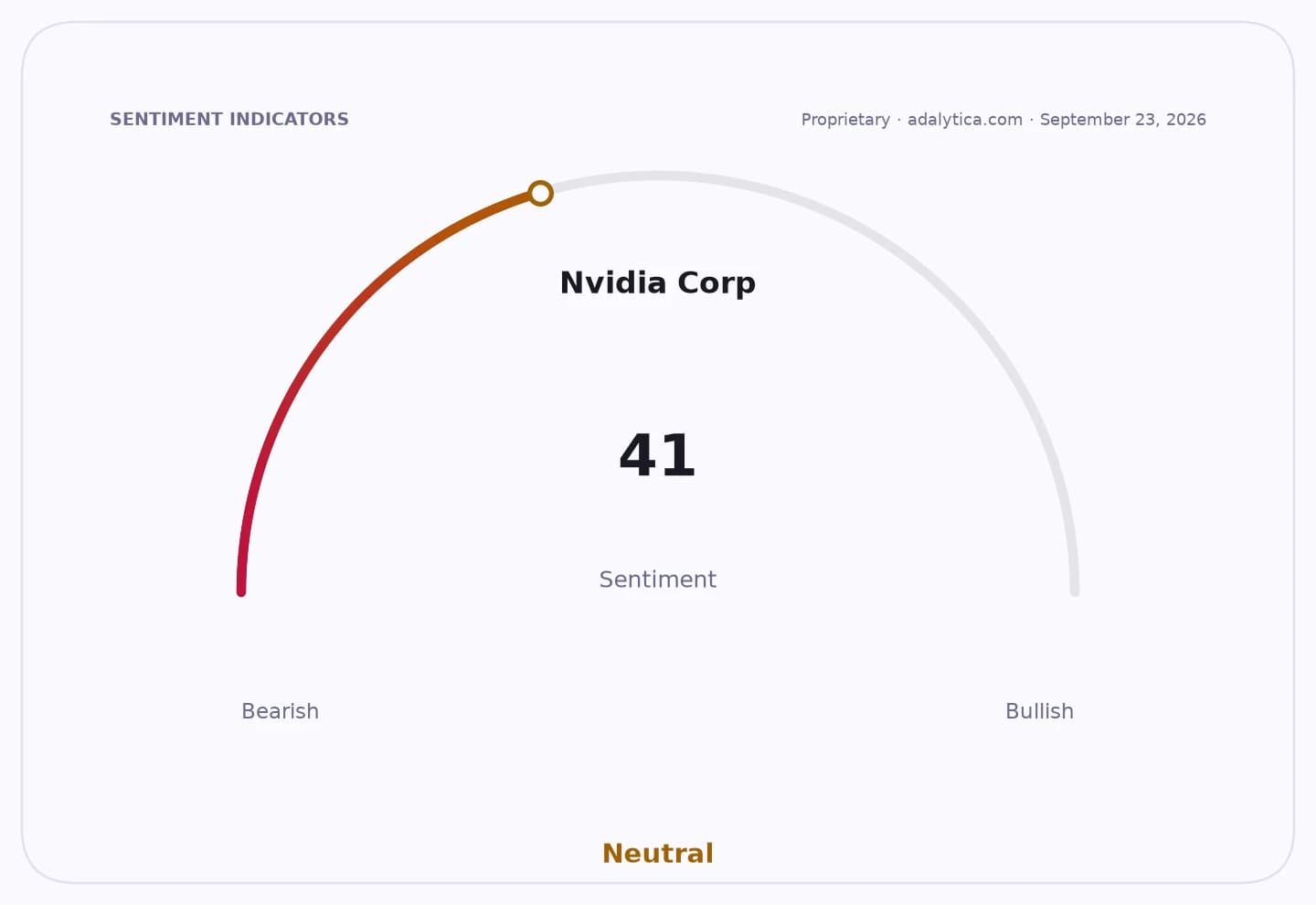
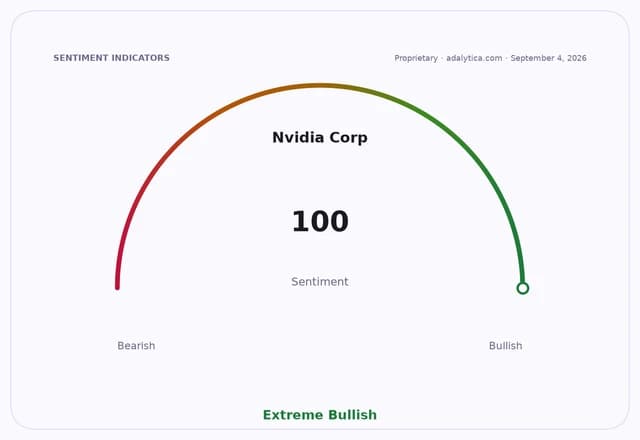
Sentiment IndicatorsⓘProprietary · adalytica.com · September 4, 2026
This is a snapshot — live sentiment, awareness and momentum for 130+ markets update continuously in the dashboard.Open AlphaPulse
The campus is being developed by a consortium including Abu Dhabi-backed MGX, Bpifrance, Nvidia and Mistral AI, with the first phase targeted for 2028-2029. The full buildout could require 30 billion to 50 billion euros by 2038, making it more expensive than Grand Paris Express and one of the largest AI infrastructure commitments in Europe. More than half the budget, around 28 billion euros, is earmarked for Nvidia graphics processors, a reminder that the AI boom remains deeply dependent on US semiconductor supply even when the strategic rhetoric is about European autonomy.
That dependency is one reason the project matters beyond France. For investors, it is a direct line into the hardware backbone of generative AI. Nvidia stands to benefit from multi-year demand tied not to consumer gadget cycles but to long-duration industrial buildouts. The company’s stock has already reflected that investment appetite: it closed at $231.24 on Sept. 4, above its 50-day moving average of $210.58 and well above its 200-day moving average of $196.53, while Adalytica’s NVIDIA earnings sentiment gauge showed “Extreme Greed.” The market is treating infrastructure demand as a durable earnings driver, even as some analysts warn that the AI capital cycle is starting to resemble a crowded trade.
The project also exposes the pressure points that come with scaling AI to a national level. The campus will need 1.4 gigawatts of power at full capacity, roughly equivalent to an EPR nuclear reactor, and is expected to consume about 10 terawatt-hours a year, close to 17% of the electricity used in the Île-de-France region. That makes grid access a central economic constraint, not a technical footnote. For utilities, equipment suppliers and power producers, AI is becoming a major new source of demand. For policymakers, it raises uncomfortable questions about whether France can add AI capacity without distorting its energy system.
Locally, the costs are even more visible. Between 70 and 90 hectares of agricultural land are being converted, triggering opposition from environmental groups and nearby officials. The cooling system’s reliance on air-based technology is meant to avoid draining groundwater, but it still requires about 700 chillers and 514 tonnes of refrigerants, with activists warning of annual PFAS leaks and heat pollution. That makes the project a test case for whether Europe’s AI ambitions can coexist with stricter land-use and environmental rules.
There is also a credibility gap at the heart of the sovereignty pitch. French officials have framed the campus as a step toward technological independence, yet the build depends on US chips, foreign money and exposure to US extraterritorial rules such as the Cloud Act. For investors, that matters because it suggests Europe’s AI strategy may create value, but not necessarily strategic autonomy. The likely beneficiaries are chip suppliers, construction contractors, power infrastructure groups and AI software firms such as Mistral. The losers are farmland owners, local residents and, potentially, public authorities if the project runs into legal delays or higher-than-expected power and cooling costs.
The deeper market narrative is that AI is moving from speculative software growth into a capital-intensive industrial phase. That should support demand for semiconductors, power equipment and data center infrastructure, but it also raises execution risk and financing risk. The bull case is that sovereign-backed megaprojects lock in years of hardware demand and reinforce Europe’s AI ecosystem. The bear case is that these projects concentrate environmental, regulatory and funding risks in a sector already stretched by debt and rising expectations. Fouju may be a small village, but the outcome there will be watched as a signal of how far Europe is prepared to go to keep pace in the AI race.
| Entity | Gains | Losses |
|---|---|---|
| Nvidia | ▲Multi-year chip demand | ▼Supply concentration risk |
| Mistral AI | ▲Compute access | ▼US chip dependence |
| Fouju residents | ▲Infrastructure spending | ▼Farmland and local disruption |
| French state | ▲AI ambition boost | ▼Sovereignty credibility gap |