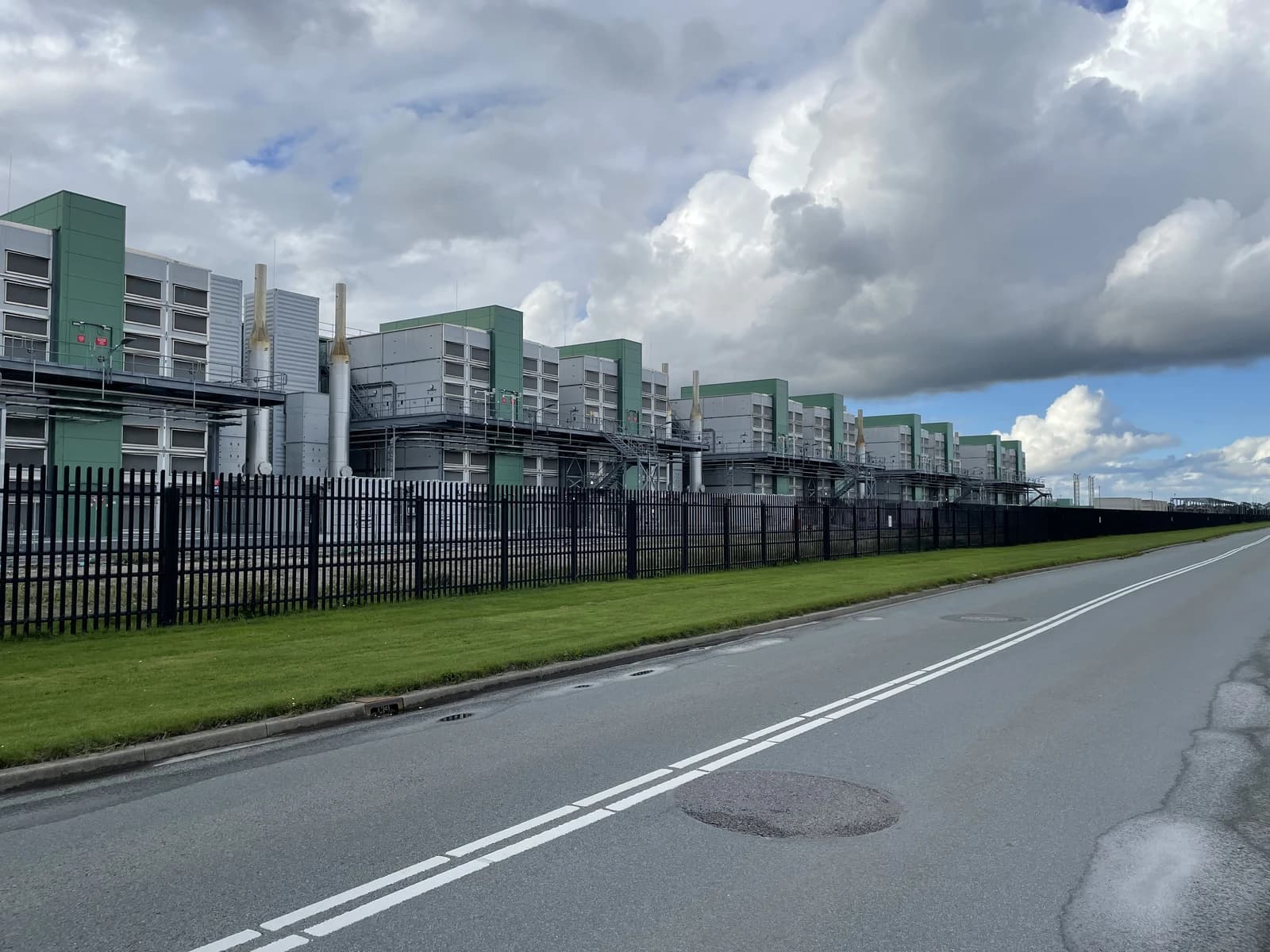
The carbon footprint tied to Nvidia’s AI chips has swelled fast enough to rival a Russian state coal miner, underscoring how the data-center buildout behind generative AI is becoming a larger environmental and regulatory risk for the industry’s most valuable chipmaker.
Nvidia AI chips face carbon footprint scrutiny
A new report from a coalition of climate and civil-society groups says emissions linked to the use of Nvidia chips sold since 2022 could reach between 4 million and 21 million tonnes of carbon dioxide in 2025, depending on the power mix used to run them. It also estimates Nvidia’s supply-chain emissions have risen 725% since 2020, or by about 9.4 million tonnes, to 10.7 million tonnes of carbon-dioxide equivalent in 2026 on the company’s own Scope 3 disclosures.

The report’s central argument is that AI’s efficiency gains do not automatically offset the electricity and materials intensity required to make and run advanced chips at scale. That matters economically because it shifts the conversation around AI from software productivity and revenue growth to cost, energy demand and compliance risk — three variables that can eventually shape infrastructure spending, margins and policy. If regulators, customers or investors begin treating AI power use more like a carbon-intensive industrial process than a clean digital service, the cost of capital for data-center expansion could rise.
Nvidia has publicly argued that AI is likely to lower emissions overall by improving efficiency across industries. In May, Josh Parker, the company’s sustainability chief, said the consensus was growing that AI would probably deliver net emissions reductions. The new report dismisses that as greenwashing, saying any efficiency gains can be overwhelmed when computing demand expands rapidly and that demand-response measures at data centers would apply for less than 1% of the year in high-growth scenarios.

For investors, the immediate issue is not whether Nvidia’s growth story breaks, but whether climate scrutiny adds another layer of operating and reputational pressure to a stock already central to the AI trade. Nvidia’s shares remain near elevated levels, with technicals still constructive — the stock has held above its 200-day moving average — but the debate around power consumption may matter more to multiples than to near-term chip orders. The risk is that utilities, grid planners and policymakers respond to surging AI loads with tighter requirements, slower permitting or higher energy costs.
The broader market implication extends beyond Nvidia. Semiconductor suppliers, data-center operators, utilities and renewable developers all stand to be pulled deeper into the same question: whether the AI boom is accelerating decarbonization or simply moving emissions from one part of the economy to another. The report’s comparison with Russian Coal is designed to sharpen that contrast, but the real economic point is that AI infrastructure is no longer a purely digital story. It is becoming an energy story.
That makes transparency a key catalyst. The report urges Nvidia to disclose emissions tied to product use and to set clearer supply-chain reduction targets. If it does not, pressure is likely to intensify from climate groups, large customers and European policymakers already weighing how to manage the power demands of new data centers.
| Entity | Gains | Losses |
|---|---|---|
| Nvidia | ▲AI revenue growth | ▼Climate scrutiny |
| Data-center operators | ▲AI demand | ▼Higher power costs |
| Utilities/renewables | ▲Grid investment | ▼Peak-load pressure |
| Climate groups | ▲Transparency push | ▼Nvidia green claims |