Nvidia’s backing of Safe Superintelligence is a sign the chip giant wants to stay at the center of the AI boom even as the industry shifts from building models to building the laboratories that may define the next generation of them.
Nvidia’s AI investment reinforces ecosystem moat
That matters because the AI trade is no longer just about selling more graphics processors. It is becoming a race to secure the best researchers, the deepest relationships and the most promising frontier-model startups before they become strategic rivals or irreplaceable customers. For Nvidia, a reported investment in Ilya Sutskever’s Safe Superintelligence is another way to reinforce the ecosystem that keeps demand for its chips, networking gear and software compounding over years, not quarters.
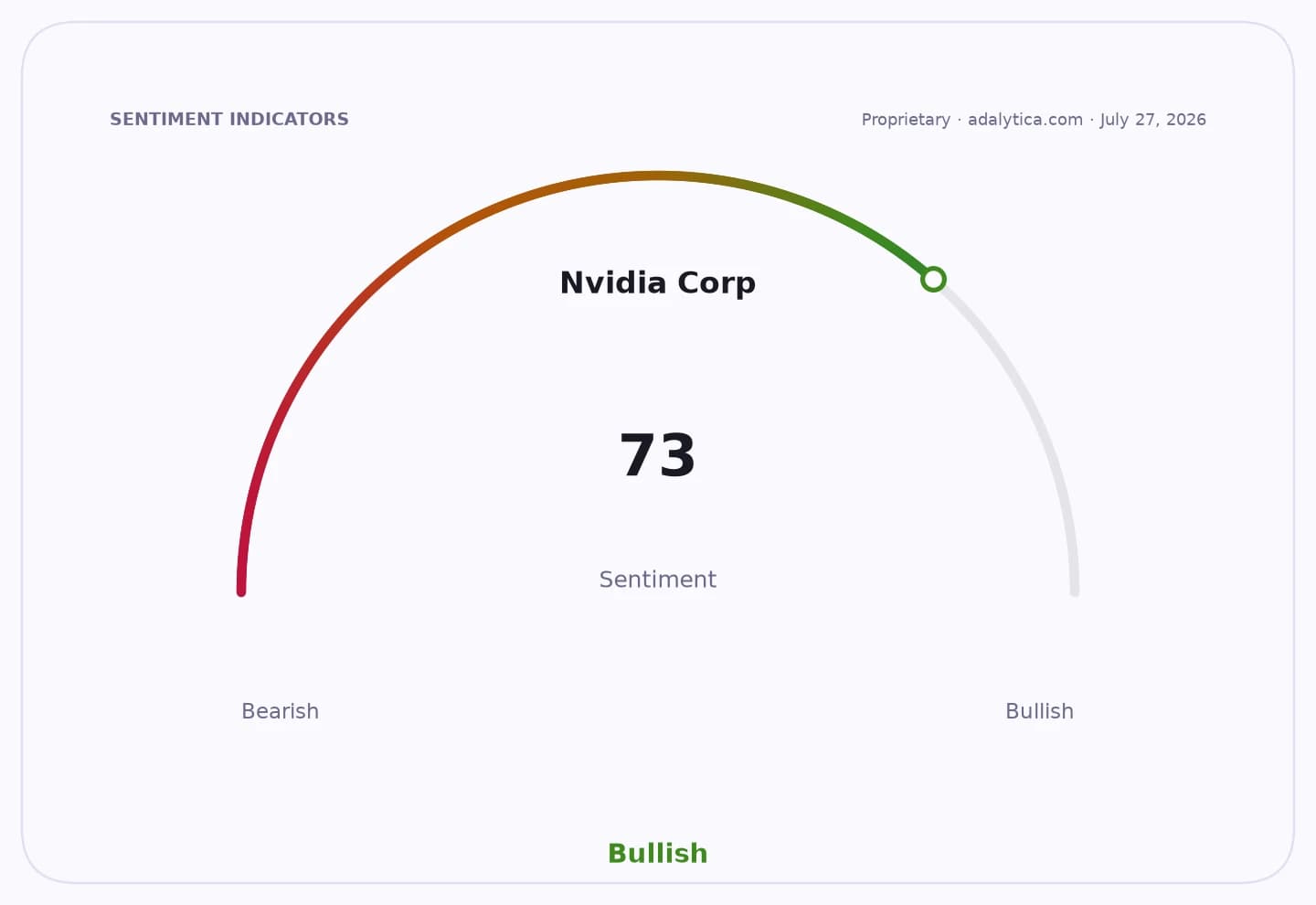
Sentiment IndicatorsⓘProprietary · adalytica.com · July 27, 2026
This is a snapshot — live sentiment, awareness and momentum for 130+ markets update continuously in the dashboard.Open AlphaPulse
The amount of the transaction was not disclosed, but the symbolism is easy to read. Sutskever, one of the most respected names in modern AI, helped shape the industry’s breakout phase at OpenAI before launching his own lab with a mission that is as ambitious as its name. Nvidia’s decision to invest suggests it sees value in aligning early with the people trying to build the next breakthrough systems, especially as competition intensifies from well-funded peers in the U.S., Europe and Asia.
For investors, that is what makes this more than a venture-style headline. Nvidia’s long-term bull case has always rested on a simple idea: the more AI advances, the more infrastructure it needs. If frontier labs keep racing to train larger and more capable models, the companies supplying the picks and shovels should continue to enjoy powerful pricing and volume tailwinds. That is why deals like this matter even when they do not move the quarterly numbers immediately.
Nvidia Corp — 30-day sentimentadalytica.com
Explore this data interactively — full history, time series and cross-market comparisons.Open AlphaPulse
The stock has already reflected that optimism, but it has also shown how quickly sentiment can swing. Nvidia shares recently traded well above both the 50-day and 200-day moving averages before pulling back, while conventional momentum gauges such as RSI and MACD have cooled from overheated levels. In plain English, the market still likes the story, but it is no longer in a straight line. That is normal for a company priced as a core AI winner.
The broader backdrop helps explain why Nvidia is still deploying capital into the ecosystem. AI spending is spreading globally, from U.S. hyperscalers to European efforts to build local champions, and the fight for talent and model leadership is only getting fiercer. Samsung’s recent move into Mistral underscored the same point: governments and corporations alike want a seat at the AI table, and they are willing to back the labs they think can matter.
There are risks, of course. Frontier AI startups can burn cash quickly, regulation is rising, and a lot of lofty promises in the sector will never become profitable businesses. But for long-term investors, Nvidia’s move reinforces a more durable thesis: the company is not just a beneficiary of AI demand, it is becoming a strategic architect of the AI industry itself.
If you own Nvidia for a multiyear compounding story, this is the kind of development worth watching. It does not guarantee the next leg higher, but it does support the idea that the company’s moat is widening at the exact moment the AI race is becoming most important.
| Entity | Gains | Losses |
|---|---|---|
| Nvidia | ▲Deeper AI ecosystem access | ▼More capital tied up in venture bets |
| Safe Superintelligence | ▲Strategic backing and credibility | ▼Greater expectations and scrutiny |
| AI chip rivals | ▲Industry growth lifts demand | ▼Nvidia strengthens its network |
| Long-term AI investors | ▲More signs of secular demand | ▼Near-term valuation volatility |