Nvidia Chief Executive Jensen Huang is again arguing the market is underestimating the durability of AI spending, and the stock’s resilience suggests investors still see a long runway for data-center demand rather than the end of a speculative peak.
Nvidia Signals AI Spending Still Has Room
That matters because Nvidia has become the clearest equity-market proxy for the AI buildout. If the company is right that investment remains “far from bubble state,” then the current wave of capital spending on chips, networking and data-center infrastructure is still being treated as a structural earnings cycle, not a short-lived trade. If it is wrong, Nvidia’s premium valuation and the broader AI complex could face a sharp reset.
The case for continued expansion is backed by the industry’s own spending patterns. Microsoft has said gross margins were squeezed by continued AI infrastructure investment, while its operating expenses rose on compute capacity, AI talent and data. That suggests the largest cloud buyer in the market is still prioritizing capacity over near-term profitability. Across the supply chain, TSMC and ASML have also been benefiting from record sales tied to AI demand, reinforcing the idea that this is not just a Nvidia-specific story but a multiyear semiconductor capex cycle.
Nvidia’s shares remain well above their longer-term trend lines. The stock closed at $212.50 in the latest session, above both its 50-day and 200-day moving averages, with the latter near $191.95. The latest RSI reading of 62.4 points to solid momentum without the kind of extreme overbought condition that usually marks a euphoric top. After a volatile stretch in which the stock briefly pulled back from above $230, the market appears to be pricing a strong but still somewhat contested earnings outlook rather than a terminal blow-off move.
Still, the bubble debate has not disappeared. Nvidia’s own gains have become more sensitive to whether hyperscalers keep spending at the same pace, and Microsoft’s recent margin pressure shows the economics of AI remain expensive. For investors, the key question is not whether AI demand exists — it clearly does — but whether the return on that spending arrives fast enough to justify the scale of the investment. A slower monetization path would hit the entire ecosystem, from chipmakers to cloud providers.
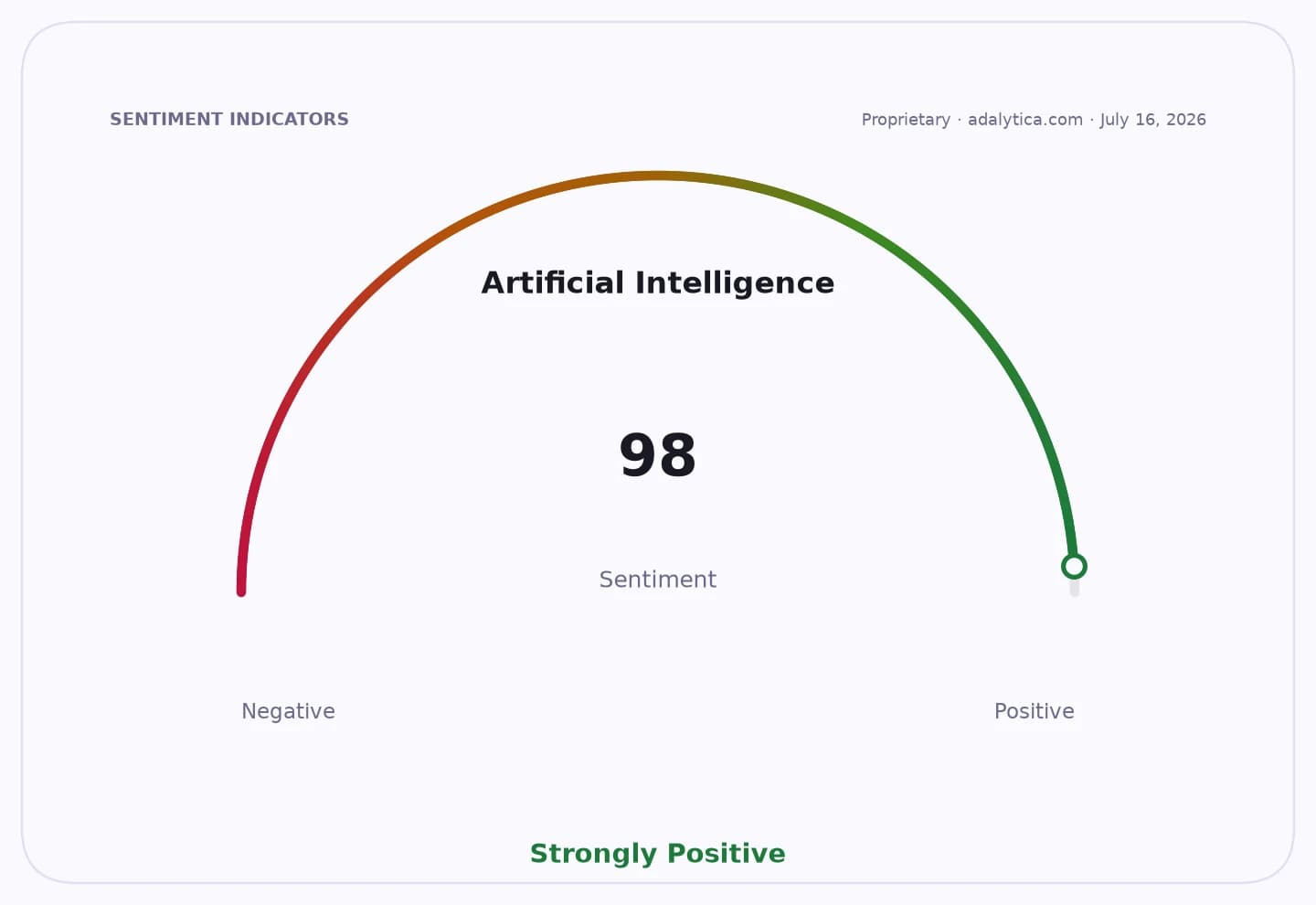
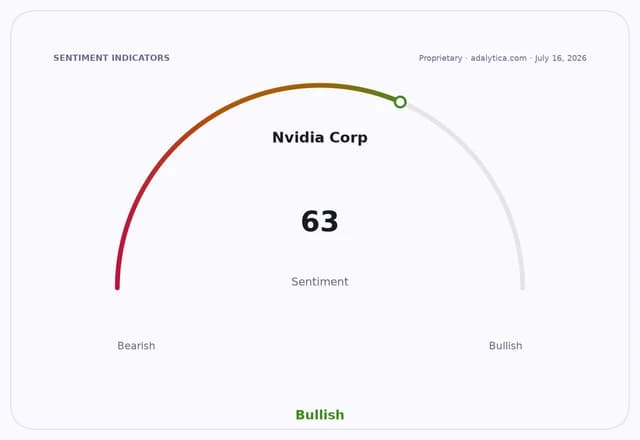
Adalytica’s Nvidia earnings sentiment snapshot has turned neutral, with sentiment at 63 and a strong one-day and one-week improvement, which matches the market’s current stance: constructive on demand, but still alert to signs of overheating. The broader AI sentiment reading is at extreme greed, a reminder that enthusiasm across the theme remains elevated even if Nvidia itself is not yet flashing classic late-cycle signals.
For now, Huang’s message is that the AI infrastructure cycle is still in its early innings. Investors will be watching whether upcoming hyperscaler spending plans, Nvidia’s data-center orders and margin trends from cloud customers confirm that view — or show that the market is moving from expansion to digestion sooner than bulls expect.
| Entity | Gains | Losses |
|---|---|---|
| Nvidia | ▲Sustained AI chip demand | ▼Bubble narrative |
| Hyperscalers | ▲Capacity for AI services | ▼Near-term margins |
| TSMC / ASML | ▲Semiconductor equipment orders | ▼Any capex slowdown |
| Shorts / skeptics | ▲— | ▼Momentum in AI names |