A sharp rotation out of chip and AI infrastructure names and into the biggest cloud and internet platforms is hammering semiconductor stocks, with Nvidia and AMD leading a broad retreat even as Amazon, Microsoft and Alphabet rally.
Nvidia, AMD Fall as Investors Rotate to Megacap Tech
That matters because this is not just a one-day shakeout. It is a reminder that the market is still willing to pay up for artificial intelligence, but it is becoming more selective about where that money goes. Investors are not abandoning AI entirely; they are shifting toward the hyperscalers that can fund the buildout with fortress balance sheets, recurring cloud revenue and far less earnings risk than the pure-play chip suppliers.
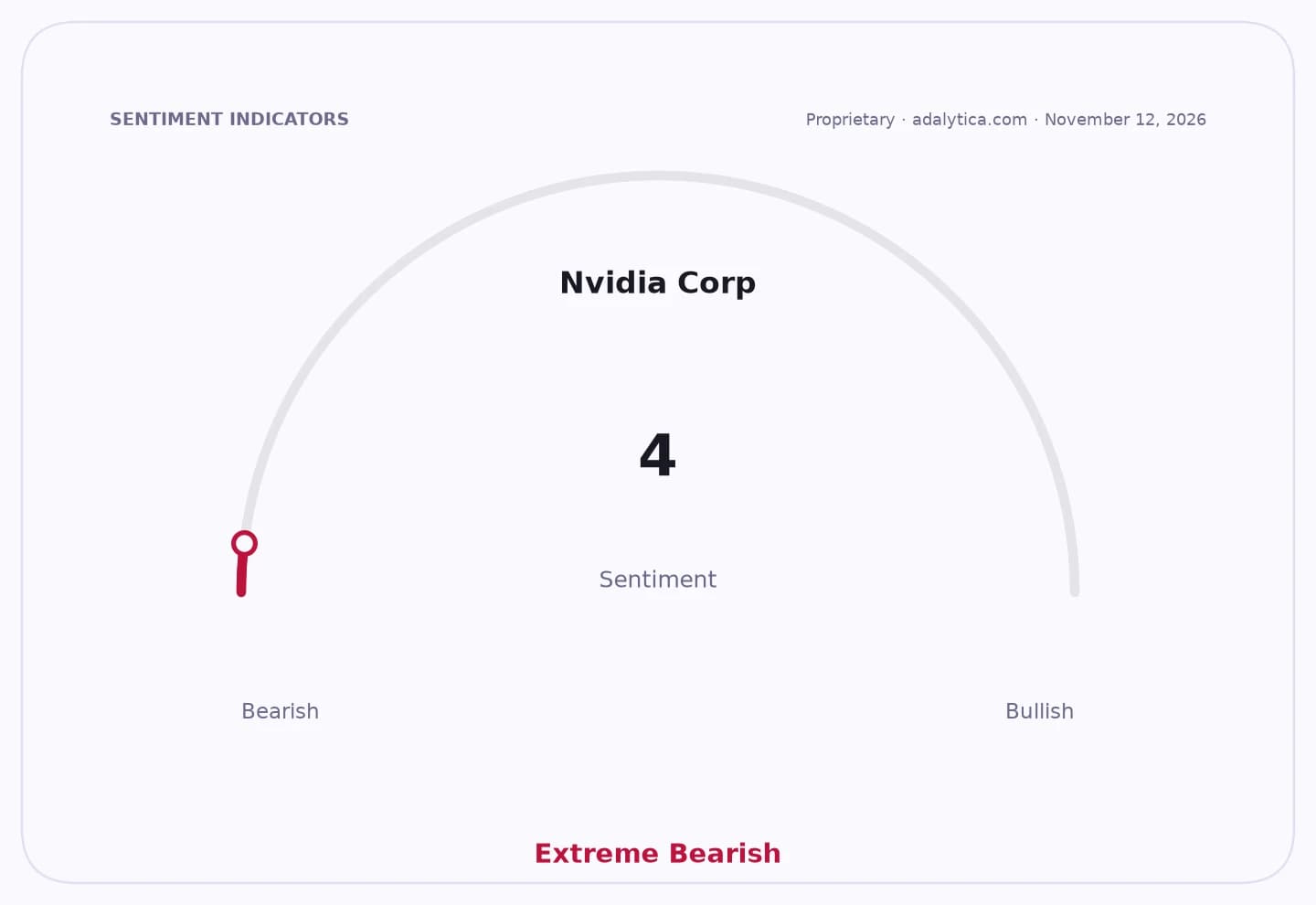
Sentiment Indicators
Nvidia fell to $178.67 on Monday after touching an intraday low of $170.24, leaving the stock down sharply from its recent highs and well below both its 50-day and 200-day moving averages. Its relative strength index sat at 27, a level that points to deeply oversold conditions, while the MACD remained decisively negative. AMD was even more volatile, rebounding to $508.58 after a brutal selloff that took the stock to $404.40 last week. The VanEck Semiconductor ETF, a cleaner read on sector appetite, closed at $487.41, still far below its 50-day average of $564.32.
For long-term investors, the economic message is simple: capital is rotating toward the parts of the AI trade with the most visible cash generation. That includes the mega-cap platforms that can spend aggressively on data centers, chips and software while still protecting margins. It is also a sign that the market is reassessing how much growth is already priced into the semiconductor names after an extraordinary run.
The move has also collided with broader market unease. Adalytica’s S&P 500 Trade Signals show awareness at 99, or “Extreme Greed,” even as sentiment has slipped to neutral. That combination often shows up when positioning is crowded and investors are quick to take profits in the hottest parts of the market. In plain English, a lot of money was leaning the same way, and Wednesday’s rotation exposed that.
The U.S. dollar is another piece of the puzzle. Adalytica’s dollar signals show sentiment at 84, or “Greed,” after a strong recent surge in trend reading. A firmer dollar can tighten financial conditions and add pressure to companies whose valuations depend heavily on future growth, which is another headwind for richly valued tech.
Still, investors should not confuse rotation with a broken thesis. AI spending is not going away. If anything, the winners over the next several years may be the companies with the best mix of scale, cash flow and pricing power, not necessarily the first names that captured the market’s imagination. That is why the hyperscalers are attracting bids while the chip complex cools.
For investors building wealth over years, not days, the lesson is to stay diversified and avoid chasing whatever has already run the hardest. AI remains one of the most powerful secular growth stories in the market, but pullbacks like this are exactly why disciplined investors spread bets across the broader ecosystem. The chip selloff is worth watching, but long-term buyers should treat it as a reminder that even the most unstoppable themes can still rotate.
| Entity | Gains | Losses |
|---|---|---|
| Hyperscalers | ▲Bigger AI share gains | ▼Smaller multiple expansion |
| Nvidia, AMD | ▲Potentially cheaper entry points | ▼Near-term momentum pressure |
| Semiconductor ETF investors | ▲Long-term setup if earnings hold | ▼Short-term mark-to-market losses |
| Cash-rich platforms | ▲More investor capital inflow | ▼Less attention for pure-play chipmakers |